
Are Expensive Water Filters Dead? Why Smart Gardeners Are Switching to This 5-Minute Mineral Solution
If you've spent hundreds: or even thousands: of dollars on a water filtration system for your garden, you might want to sit down for this.
The reverse osmosis units, the multi-stage carbon filters, the UV purifiers: they're excellent at removing contaminants. But here's the part most gardeners don't realize until their tomatoes start underperforming: these systems are also stripping away the very minerals your plants need to thrive.
And that's just the beginning of the problem.
The Filtration Paradox: When "Clean" Water Isn't Better
Traditional water treatment for plants focuses almost exclusively on removal. Reverse osmosis systems, for example, can eliminate up to 99% of dissolved solids: including chlorine, fluoride, heavy metals, and other harmful compounds. That sounds ideal, right?
The issue is that these systems don't discriminate. Along with the bad actors, they're also removing calcium, magnesium, potassium, and dozens of other trace minerals that serve as the foundation of soil health and plant nutrition.
Research in soil microbiology has demonstrated that these minerals aren't just "nice to have": they're essential cofactors for enzymatic processes in plants and the microbial communities that support them. When you water with demineralized water, you're essentially forcing your plants to survive on the mineral reserves already present in your soil. Over time, this creates a deficit that even the best fertilizers struggle to correct.

The True Cost of Conventional Filtration
Let's talk numbers, because the financial reality of traditional filtration systems is rarely discussed honestly.
A quality whole-house reverse osmosis system typically runs between $1,500 and $3,000 upfront. Then there are the ongoing costs: membrane replacements ($150-$300 annually), pre-filters and post-filters ($100-$200 per year), and increased water bills due to the 3-4 gallons of wastewater produced for every gallon of filtered water.
For gardeners using point-of-use systems to fill watering cans or connect to drip irrigation, the economics are similarly challenging. Even mid-range countertop RO systems start around $300-$500, with filter replacements every 6-12 months.
Beyond the financial investment, there's the physical footprint. These systems require installation space, plumbing modifications, and storage tanks. For urban gardeners or those with limited utility access, this simply isn't practical.
What Plants Actually Need: The Mineral-Microbe Connection
Here's where the science gets interesting.
Plants don't grow in isolation: they exist within a complex ecosystem of soil microorganisms that facilitate nutrient uptake. Mycorrhizal fungi, rhizobacteria, and other beneficial microbes form symbiotic relationships with plant roots, essentially extending the root system and improving access to nutrients.
But these microbes need trace minerals to function optimally. Sulfur, iron, zinc, manganese, boron, copper, molybdenum: these aren't just plant nutrients. They're also essential for microbial metabolism and enzyme production.
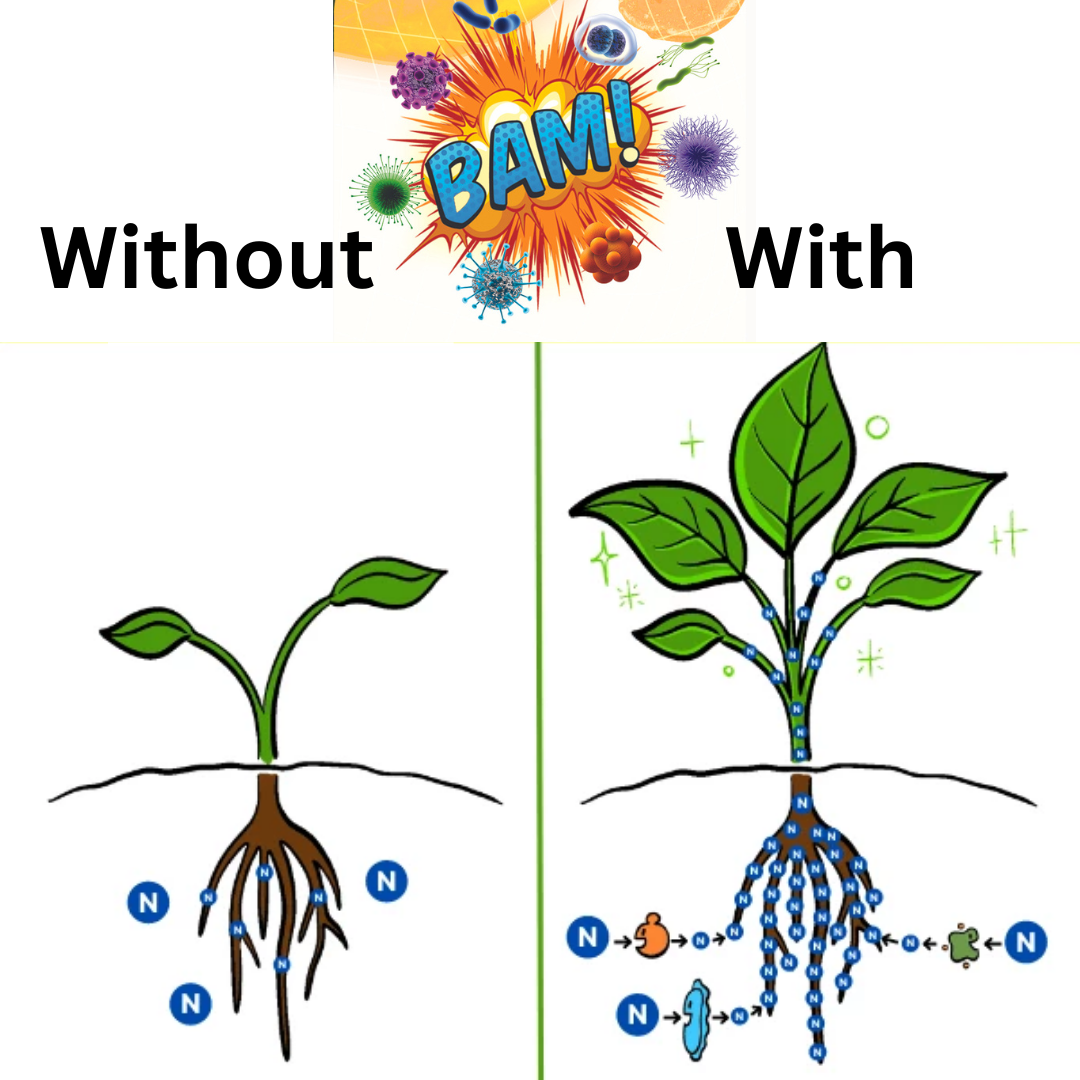
When you irrigate with mineral-deficient water, you're not just starving your plants: you're undermining the entire soil food web. The result? Slower growth, reduced pest resistance, lower yields, and increased dependence on synthetic inputs to compensate for the biological deficit you've created.
The 5-Minute Solution That Changes Everything
This is where the paradigm shifts.
Instead of spending thousands on equipment that removes everything and forces you to remineralize later, what if you could treat your water in about five minutes: removing only the harmful compounds while simultaneously adding back 70+ essential trace minerals?
That's exactly what Drops of Balance accomplishes through a concentrated mineral solution derived from ancient seabed deposits. The process is elegantly simple: add the appropriate dosage to your water source, wait approximately five minutes for the chemical reactions to complete, and you're done.
During those five minutes, the sulfated trace minerals bind with and precipitate out chlorine, fluoride, and other toxic compounds, effectively removing them from solution. Simultaneously, the water becomes enriched with bioavailable forms of calcium, magnesium, sulfur, iron, zinc, and over 65 other trace elements that support both plant health and soil microbiology.
The treated contaminants settle as a fine precipitate that can be filtered out or, in many cases, simply left to settle in your watering container. Unlike reverse osmosis, there's no wastewater, no electricity requirement, and no complex installation.
Cost Analysis: The Numbers Don't Lie
Let's compare the economics of water treatment for plants using these two approaches.
Traditional RO System (5 years):
- Initial equipment: $2,000
- Membrane replacements: $1,000
- Filter replacements: $750
- Remineralization products: $500
- Increased water costs: $300
- Total: $4,550
Drops of Balance (5 years, treating ~500 gallons monthly):
- Product cost: ~$780 (approximately 30,000 gallons treated)
- Installation: $0
- Maintenance: $0
- Additional equipment: $0
- Total: $780
The difference is substantial: and that's before factoring in the time saved on maintenance, filter changes, and troubleshooting equipment failures.
Real-World Results: What Gardeners Are Reporting
The shift toward mineral-based water treatment for plants isn't theoretical: gardeners who've made the switch are documenting measurable improvements in plant performance and soil health.
Tomato growers report more vigorous vegetative growth and increased fruit set. Cannabis cultivators note improved terpene profiles and resin production. Vegetable gardeners observe better pest resistance and reduced fungal pressure. These outcomes align with what we'd expect when soil microbiome function is optimized through adequate trace mineral availability.
The mechanism is straightforward: when beneficial microbes have access to the full spectrum of trace minerals they require, they proliferate and function more efficiently. This enhanced microbial activity improves nutrient cycling, increases organic matter decomposition, and strengthens plant immune responses.
Making the Switch: Practical Considerations
Transitioning from filtered water to mineralized water treatment doesn't require a complete system overhaul. For most gardeners, the process is remarkably simple.
If you're currently using RO or distilled water, you can simply add the appropriate dosage of mineral concentrate to your water source. For those using untreated tap water, the same product removes harmful compounds while boosting mineral content: addressing both water quality issues simultaneously.
The dosage varies based on your water source and intended use. Tap water for plants typically requires 0.5 ml per gallon, while remineralizing RO or distilled water uses about 0.25 ml per gallon. For foliar applications, a 2 ml per gallon ratio provides optimal mineral delivery directly to leaf surfaces.
The Bigger Picture: Sustainable Water Treatment
Beyond individual garden performance, this approach to water treatment for plants addresses broader environmental concerns. Traditional filtration systems waste significant amounts of water: a critical consideration in regions facing water scarcity. They also require energy for operation and generate plastic waste through filter replacements.
Mineral-based water treatment eliminates these environmental costs while actually improving ecological outcomes through enhanced soil health and reduced dependence on synthetic fertilizers. When soil microbiomes function optimally, plants require fewer external inputs, creating a more sustainable and resilient growing system.
The Bottom Line
Expensive water filters aren't necessarily dead, but their role in horticulture deserves serious reevaluation. For drinking water in homes with severely compromised municipal supplies, they may still have a place. But for water treatment for plants? The evidence increasingly points toward mineral-based solutions that treat contaminants without creating nutritional deficits.
The five-minute mineral treatment approach offers equivalent or superior contaminant removal, costs a fraction of traditional filtration, requires no installation or maintenance, and simultaneously addresses plant nutrition and soil health. For gardeners prioritizing both performance and practicality, it's not just an alternative; it's an upgrade.
You can learn more about mineral-based water treatment and explore product options at Drops of Balance.
Your plants: and your wallet( will thank you.)