
10 Reasons Your Organic Fertilizer Isn't Working for Vegetables (And the Water Fix That Changes Everything)
You did everything right. You bought the good stuff, organic fertilizer, compost, maybe even some fancy amendments from the garden center. You followed the instructions. You waited patiently.
And yet... your vegetables look sad. Stunted. Maybe even worse than your neighbor's plants, and they're using the cheap synthetic stuff from the hardware store.
What gives?
Here's the thing most gardeners don't realize: organic fertilizer doesn't feed your plants directly. It feeds the soil microbes, which then break down those nutrients into forms your plants can actually absorb. If something's disrupting that microbial process, your expensive organic fertilizer is basically just sitting there doing nothing.
Let's break down the 10 most common reasons your organic fertilizer isn't delivering results, and the surprisingly simple water fix that changes everything.
Reason #1: Your Soil Temperature Is Too Low
Organic fertilizers are essentially inert in their raw form. They require bacteria and fungi to decompose them into plant-available nutrients. This microbial activity is temperature-dependent, when soil temperatures drop below optimal ranges, decomposition slows dramatically.
If you're applying organic fertilizer in early spring before the soil has warmed up, you might be waiting weeks (or longer) before those nutrients become accessible to your plants.
Reason #2: Your Soil Is Too Dry
Microorganisms need moisture to survive, reproduce, and move through the soil. Dry conditions don't just slow down microbial activity, they can halt it entirely. Without adequate moisture, the bacteria and fungi responsible for breaking down organic matter simply can't do their job.
This creates a frustrating cycle: you add fertilizer expecting results, but the nutrients remain locked up in forms your plants can't use.
Reason #3: You're Applying Fertilizer to Bare Soil
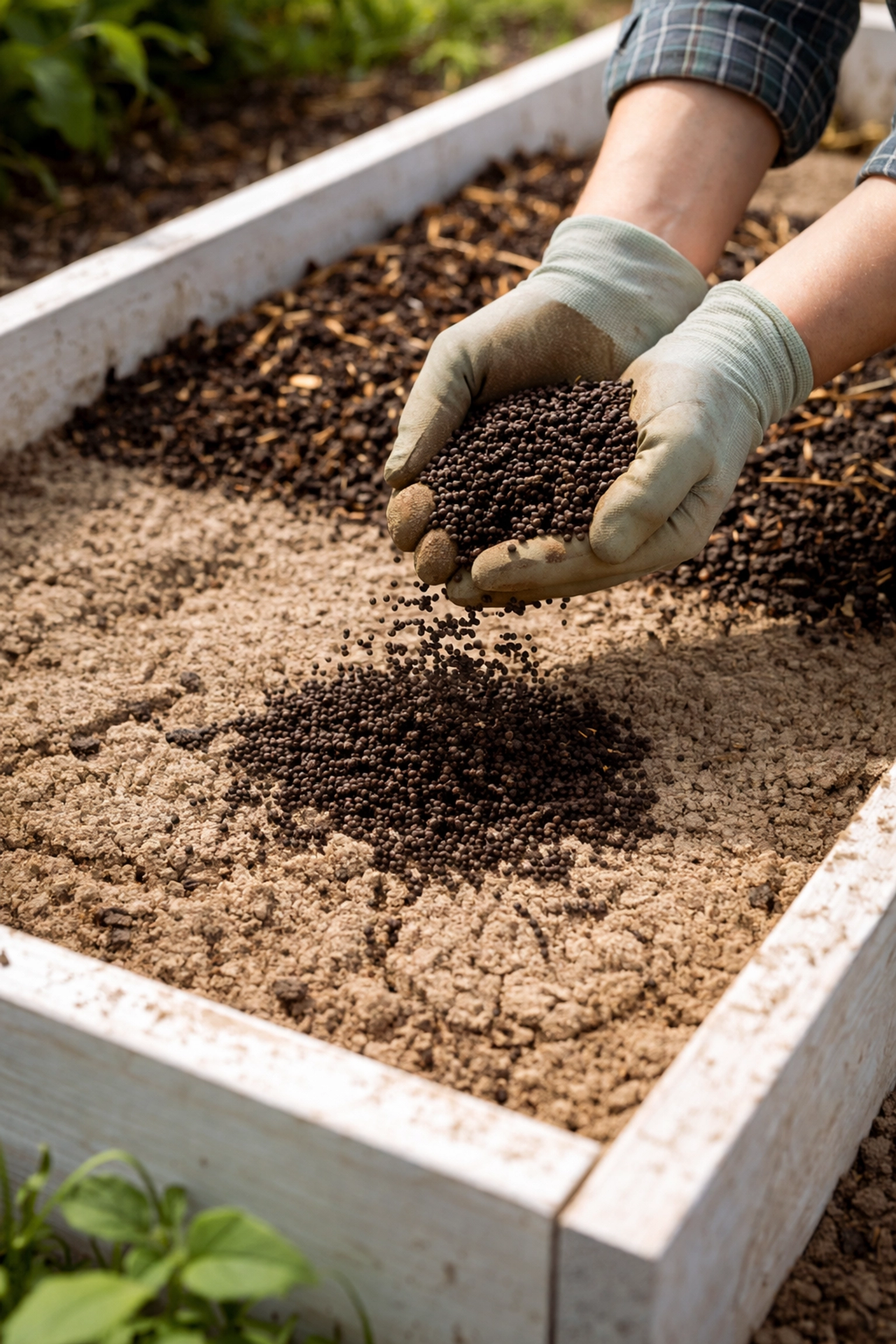
Here's a mistake even experienced gardeners make: sprinkling organic fertilizer directly on bare, exposed soil. The problem? That's not where the microbial action happens.
The highest concentrations of beneficial bacteria and fungi live in the top layer of organic matter, in your compost and mulch. When you apply fertilizer without covering it with these materials, you're essentially bypassing the decomposition system your organic fertilizer depends on.
Reason #4: Wrong Application Timing
Timing matters more than most people realize. Fertilizing seedlings immediately after transplanting, for example, can stress plants before they've had a chance to establish their root systems in the new environment.
Similarly, applying fertilizer during dormant periods or extreme weather conditions reduces its effectiveness significantly.
Reason #5: Your Soil pH Is Off
Even if you have thriving microbial populations and perfect moisture levels, acidic or alkaline soil can "lock out" nutrients. This means the nutrients are technically present in the soil, but they exist in chemical forms that plant roots cannot absorb.
A simple soil test can reveal pH problems that no amount of fertilizer will fix on its own.
Reason #6: Compacted Soil Structure
Compacted soil creates a physical barrier to nutrient absorption. Roots struggle to penetrate dense soil, and water (carrying dissolved nutrients) can't move freely through the soil profile.
Overwatering compounds this problem by washing away water-soluble nutrients before plants can absorb them. Underwatering creates hard, compacted conditions that prevent uptake altogether.
Reason #7: You're Actually Over-Fertilizing
Yes, even with organic fertilizers, more isn't always better. Excess nitrogen: common in many organic fertilizers: promotes vigorous leafy growth at the expense of flowers and fruit production.
If your tomato plants are producing beautiful foliage but no tomatoes, over-fertilization might be the culprit.
Reason #8: Lack of Soil Microorganisms
This is the big one: especially for container gardeners.
Without sufficient microbial life in your soil, organic fertilizer molecules cannot decompose into plant-accessible nutrients. Period. You can add all the organic amendments you want, but if the microbial workforce isn't there, nothing happens.
And here's where things get interesting: something might be actively killing your soil microbes.
Reason #9: Chlorine in Your Water Is Killing Soil Microbes
Municipal water treatment facilities add chlorine specifically because it kills microorganisms. That's great for making water safe to drink. It's terrible for your garden.
Every time you water your vegetables with chlorinated tap water, you're essentially sterilizing your soil. The very microbes your organic fertilizer depends on are being systematically eliminated with each watering session.
Research has consistently demonstrated that chlorine: even at the relatively low concentrations found in tap water: can significantly reduce beneficial soil microbial populations.
Reason #10: Fluoride Is Disrupting Microbial Activity
Fluoride is another common tap water additive that interferes with soil biology. While the mechanisms differ from chlorine, the end result is similar: reduced microbial activity and impaired nutrient cycling.
Studies have shown that fluoride can inhibit enzyme activity in soil microorganisms, slowing down the decomposition processes that make organic fertilizer effective.
The Water Fix That Changes Everything
Here's the pattern you might be noticing: many of these problems trace back to one source: your water.
You can have perfect soil temperature, ideal moisture levels, proper timing, and high-quality organic fertilizer. But if you're watering with tap water containing chlorine and fluoride, you're undermining the entire system every single time you turn on the hose.
This is where Drops of Balance enters the picture.
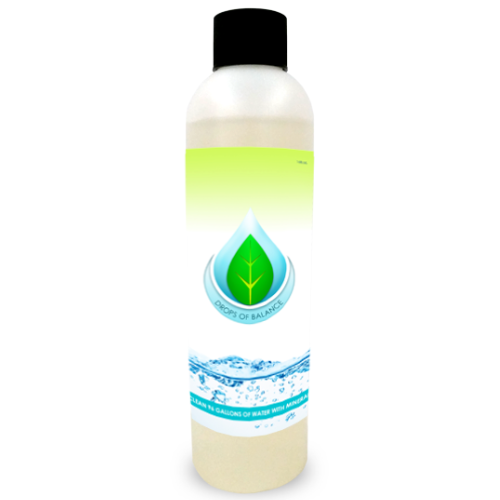
Drops of Balance is a concentrated mineral solution that neutralizes chlorine, fluoride, and other harmful chemicals in tap water. But it doesn't stop there: it also adds sulfated trace minerals that support both soil health and plant nutrition.
Think about it: instead of water that kills your soil microbes, you're now watering with mineral-rich water that actually supports microbial life. The difference is dramatic.
The Science Behind Sulfated Trace Minerals
Plants require more than just nitrogen, phosphorus, and potassium (the N-P-K you see on fertilizer labels). They need trace minerals: iron, manganese, zinc, copper, and others: in small but critical amounts.
Sulfated forms of these minerals are particularly important because sulfur plays essential roles in protein synthesis and enzyme function. When your water delivers these minerals directly to the root zone, you're supporting plant nutrition at the most fundamental level.
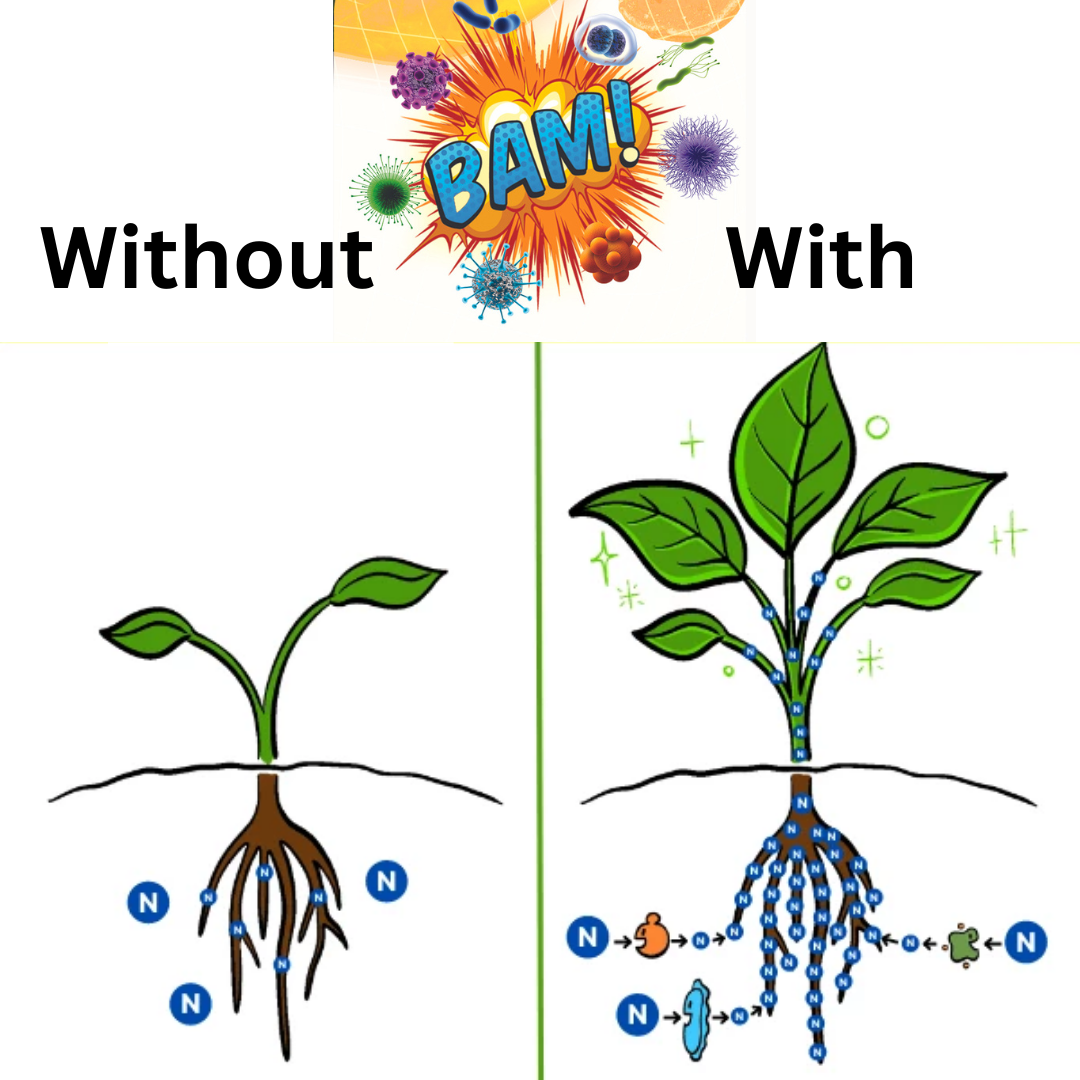
The BAM Plant Comparison demonstrates this principle visually. Plants watered without Drops of Balance show weak growth and limited nutrient uptake. Plants treated with Drops of Balance are consistently larger and healthier, with thriving soil microbes and improved nutrient transfer.
Making the Switch
The transition is simple. Add Drops of Balance to your watering routine, and you transform tap water from a soil microbe killer into a delivery system for beneficial minerals.
Your organic fertilizer starts working the way it's supposed to. Soil microbes flourish. Nutrient cycling accelerates. And your vegetables finally start producing the results you've been waiting for.
For larger gardens or serious growers, the 64 oz concentrate offers an economical option for treating high volumes of water throughout the growing season.
The Bottom Line
Organic fertilizer isn't broken: but it does require specific conditions to work effectively. Temperature, moisture, timing, soil structure, and pH all play important roles.
However, the most overlooked factor is water quality. Chlorine and fluoride in tap water systematically destroy the microbial populations your organic fertilizer depends on. No amount of premium fertilizer can overcome water that's actively working against your soil biology.
Fix the water, and you fix the foundation. Everything else: the organic fertilizer, the compost, the careful attention to timing and application: finally has a chance to deliver the results you've been working toward.
Your vegetables deserve better than tap water. And honestly? So do you.