
7 Mistakes That Kill Your Organic Fertilizer’s Power (And How to Fix Them Right Now)
You’ve done the research, bought the high-quality organic fertilizer, and spent your weekend getting your hands dirty in the garden. You’re expecting a lush, vibrant explosion of green, but instead, your plants look… well, a bit "meh." Maybe they’re yellowing, maybe they’ve stopped growing, or maybe they’re just not as vigorous as the ones on the back of the seed packet.
In the world of organic gardening, it’s easy to assume that because you’re using natural products, things will just "work out." But organic systems are a bit more complex than synthetic ones. While synthetic fertilizers act like an IV drip of nutrients directly to the plant, organic fertilizers rely on a complex biological dance between the soil, the water, and the microbes.
If one part of that dance is off, your expensive fertilizer basically becomes fancy dirt.
Let’s look at the seven most common mistakes that are killing your organic fertilizer’s power and exactly how you can fix them right now.
1. The "More is Better" Fallacy (Overapplication)
It’s a common human instinct: if one scoop is good, three scoops must be great, right? Wrong. In organic gardening, overapplication is one of the quickest ways to stall your progress.
Even though organic fertilizers are generally slower-releasing than synthetics, dumping too much can lead to "nutrient lockout." This happens when an excess of one mineral prevents the plant from absorbing another. For example, too much phosphorus can block the uptake of zinc and iron. Over-fertilizing can also lead to a buildup of salts in the soil, which dehydrates the roots: essentially "burning" them.
The Fix: Always follow the label instructions. If you’re unsure, it is always better to under-apply and observe. A soil test is your best friend here; it tells you exactly what is missing so you aren’t just guessing.

2. Treating the Surface Like a Buffet (Surface Application)
Many gardeners simply sprinkle their organic fertilizer on top of the soil and walk away. While some nutrients will eventually wash down, a large portion of the power is lost to the atmosphere. Nitrogen, in particular, can volatilize (turn into gas) if left sitting on the surface. Furthermore, organic matter needs to be in contact with soil microbes to break down into a form the plants can actually eat.
The Fix: Don’t just "dust" the soil. Scratch the fertilizer into the top 2-3 inches of the soil. This protects the nutrients from the sun and wind and puts them right where the soil bacteria can get to work. If you’re working with established plants and can’t dig, at least cover the fertilizer with a layer of mulch or compost.
3. The "Set It and Forget It" Watering Habit
Organic nutrients aren't mobile on their own. They need water to move from the soil particles into the plant roots. If you apply your fertilizer to bone-dry soil and don't water it in, it’s just sitting there. Conversely, if you overwater to the point of saturation, you risk the nutrients leaching out or washing away before they ever reach the root zone.
The Fix: Water the soil lightly before you apply your fertilizer to ensure the ground is receptive. After application, water it in thoroughly. This "activates" the biology and helps transport those minerals down to the root tips. Consistency is key; keep the soil moist (but not soggy) to ensure the decomposition process continues.
4. Expecting Overnight Miracles (Improper Timing)
Synthetic fertilizers give plants a "sugar rush": fast growth that often results in weak cell walls. Organic fertilizer is more like a healthy, slow-cooked meal. It takes time for the soil food web to break down complex organic matter into simple ions like nitrate, phosphate, and potassium. If you wait until your plants are already showing severe deficiencies to fertilize, you’re already behind the curve.
The Fix: Plan ahead. Apply your organic amendments a few weeks before planting or early in the growing season. This gives the microbes time to start the "digestion" process. Think of it as building a pantry for your plants rather than just feeding them a single meal.
5. Ignoring the Soil’s pH "Mood"
You can have the best organic fertilizer in the world, but if your soil pH is too high (alkaline) or too low (acidic), the nutrients become chemically "locked" to the soil particles. They are physically there, but the plant can't pull them off. Most garden plants thrive in a slightly acidic range (6.0 to 7.0).
The Fix: Test your pH every season. If your soil is too acidic, you might need a bit of lime. If it's too alkaline, elemental sulfur or peat moss can help. When the pH is balanced, the chemical "magnets" in the soil release the nutrients easily to the roots.
6. Forgetting the Soil's Tiny Workers (The Microbiome)
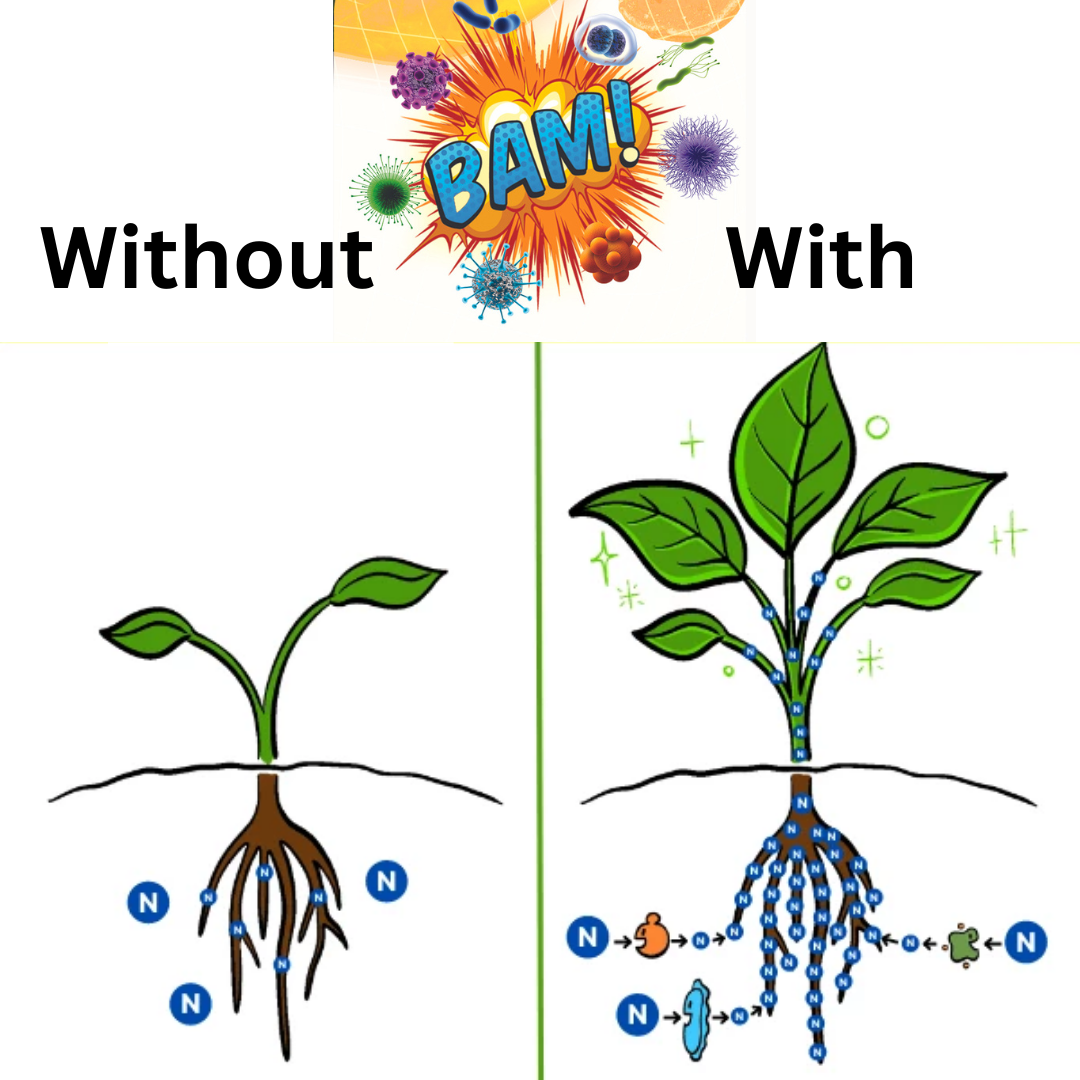
This is the most overlooked part of organic gardening. Organic fertilizer is not actually plant food: it is microbe food. Bacteria and fungi (like Mykos) eat the fertilizer and then excrete it in a form the plants can absorb. If your soil is "dead" due to previous chemical use, compaction, or lack of organic matter, your fertilizer will just sit there.
The Fix: You need to inoculate your soil. Adding beneficial microbes and fungi helps create a thriving ecosystem. Products like BAM! Microbial Inoculant can jumpstart this process, ensuring there’s an army of workers ready to process your fertilizer.
7. The Silent Saboteur: Your Tap Water
This is the big one. Most people water their organic gardens with standard city tap water. To keep water "safe" for human consumption, municipalities add chlorine or chloramine to kill bacteria.
The problem? Chlorine doesn’t distinguish between "bad" bacteria in a water pipe and "good" bacteria in your garden soil. Every time you water your garden with chlorinated tap water, you are essentially "sanitizing" your soil and killing the very microbes that make your organic fertilizer work.
Furthermore, tap water often contains heavy metals and fluoride, which can accumulate in the soil and eventually in your food, stressing the plants and inhibiting nutrient uptake.
The Fix: You must treat your water before it hits the soil. Using a mineral-based water treatment like Drops of Balance is a game-changer for organic gardeners.
Why Water Quality Changes Everything
When you add Drops of Balance to your watering can or reservoir, the sulfate-based minerals go to work immediately. They neutralize the harmful effects of chlorine and chloramine and cause heavy metals to clump together (flocculate) so they become inert and harmless to the plant.
By cleaning your water, you are protecting the biological investment you’ve made in your soil. Instead of a sterile environment, your soil becomes a thriving metropolis of microbial activity, allowing your plants to access the full power of your organic fertilizer.
The Ultimate Organic Strategy
If you want to see the real potential of your garden, you need to combine all these fixes into one cohesive system.
- Clean the Water: Use Drops of Balance to remove toxins like chlorine that kill soil life.
- Inoculate the Soil: Add beneficial microbes and enzymes to ensure the fertilizer is actually being processed. Our Complete Enzyme Package is a great way to handle this in one go.
- Feed Correctly: Use high-quality organic fertilizer at the right rates, at the right time, and worked into the soil.

Summary: Stop Working Against Yourself
Organic gardening shouldn't be a struggle. Most of the time, the "power" isn't missing from your fertilizer: it's just being blocked by simple mistakes. By paying attention to your soil pH, the way you apply your amendments, and most importantly, the quality of the water you use, you can unlock a level of growth you didn't think was possible.
Don't let chlorine and heavy metals kill your garden's potential. Start treating your water today and watch your organic fertilizer finally do what it was designed to do.

For more tips on how to optimize your water and soil health, explore our full range of mineral concentrates and gardening solutions. Your plants will thank you!