
Fertilizer for Tomatoes: Why Most Organic Blends are Failing Your Plants (and How to Fix Nutrient Lockout)

For many home gardeners and professional growers alike, the quest for the perfect tomato is a seasonal obsession. We seek that deep red color, the heavy weight of a fruit bursting with juice, and that unmistakable homegrown flavor. To achieve this, the modern gardener almost instinctively reaches for organic fertilizer. We have been taught that "organic" is synonymous with "healthy," and while that is true in principle, the execution often falls short of the biological requirements of the Solanum lycopersicum (tomato) plant.
In reality, many high-end organic blends are failing to deliver. Gardeners frequently witness stunted growth, yellowing leaves (chlorosis), or the dreaded blossom end rot, despite following the application instructions on the bag. This phenomenon often stems from a fundamental misunderstanding of soil chemistry and a process known as nutrient lockout. To grow the best tomatoes, we must look beyond the N-P-K (Nitrogen, Phosphorus, Potassium) ratio and focus on the bioavailability of trace minerals and the health of the soil microbiome.
The Paradox of Organic Fertilizer
The primary challenge with organic fertilizers is that they are not immediately available to the plant. Unlike synthetic salts that dissolve in water and are taken up via osmosis, organic matter must be processed by soil biology. Research, including studies from Washington State University, suggests that organic fertilizers can sometimes lead to lower initial yields compared to synthetics because the plant must expend significant metabolic energy to "detoxify" ammonia and process complex organic compounds.
When we apply a heavy dose of organic fertilizer for tomatoes, we are essentially dumping a "raw" product into the soil. If the soil lacks the necessary microbial workforce or if the water chemistry is imbalanced, these nutrients sit idle. This leads to an accumulation of unprocessed minerals that can actually become toxic to the delicate root hairs, causing the plant to prioritize survival over fruit production.
Understanding Nutrient Lockout in Tomatoes
Nutrient lockout occurs when a plant is unable to absorb nutrients, even if they are present in the soil. In tomato cultivation, this is rarely caused by a total lack of fertilizer. Instead, it is usually caused by one of three factors:
- pH Imbalance: Tomatoes prefer a slightly acidic soil (pH 6.2 to 6.8). If the pH drifts outside this range, chemical reactions occur that "lock" minerals like iron, manganese, and phosphorus into solid forms that roots cannot intake.
- Mineral Antagonism: High levels of one nutrient can physically block the uptake of another. For example, an excess of potassium (common in "bloom booster" organic fertilizers) can lock out calcium, leading directly to blossom end rot.
- Microbial Dormancy: Without active microbes to chelate (bond) minerals, the fertilizer remains "inorganic" to the plant’s biological receptors.
The Missing Link: Sulfated Trace Minerals
The most common pitfall in organic tomato programs is the omission of trace minerals. Most commercial organic fertilizers focus on the "Big Three" (N-P-K), but plants require over 70 different trace elements to complete their metabolic cycles. This is known as Liebig's Law of the Minimum, which states that growth is dictated not by total resources available, but by the scarcest resource (limiting factor).
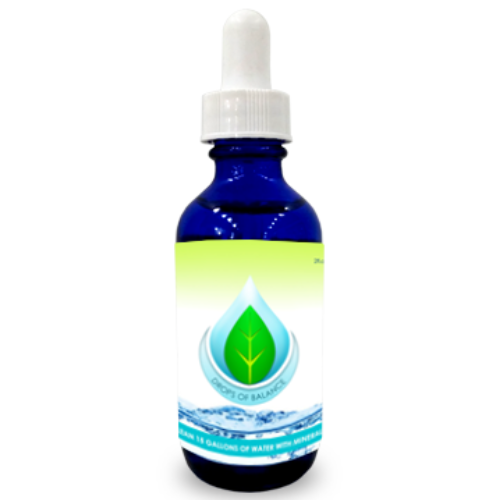
This is where Drops of Balance becomes essential. Our 2 oz concentrated mineral solution provides a full spectrum of sulfated trace minerals. These minerals act as the "keys" to the enzymatic "locks" within the plant. When you add Drops of Balance to your irrigation water, you aren't just feeding the plant; you are optimizing the water itself to act as a more efficient delivery vehicle. These minerals help stabilize the electrical conductivity (EC) of the soil solution, reducing the risk of nutrient lockout and ensuring the plant can access the best plant food already present in the organic matter.
The Microbial Solution: Unlocking the Soil with BAM!
If minerals are the keys, microbes are the locksmiths. To fix a failing organic program, you must introduce a high-quality microbial inoculant. Most soil is not "dead," but it is often "dormant," especially if it has been treated with chlorinated tap water.
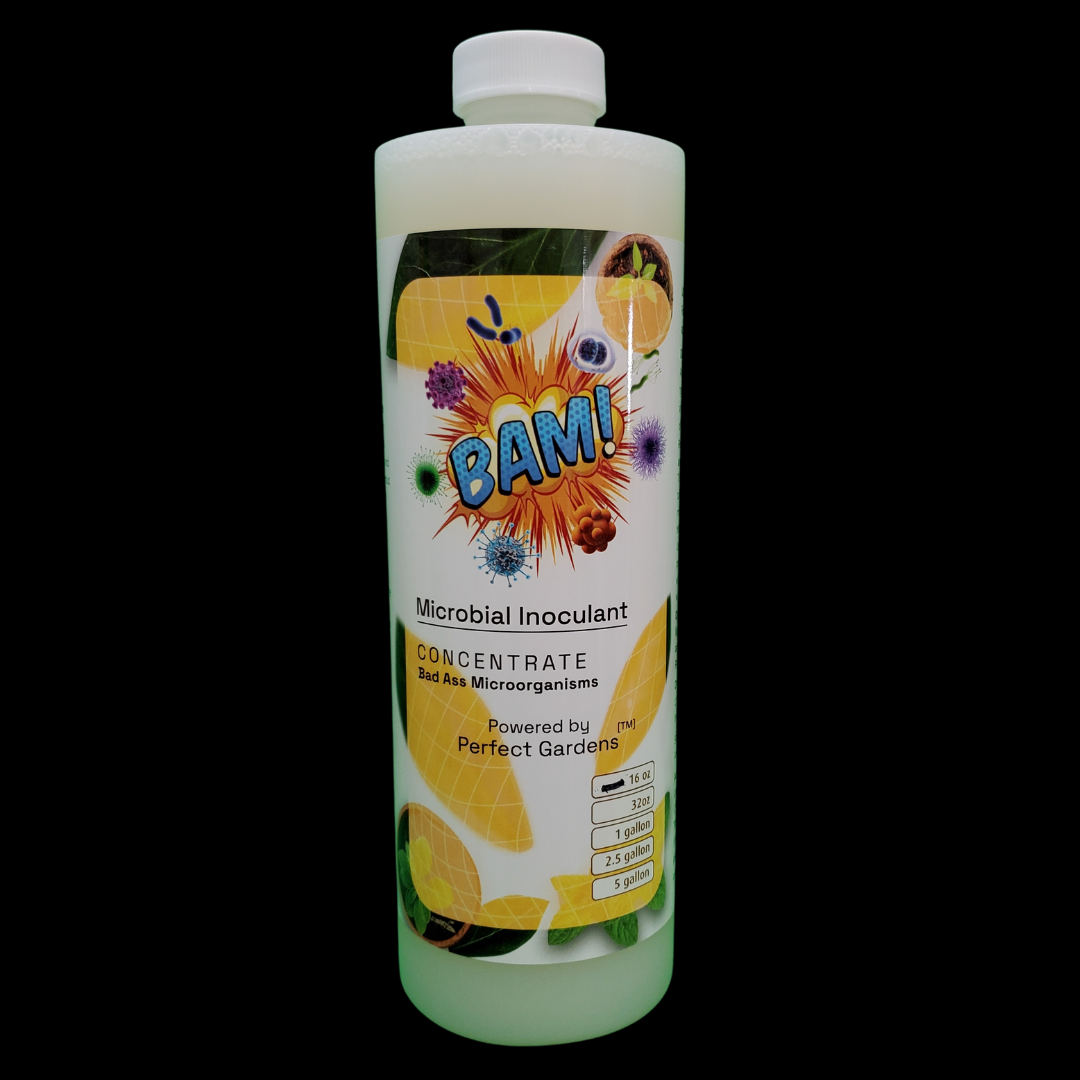
BAM! (Beneficial Adaptive Microbes) is a specialized microbial inoculant designed to break down organic fertilizers into plant-available ions. In a tomato garden, BAM! works synergistically with trace minerals to create a "bio-digestion" zone around the roots. This process converts the ammonia found in organic fertilizers into nitrates and ensures that heavy minerals are chelated for easy uptake.
As seen in trial comparisons, plants treated with a combination of trace minerals and microbial inoculants show significantly more robust root systems and larger leaf surface areas. A larger leaf surface area translates to increased photosynthesis, which provides the sugars necessary to grow those heavy, flavorful tomatoes we all desire.
Why Your Water Might Be Killing Your Tomatoes
You can buy the most expensive organic fertilizer on the market, but if you are mixing it with untreated municipal water, you are likely self-sabotaging. Most city water contains chlorine or chloramine, designed specifically to kill bacteria. Unfortunately, these chemicals do not distinguish between "bad" bacteria and the "good" microbes in your soil.
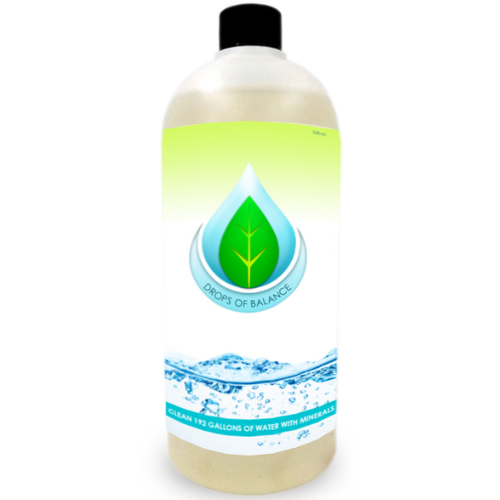
Every time you water your garden with tap water, you are effectively "sterilizing" your soil. This kills the microbes that prevent nutrient lockout. By using Drops of Balance in your watering can or irrigation system, you neutralize these harmful oxidizers. The sulfate minerals in the solution bind to toxins like fluoride and chlorine, rendering them harmless and allowing your soil biology to thrive.
How to Fix a Failing Tomato Plant (A 3-Step Recovery Plan)
If your tomatoes are currently showing signs of yellowing, slow growth, or lack of fruit set, follow this protocol to reset the soil chemistry:
1. Flush and Neutralize
Stop all high-NPK organic fertilizers for one week. Water your plants with a solution of Drops of Balance (.25 ml to .5 ml per gallon). This will help neutralize any accumulated salts and toxins in the soil while providing a "mineral reset."
2. Re-Inoculate the Rhizosphere
Once the soil toxins are neutralized, introduce BAM! Microbial Inoculant. Use the 32 oz BAM! bottle to create a drench. This will re-establish the microbial colonies needed to break down the "locked" nutrients currently sitting in your soil.
3. Foliar Feed for Immediate Absorption
When a plant is in nutrient lockout, the roots are struggling. You can bypass the root system entirely by foliar spraying. Mix 2 ml of Drops of Balance per gallon of water and spray the leaves in the early morning or late evening. The plant will absorb the trace minerals through its stomata, providing an immediate metabolic boost while the soil recovers.
The Scientific Edge: Why "Sulfated" Matters
Many gardeners use "colloidal" minerals or simple rock dust. While these are better than nothing, they are often insoluble. Drops of Balance utilizes sulfated trace minerals. In chemistry, sulfates are highly soluble and biologically active. This ensures that the minerals don't just sit in the soil as rocks, but are immediately available for the plant to use in building cell walls and synthesizing vitamins.
This scientific approach to gardening is why professional growers are moving away from the "more is better" fertilizer philosophy. By focusing on balance, we can actually use less fertilizer while achieving greater results. This is not only better for your plants but more sustainable for the environment, reducing the nutrient runoff that plagues many organic gardening systems.
Conclusion: Creating a Balanced Ecosystem
Growing the ultimate tomato is about more than just finding the right bag of dirt. It is about managing an ecosystem. By addressing the quality of your water with Drops of Balance and the health of your soil biology with BAM!, you eliminate the variables that lead to nutrient lockout.
Whether you are a hobbyist or looking to scale your production, the principle remains the same: Remove the toxins, add the missing trace elements, and let nature do the work. Your plants don't just need more food; they need the balance to eat what you're already giving them.
For more information on how to optimize your garden water and soil, visit our Safety Testing page or explore our full collection of plant health solutions.