
How to Improve Soil Health in 3 Minutes Without Expensive Garden Soil Amendments (Water Treatment Secret)
You've bought the premium compost. The worm castings. Maybe even that $40 bag of mycorrhizal fungi that promised to revolutionize your garden. You're doing everything right to improve soil health, except for one critical mistake that's undermining all of it.
Every time you water your plants with untreated tap water, you're dumping a cocktail of chlorine, chloramine, fluoride, and heavy metals directly onto your carefully cultivated soil microbiome. It's like throwing a grenade into a thriving microbial city, then wondering why your expensive garden soil amendments aren't delivering results.
Here's the good news: You can fix this problem in about 3 minutes.
The $500 Garden Soil Amendment Problem
Most gardeners approach soil health backwards. They focus exclusively on what they're adding to the soil, compost, fertilizers, minerals, beneficial bacteria, while completely ignoring what they're destroying with their water source.
Municipal tap water contains biocidal chemicals specifically designed to kill microorganisms. That's great for keeping your drinking water pathogen-free, but catastrophic for the billions of beneficial bacteria, fungi, and other microbes that make your soil functional.
The typical chlorine concentration in tap water ranges from 0.5 to 2.0 mg/L, with some municipalities pushing even higher during seasonal treatments. Research has demonstrated that these concentrations can reduce soil microbial biomass by 30-50% within hours of application, particularly affecting the sensitive nitrogen-fixing bacteria and mycorrhizal fungi networks that plants depend on for nutrient uptake.

You're essentially sterilizing your soil every time you water, then trying to repopulate it with expensive amendments. It's an exhausting, expensive cycle that never addresses the root cause.
The Hidden Killers in Your Garden Hose
Let's break down what's actually flowing through your irrigation system:
Chlorine and Chloramine: These disinfectants don't discriminate. They'll kill harmful pathogens in your water, but they're equally effective at decimating beneficial soil bacteria. Chloramine, increasingly used by water utilities because it's more stable than chlorine, is particularly problematic, it doesn't evaporate when you leave water sitting out overnight, which is a common (but ineffective) recommendation you'll find online.
Fluoride: While controversial in drinking water debates, fluoride's impact on soil biology is less disputed. Studies show that fluoride accumulation in soil can inhibit enzyme activity in beneficial microorganisms and interfere with nitrogen fixation processes. The EPA's 2026 fluoride review has renewed scientific scrutiny on environmental impacts beyond human health.
Heavy Metals: Lead, copper, and other metals leach from aging municipal infrastructure. Even trace amounts can accumulate in soil over time, creating toxic conditions for the microbial populations you're trying to cultivate.
Pharmaceutical Residues: Modern water treatment facilities weren't designed to remove hormone disruptors, antibiotics, and other pharmaceutical compounds that now pervade water supplies. These can have subtle but significant effects on soil ecology.
How to Improve Soil Health: Start With Your Water
Here's where things get interesting, and fast.
Traditional advice tells you to let tap water sit for 24 hours to "off-gas" chlorine, or to invest in expensive dechlorination systems. But there's a more comprehensive solution that takes about 3 minutes and addresses multiple contaminants simultaneously.
Concentrated mineral solutions like Drops of Balance work through a process called sulfate-based chelation. When added to tap water at the proper concentration, sulfate trace minerals bind to chlorine, chloramine, fluoride, and heavy metal molecules, neutralizing their biocidal activity almost instantly.
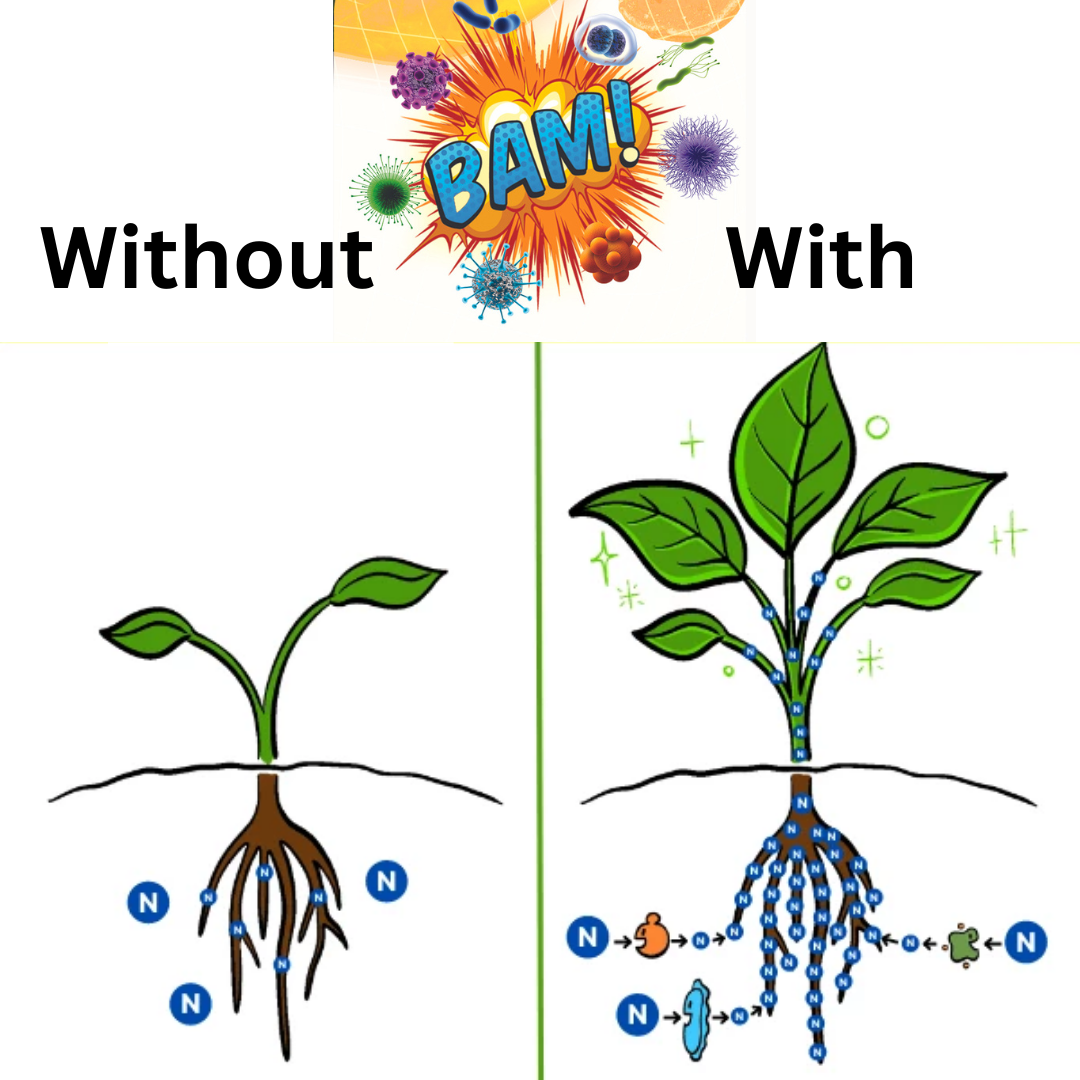
The mechanism is elegantly simple: sulfate ions have a higher electronegativity than the bonds holding chlorine to its compounds, essentially "grabbing" these toxins out of solution and rendering them inert. The process completes within minutes of mixing, specifically, about 3 minutes for full distribution and binding in a typical watering can or irrigation line.
But here's the bonus: While neutralizing toxins, you're simultaneously remineralizing your water with trace elements that support soil biology. Magnesium sulfate, zinc sulfate, manganese sulfate, and other sulfated minerals provide exactly the micronutrients that beneficial soil organisms need to thrive.
The 3-Minute Protocol for Water Treatment for Plants
Here's the practical application:
For a standard watering can (2 gallons): Add approximately 1 mL of concentrated mineral solution to your tap water. Stir or shake for 30 seconds. Wait 2-3 minutes before application. That's it.
For drip irrigation or larger systems: Pre-treat your water source by adding the proportional amount to your reservoir or directly into your irrigation line using a dosing system. For most gardens, this works out to roughly 0.5 mL per gallon for tap water treatment.
For foliar spraying: Increase the concentration slightly (2 mL per gallon) to ensure thorough toxin neutralization and mineral availability for leaf absorption.
The total time investment? Measure, pour, wait. Three minutes, maximum.
Compare that to the weeks or months required for traditional garden soil amendments to break down and become biologically available. Compare it to the ongoing expense of purchasing microbial inoculants that immediately die when you water them with chlorinated tap water.
The Economics of Smart Soil Health
Let's do some math that'll make you reconsider your gardening budget.
A typical 8oz bottle of concentrated mineral solution treats approximately 512 gallons of water at the standard garden rate. If you're watering a 200 square foot vegetable garden at 1 inch per week (roughly 125 gallons monthly during growing season), that single bottle lasts you more than four months.
Cost per treatment: About $0.15 per watering session.
Now consider what you're protecting: That $45 bag of mycorrhizal fungi you bought? It's actually staying alive in your soil now. The $30 compost tea you brewed? Those bacteria aren't immediately dying when you water. The $25 worm castings you top-dressed with? The beneficial organisms aren't being chemically sterilized every 3 days.
You're not spending money on water treatment instead of soil amendments, you're spending a tiny amount to make your soil amendments actually work as intended.
Beyond the Quick Fix: Long-Term Soil Building
To be clear: Treating your water isn't a replacement for good soil management practices. You still need to:
- Add organic matter regularly through compost, mulch, or cover crops
- Minimize mechanical tillage that disrupts fungal networks
- Maintain diverse plantings that support varied microbial communities
- Conduct periodic soil testing to guide mineral supplementation
But here's the critical insight: All of these practices depend on living soil biology. If you're systematically killing that biology with your water source, you're building on a foundation that keeps crumbling.

Think of water treatment as the gatekeeper. It's the simple step that allows everything else you're doing, the expensive amendments, the careful cultivation practices, the biological inoculants, to actually succeed.
The Scientific Foundation
This isn't pseudoscience or gardening folklore. The impact of chlorinated water on soil biology has been documented in peer-reviewed research for decades. A 2019 study in Soil Biology and Biochemistry found that even low-level chlorine exposure (comparable to typical tap water) reduced soil enzyme activity by 35% and bacterial diversity by 42% over a 30-day period.
Sulfate-based mineral treatments have similarly solid scientific backing. The use of sulfate compounds for water purification dates back over a century, with modern applications refined through agricultural and horticultural research. The addition of bioavailable sulfated trace minerals supports multiple soil functions simultaneously, from microbial energy metabolism to plant nutrient uptake.
This is established soil science, applied practically.
Getting Started
If you're ready to stop sabotaging your soil investments, the implementation is straightforward:
- Get a concentrated mineral solution specifically formulated for water treatment, check the options here
- Establish your dosing routine: Pre-treat water before every garden application
- Be consistent: The benefits compound over time as your soil biology stabilizes and rebuilds
- Monitor results: You should notice improved plant vigor, better water retention, and reduced nutrient deficiency symptoms within 2-3 weeks
The beauty of this approach is its simplicity. No complicated equipment. No significant time investment. No dramatic changes to your existing gardening routine.
Just 3 minutes to protect the microscopic workforce that actually grows your plants.
The Bottom Line
You can't buy healthy soil, you can only cultivate the conditions that allow it to develop. And the most fundamental condition is protecting the living organisms that create soil health in the first place.
Before you spend another dollar on premium composts, mineral amendments, or beneficial microbe products, ask yourself: Am I killing these organisms with my water source faster than I can replace them?
If the answer is yes (and for most gardeners using untreated tap water, it is), then your first step isn't another expensive amendment. It's 3 minutes of water treatment before every watering.
That's how to improve soil health without breaking the bank: by stopping the destruction you didn't know you were causing.
Your soil microbes will thank you. Your plants will show you. And your wallet will appreciate the efficiency.