
How to Remove Glyphosate from Your Garden Water Naturally (Without Expensive Filters)
For the modern organic gardener, the battle for soil health is often fought on a hidden front. You might choose non-GMO seeds, avoid synthetic pesticides, and compost your kitchen scraps religiously. However, there is a silent contaminant that often bypasses even the most diligent gardening practices: your water supply.
Glyphosate, the active ingredient in many broad-spectrum herbicides, has become a ubiquitous environmental pollutant. While most gardeners know to avoid spraying it on their property, few realize that it can enter their garden through municipal tap water or local groundwater runoff.
In this guide, we will explore the science of how glyphosate impacts your garden and provide a natural, mineral-based solution to treat your water without the need for expensive, high-maintenance filtration systems.
The Glyphosate Problem: Beyond the Spray Bottle
Glyphosate is more than just a weed killer; it is a powerful chelator. In a chemical context, a chelator is a substance that binds to metal ions. While this property makes it effective at killing plants by disrupting their internal processes, it also means that glyphosate in your garden water can bind to essential nutrients in the soil: such as calcium, magnesium, and iron: making them unavailable to your plants. This is a phenomenon known as "nutrient lockout."
Furthermore, glyphosate is an antimicrobial agent. It targets the shikimate pathway, a metabolic route found in plants, bacteria, and fungi. When you water your garden with glyphosate-contaminated water, you are inadvertently suppressing the beneficial microbial life that lives in your soil. Healthy soil relies on a symbiotic relationship between plant roots and microbes; when those microbes die, soil structure collapses, and plant immunity plummets.
Why Standard Filtration Often Falls Short
When gardeners realize their water might be contaminated, the first instinct is to install a filter. While Reverse Osmosis (RO) systems or high-end carbon blocks can be effective at removing various chemicals, they present several challenges for the home gardener:
- Cost: Industrial-grade filters capable of high flow rates for gardening are expensive to install and maintain.
- Waste: RO systems waste several gallons of water for every one gallon of "clean" water produced.
- Mineral Depletion: Most high-efficiency filters are "dumb": they remove the bad stuff, but they also strip out the beneficial trace minerals your plants need to thrive.
- Incomplete Removal: Many basic carbon filters are not rated to specifically target glyphosate or fluoride effectively over the long term.
The Natural Solution: Ionic Mineral Water Treatment
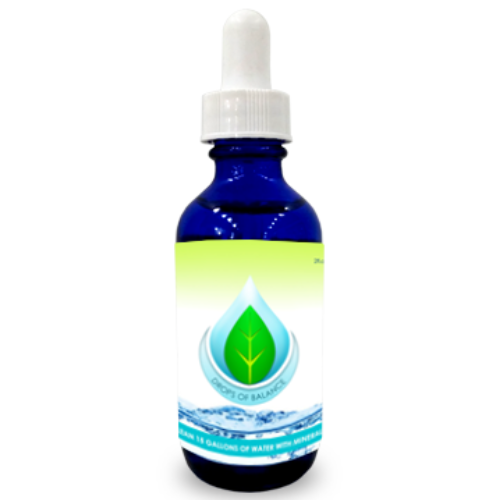
At Drops of Balance, we utilize the principles of nature to treat water. Rather than trying to "trap" contaminants in a physical mesh, we use a concentrated solution of sulfated trace minerals to neutralize toxins through a process called coagulation and flocculation.
The Science of Coagulation and Flocculation
When Drops of Balance is added to water, the ionic minerals interact with dissolved contaminants like glyphosate, chlorine, and heavy metals. These contaminants usually carry a specific electrical charge that keeps them suspended and dissolved in the water.
The sulfate minerals in our solution act as "magnetic" collectors. They neutralize the charge of the contaminants, causing them to clump together (coagulation). As these particles continue to bond, they form larger, heavier masses called "floc" (flocculation). These neutralized particles then become insoluble: meaning they are no longer "active" in the water and will eventually settle to the bottom of your container or become inert in the soil profile, preventing them from being absorbed by plant roots.
5 Steps to Treating Your Garden Water Naturally
Removing glyphosate and improving your garden’s hydration doesn’t require a plumbing overhaul. Here is how to implement a mineral-based treatment strategy.
1. Assess Your Source
Most municipal water contains not just potential herbicide runoff, but also fluoride and chloramines. If you are on a well, agricultural runoff is your primary glyphosate concern. Knowing your water's baseline helps you understand the dosage required.
2. Mineralize and Neutralize
Add Drops of Balance to your watering can or rain barrel. For typical garden use, a concentration of approximately 0.5 ml per gallon is sufficient for tap water. If you are using RO or distilled water, you can reduce the dosage to 0.25 ml per gallon, as your goal is primarily mineralization rather than decontamination.
3. Allow for Reaction Time
Science takes a moment to work. After adding the minerals, stir the water and let it sit for at least a few minutes. This allows the ionic exchange to take place, neutralizing the glyphosate and other harmful chemicals like fluoride.
4. Improve Soil Structure via Hydration
Water treated with trace minerals has a lower surface tension and better "wetting" capability. This means the water penetrates deeper into the soil and reaches the root zone more effectively, rather than just running off the surface. This is a critical step in how to improve soil health over time.
5. Re-Inoculate the Biology
Once you have stopped the influx of toxins, you must rebuild the microbial community that those toxins suppressed. This is where a high-quality microbial inoculant becomes essential.
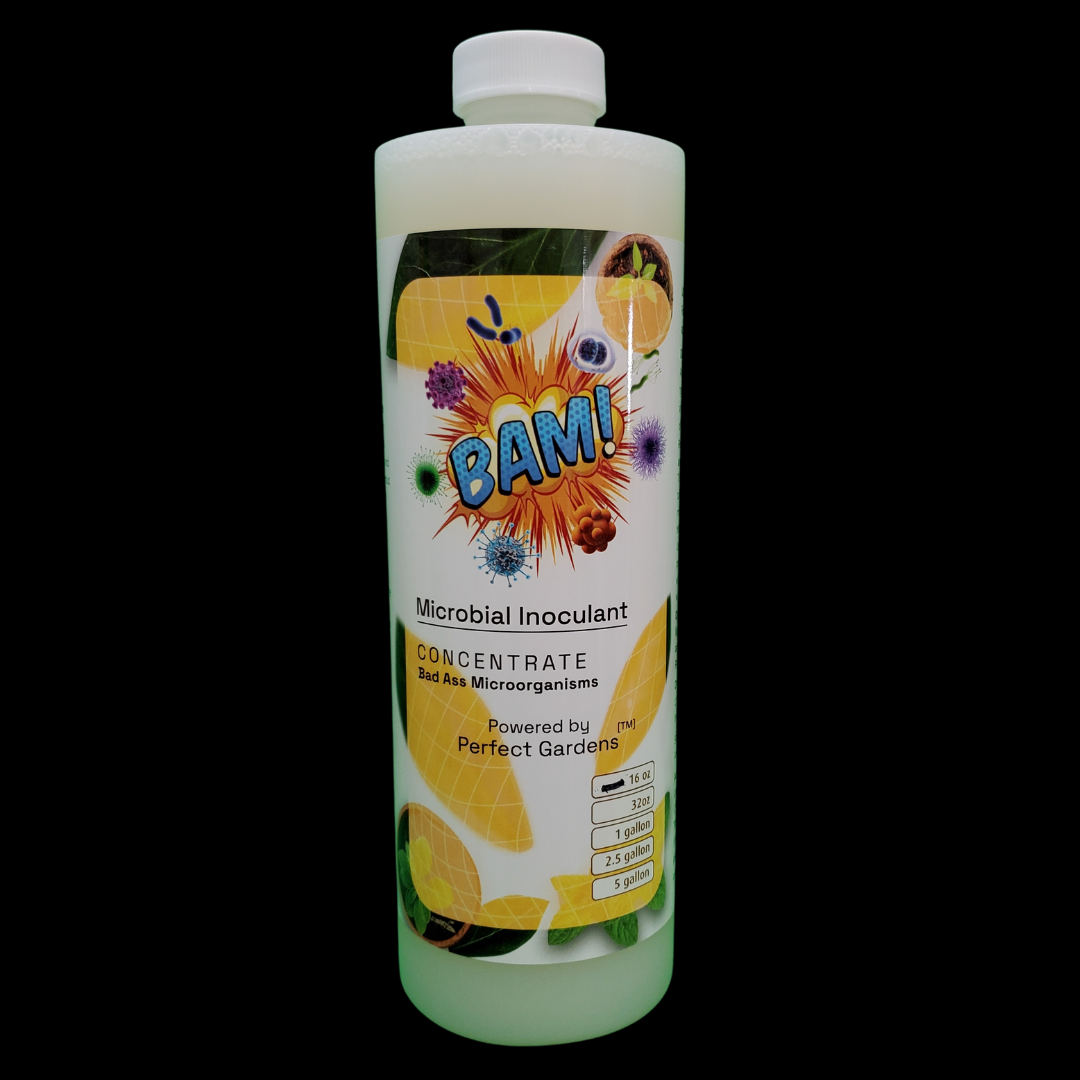
By using BAM! (Beneficial Ancient Microbes), you introduce a diverse spectrum of lactic acid bacteria, photosynthetic bacteria, and yeast. These microbes work in tandem with the trace minerals provided by Drops of Balance to break down organic matter and deliver nutrients directly to the plant.
The Synergy: Minerals + Microbes
The secret to a truly organic garden isn't just removing the "bad" stuff; it's about optimizing the "good" stuff. When you treat your water with Drops of Balance, you are essentially "cleaning the slate." You are removing the inhibitors (glyphosate, fluoride, chlorine) that prevent your soil from functioning correctly.
When you then add a microbial solution like BAM, those microbes have a safe, mineral-rich environment in which to multiply.
Real-World Results
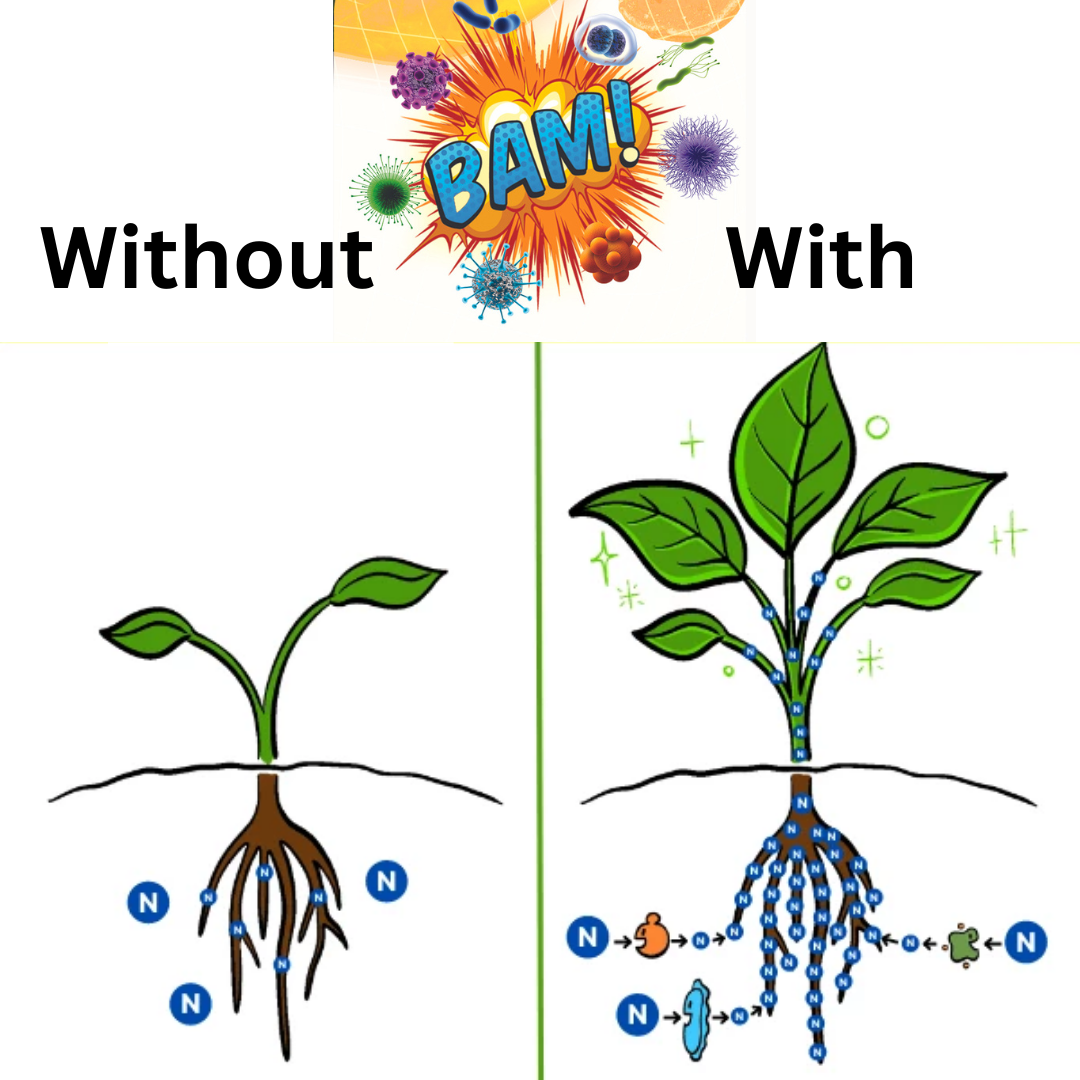
In our trials, we have seen a dramatic difference in plant vitality when moving from standard tap water to mineral-treated, microbially-active water.
As seen in the comparison above, the plant on the right: treated with a combination of balanced minerals and microbial inoculants: exhibits significantly more robust foliage and a more developed root system. The plant on the left, watered with standard untreated water, shows signs of nutrient deficiency and stunted growth, likely due to the presence of inhibitory chemicals in the water source.
Beyond Glyphosate: The Fluoride and Heavy Metal Factor
While glyphosate is a major concern, it isn't the only hurdle for gardeners. Many municipalities add fluoride to the water supply. Unlike chlorine, fluoride does not evaporate if the water is left out overnight. Fluoride is a known phytotoxin; it accumulates in the leaves of plants and can cause "tip burn" or necrosis, particularly in sensitive species like spider plants, lilies, and certain fruit trees.
The Drops of Balance mineral solution is specifically designed to address these inorganic contaminants. By using the same coagulation principles, the minerals bind to fluoride ions, rendering them inactive and preventing the plant from absorbing them. This is one of the most cost-effective ways to remove fluoride from water for large-scale gardening applications.
Summary of Benefits for the Garden
By switching to a natural mineral treatment for your garden water, you are achieving several goals simultaneously:
- Toxin Neutralization: Effectively managing glyphosate, fluoride, and heavy metal concentrations.
- Trace Mineral Supplementation: Providing over 70 trace minerals that are often missing from commercial fertilizers.
- Microbial Protection: Creating a safe environment for beneficial soil life to thrive.
- Improved Nutrient Uptake: Ending nutrient lockout caused by chemical chelators.
- Cost Efficiency: One 16oz or 32oz bottle of Drops of Balance can treat hundreds of gallons of garden water for a fraction of the cost of high-end filtration.
Conclusion
Your garden is an ecosystem, and water is its lifeblood. By understanding the chemical interactions between contaminants like glyphosate and your soil's biology, you can take proactive steps to protect your plants. You don't need a PhD or a $2,000 filtration system to have clean water; you just need to work with the natural laws of mineral chemistry.
If you are ready to see the difference that purified, mineralized water can make in your harvest, explore our full range of water treatment solutions and start giving your plants what they truly need to grow.