
Is Your Well Water Safe? The Hidden Toxins Lurking in Late Summer Wells
If you rely on a private well, you probably take a certain pride in your water. There’s something deeply satisfying about pulling your hydration directly from the earth, bypasssing the industrial chemical smells of municipal "city water." But as we settle into the dog days of August, that pristine image might need a reality check.
Late summer is a unique period for hydrology. As temperatures soar and rainfall becomes sporadic, the dynamics of your underground aquifer shift. What was safe in the spring might be problematic by the time your tomatoes are ripening. At Drops of Balance, we focus on the intersection of water science and wellness, and today we’re diving deep into why your well water might be hiding some late-summer secrets, and how you can ensure it remains a source of health rather than a cocktail of contaminants.
The "Concentration Effect": Why August Changes Your Water Chemistry
To understand why late summer is a high-risk time for well owners, we have to look at the physics of the aquifer. During the spring melt and early summer rains, aquifers are typically "recharged." This influx of fresh water dilutes naturally occurring minerals and potential pollutants.
However, by August, the water table often drops. As the volume of water in your well decreases, the concentration of dissolved solids increases. Think of it like a pot of soup simmering on the stove: as the liquid evaporates, the saltiness becomes more intense. In your well, this means that heavy metals, nitrates, and even natural fluoride become more concentrated in every glass you drink.
Furthermore, the heat of late summer can warm the upper layers of the soil, potentially increasing the activity of certain bacteria. If your well casing has even a hairline fracture, or if your well is shallow, the risk of surface contaminants leaching into your supply is at its annual peak.

Common Late-Summer Contaminants
According to water safety data, private wells are susceptible to a variety of "hidden" toxins that aren't always detectable by taste or smell. Let’s break down the primary culprits we see during the dry spells of late summer.
1. Heavy Metals (Arsenic, Lead, and Manganese)
Heavy metals occur naturally in the earth's crust. In many regions, arsenic and manganese are prevalent in the bedrock. During dry spells, as you pump more water for your garden and household needs, you may be drawing from deeper or more stagnant parts of the aquifer where these metals have settled. Arsenic is a known carcinogen, and even low-level exposure over time can lead to significant health issues.
2. Nitrates and Agricultural Runoff
If you live near farms or even large suburban lawns, August is a prime time for nitrate contamination. Nitrates from fertilizers can linger in the soil and, following a late-summer thunderstorm, wash rapidly into shallow or poorly sealed wells. High nitrate levels are particularly dangerous for infants and can interfere with the blood's ability to carry oxygen.
3. The Fluoride Factor
While many people focus on how to remove fluoride from water in city supplies, well owners often forget that fluoride is a naturally occurring mineral. In certain geological formations, natural fluoride levels can exceed safe drinking standards. Excessive fluoride isn't just a concern for dental health; it can impact bone density and neurological function. When your well level drops, these fluoride concentrations can spike.
4. Bacteria and Pathogens
Total coliform and E. coli are the two most common bacterial threats. In late summer, failing septic systems (which are often stressed by dry soil conditions) can leak pathogens into the groundwater. If your well is located "down-gradient" from a septic tank, the risk increases as the ground dries and cracks, providing direct pathways for bacteria to reach the water table.
Why Your Garden Feels the Stress Too
It isn’t just your family’s health at stake; your plants are often the "canaries in the coal mine" for water quality issues. When well water becomes high in salts and heavy metals, it can create a toxic environment for soil microbes.
Plants rely on a delicate exchange of nutrients mediated by beneficial bacteria and fungi. When you use untreated, late-summer well water, you might be inadvertently introducing high levels of chlorine (if you've shock-treated the well) or heavy metals that lock up nutrients.
This is where the concept of trace minerals for plants becomes vital. Plants don't just need N-P-K (Nitrogen, Phosphorus, Potassium); they require a full spectrum of ionic minerals to facilitate photosynthesis and build strong cellular structures. If your water is "hard" or contaminated, those essential minerals become "bio-unavailable," meaning they are present in the soil but the plant can't actually absorb them.

The Science of Water Treatment: How Drops of Balance Helps
At Drops of Balance, we utilize a specific mineral-based technology to address these issues. Our solution is a concentrated mineral complex: primarily sulfated ionic minerals: that works through a process called flocculation and ionic exchange.
When you add Drops of Balance to your well water, the ionic minerals go to work on a molecular level:
- Flocculation: The minerals bind to dissolved contaminants, including heavy metals and even certain pesticides. These contaminants are "clumped" together, making them heavy enough to sink to the bottom of your container or be easily caught by a simple sediment filter.
- Neutralization: The solution effectively helps to neutralize harmful elements like fluoride and chlorine, transforming them into inert, insoluble compounds.
- Mineralization: While removing the "bad stuff," it adds back a balanced profile of over 70 trace minerals. This is crucial for both human hydration and plant health.
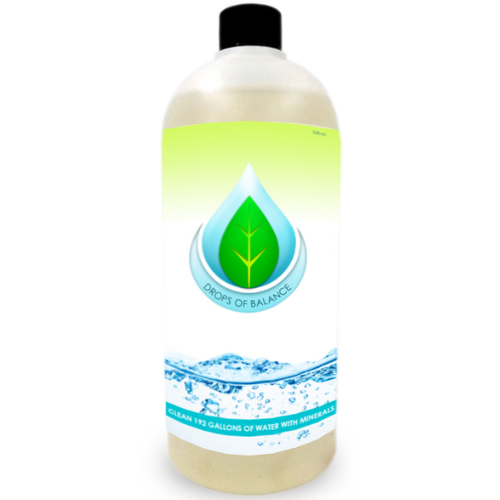
Using our 32oz Drops of Balance concentrate can treat up to 192 gallons of water, making it a highly efficient way to manage your late-summer water quality without installing massive, expensive filtration systems that often strip the water of its "life."
Action Steps for Well Owners in August
If you haven't tested your well lately, now is the time. Here is a scientific approach to ensuring your summer water is safe:
- Perform an Annual Test: At a minimum, test for coliform bacteria, nitrates, pH, and Total Dissolved Solids (TDS). In late summer, these metrics are most likely to fluctuate.
- Check for "New" Contaminants: Every 3-5 years, you should perform a more comprehensive test that includes arsenic, lead, and fluoride. If you are noticing a change in taste or a "metallic" smell, don't wait: test immediately.
- Inspect Your Well Head: Ensure the cap is tight and the casing is at least 12 inches above the ground. Clear away any tall weeds or debris where rodents or insects might nest.
- Implement a Mineral-Based Treatment: For daily drinking and garden use, treating your water with a solution like Drops of Balance ensures that even if your well has a "bad day" due to a sudden storm or a drop in the water table, the toxins are neutralized.
Better Water, Better Harvest
As we look toward the fall harvest, the quality of your water will dictate the quality of your food. By using a water treatment protocol that focuses on purification through mineralization, you aren't just removing toxins: you are optimizing the biological potential of every drop.
Whether you are trying to remove fluoride from water for your children’s health or looking for the perfect blend of trace minerals for plants to win the neighborhood pumpkin contest, understanding the seasonal shifts in your well water is the first step.
Don't let the "hidden toxins" of late summer catch you off guard. Take control of your water supply today, and see the difference that balanced, mineral-rich water can make for your home and your garden.
For more information on our lab-tested results and how we handle specific contaminants, visit our Safety Testing page or browse our full collection of water and soil solutions.