
Mineral Deficiencies in Humans: Is Your "Clean" Filtered Water Actually Part of the Problem?
For decades, the health-conscious community has focused on one primary goal regarding hydration: purity. We have been taught that the "cleaner" the water, the better it is for our bodies. This led to the widespread adoption of advanced filtration technologies like Reverse Osmosis (RO) and distillation. These systems are undeniably effective at one thing: stripping water of almost everything it contains.
However, as scientific understanding of human biochemistry evolves, a critical question has emerged: In our quest to remove toxins like chlorine and fluoride, have we inadvertently created a new health crisis? There is growing evidence that "clean" filtered water, devoid of its natural mineral structure, may contribute to chronic mineral deficiencies in humans.
The Chemistry of "Hungry" Water
To understand why pure water might be problematic, we must look at the chemistry of water itself. In nature, water is never "just" H2O. As it flows through rivers and over rocks, it picks up a complex profile of minerals, including calcium, magnesium, potassium, and dozens of trace elements. These minerals don't just provide nutrition; they stabilize the water's pH and chemical structure.
When water undergoes Reverse Osmosis, 92% to 99% of these beneficial minerals are removed. The resulting liquid is what some scientists refer to as "aggressive" or "hungry" water. Because it has been stripped of its mineral content, it is chemically unstable. In an attempt to reach a state of equilibrium, this demineralized water becomes highly reactive.
Research suggests that when we consume demineralized water, it may actually absorb minerals from the body and eliminate them through urine. A study highlighted by the World Health Organization (WHO) found that reduced mineral intake from water was not compensated for by diet alone. In fact, low-mineral water was responsible for an increased elimination of essential elements from the body, potentially leading to a net loss of systemic minerals over time.
The Role of Magnesium and Calcium in Hydration
While most people look to food for their primary source of minerals, water provides these elements in an ionic, highly bioavailable form. Calcium and magnesium are the two most prominent minerals lost during intensive filtration.
- Magnesium: This mineral is a cofactor in more than 300 enzymatic reactions in the human body, including energy production, protein synthesis, and muscle function.
- Calcium: Beyond bone health, calcium is critical for nerve signaling and cardiovascular stability.
When we remove these from our drinking water, the impact is twofold. First, we lose a consistent daily intake of these ions. Second, if we use that same "clean" water for cooking, the problem compounds. Studies show that RO water used for cooking can cause substantial losses of essential elements from food: reaching up to 60% for magnesium and calcium. Essentially, the water "pulls" the minerals out of your vegetables and grains during the boiling process, which are then typically drained away.
The Fluoride Dilemma: Why We Filter in the First Place
The drive for high-level filtration is largely fueled by the desire to remove fluoride from water and eliminate heavy metals like lead or arsenic. Fluoride, a common additive in municipal water supplies, is a controversial neurotoxin that many health-conscious individuals seek to avoid at all costs.
Standard carbon filters often fail to remove fluoride effectively, leading many to turn to Reverse Osmosis. The irony is that while RO successfully removes the fluoride, it also removes the trace minerals that help our bodies process nutrients and maintain electrolytic balance.
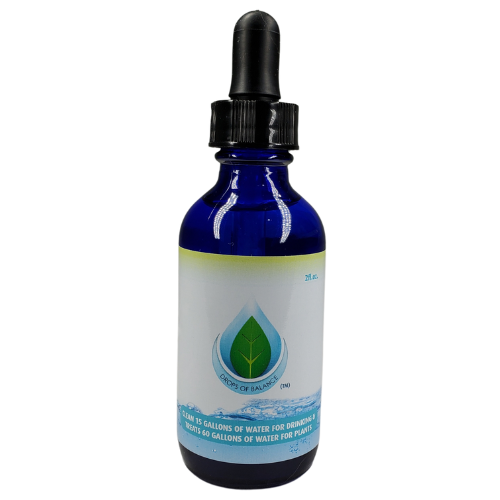
This is where the 2 oz Drops of Balance solution changes the equation. By using a concentrated sulfate-based mineral complex, you can treat tap water to precipitate out harmful contaminants like fluoride and chlorine, while simultaneously introducing a broad spectrum of over 70 trace minerals back into the solution. It transforms "dead" water into a living, mineral-rich resource.
Trace Minerals for Humans: The Missing Link
In the world of nutrition, we often focus on the "macros": calcium, potassium, and magnesium. However, the human body also requires a vast array of trace minerals like selenium, manganese, zinc, and copper in minute amounts. These trace minerals for humans act as the "spark plugs" for our biological systems. They are essential for:
- Enzymatic Function: Acting as catalysts for chemical reactions.
- Hormonal Balance: Supporting the thyroid and adrenal glands.
- pH Regulation: Maintaining the delicate alkaline-acid balance in the blood.
- DNA Repair: Aiding the body’s natural regenerative processes.
Modern industrial farming has depleted our soils of these trace elements, meaning our food is no longer the reliable source of minerals it once was. This makes the mineral content of our water more vital than ever before. If your filtration system is removing the few trace minerals left, you are effectively drinking "empty" calories in liquid form.
From Soil Health to Human Health
The connection between the minerals in our water and the health of our bodies is mirrored in the plant world. Just as humans suffer from "clean" water that lacks nutrition, plants struggle when they are given purified water without the necessary microbial and mineral support.
This is why we advocate for a holistic approach to wellness that starts with the water and extends to the soil. For those growing their own food, using a product like BAM! Microbial Inoculant ensures that the soil environment is rich in the beneficial bacteria needed to help plants uptake trace minerals. When you water your garden with mineral-rich, structured water, you are essentially pre-loading your food with the nutrients your body needs.

The Scientific Consensus and Mitigation
It is important to acknowledge that there is a scientific debate regarding the impact of demineralized water. Some health authorities, including the WHO in various reports, argue that a "balanced diet" should provide all necessary minerals. However, this assumes that the modern diet is, in fact, balanced and that the soil in which our food is grown is nutrient-dense.
For many, this is simply not the reality. The practical risk factors for mineral deficiency increase significantly if an individual:
- Consumes only purified/RO water.
- Relies on a standard modern diet (often high in processed foods).
- Experiences high levels of physical or mental stress, which depletes magnesium.
To mitigate these risks, you don't have to give up your high-quality filtration system. The solution is to remineralize. By adding back a full-spectrum mineral concentrate, you satisfy the water's "hunger," preventing it from leaching minerals from your body while providing the essential trace elements your cells crave.
Practical Steps for Healthier Hydration
If you are concerned about mineral deficiencies, consider the following protocol for your daily hydration:
- Test Your Water: Understand what is actually in your tap water. Many people filter out of fear without knowing their specific local water profile. You can view our safety testing to see how our mineral complex interacts with various contaminants.
- Add Trace Minerals: If you use an RO system, always add a mineral concentrate like Drops of Balance back into your storage tank or glass. This ensures the water is structured and bioavailable.
- Use Glass for Storage: Avoid plastic containers, especially when using "aggressive" purified water, as it can leach chemicals from the plastic more easily than mineralized water.
- Support Your Gut: Minerals require a healthy gut environment for optimal absorption. Integrating beneficial microbes into your lifestyle: both through fermented foods and healthy garden practices: can enhance your body's ability to utilize the minerals you consume.
Conclusion
"Clean" water should not mean "empty" water. While the technology to remove toxins like fluoride is a triumph of modern engineering, it is only half of the hydration equation. True health requires a return to the mineral balance found in nature's most pristine springs.
By understanding the relationship between filtration and mineral depletion, you can make informed choices that protect your body from the unintended consequences of purified water. It is time to move beyond simple filtration and embrace the science of mineral restoration. Your body, from your bones to your nervous system, will thank you for the balance.