
Nature’s Liquid Gold: Why Concentrated Trace Minerals Outperform Traditional Fertilizers
In the realm of modern horticulture and regenerative agriculture, a fundamental shift is occurring. For decades, the "NPK" paradigm: focusing almost exclusively on Nitrogen (N), Phosphorus (P), and Potassium (K): has dominated the fertilizer industry. However, emerging botanical research and soil science indicate that while these macronutrients are essential for plant volume, they are insufficient for true plant health, resilience, and nutrient density.
The emergence of concentrated liquid trace minerals, often referred to as "Nature’s Liquid Gold," represents a more sophisticated approach to plant nutrition. Unlike bulky, slow-release granular fertilizers that rely on mechanical breakdown and favorable weather conditions, liquid mineral solutions offer immediate bioavailability and a full spectrum of elements that mimic the natural complexity of virgin soil.
The NPK Fallacy: Why Macronutrients Aren't Enough
The traditional approach to fertilization often treats plants like industrial machines rather than complex biological organisms. Synthetic NPK fertilizers act as a "quick fix," providing a burst of growth that can be deceptive. While the plant may appear green and vigorous, it often lacks the structural integrity and chemical complexity provided by trace minerals for plants.
Research indicates that relying solely on NPK formulas creates systemic deficiencies. Essential elements such as molybdenum, manganese, zinc, and boron are frequently absent from standard commercial mixes. The impact of these missing elements is profound; for instance, scientific studies have shown that the application of molybdenum: a critical component in nitrogen fixation: can increase yields by 40% to 600% in soils where it was previously deficient. Without these trace elements, the metabolic pathways of the plant are stunted, leading to a harvest that is high in water content but low in actual nutritional value.
Bioavailability: Liquid vs. Bulky Slow-Release Fertilizers
One of the primary advantages of concentrated liquid minerals like those found at Drops of Balance is the speed and efficiency of uptake.
Bulky, slow-release fertilizers are often comprised of granules coated in polymers or sulfur. These require specific soil temperatures and moisture levels to "melt" and release their contents. This process is inherently imprecise. If the environment is too dry, the nutrients remain locked away; if it is too wet, the nutrients can leach into the groundwater before the roots can intercept them, causing environmental runoff issues.
In contrast, concentrated liquid minerals are typically delivered in an ionic, water-soluble form. This allows for:
- Immediate Root Uptake: The minerals are already dissolved and ready for the plant's cation exchange process.
- Foliar Feeding: Liquid solutions can be applied directly to the leaves (foliar spraying), allowing nutrients to bypass the soil entirely and enter the plant’s vascular system through the stomata.
- Precision Dosing: Growers can adjust mineral concentrations based on the specific growth stage of the plant, ensuring the best plant food delivery at the exact moment it is needed.
The Role of Trace Minerals in Plant Defense and Vitality
Trace minerals serve as enzymatic cofactors. In simpler terms, they are the "keys" that turn on the biochemical engines within a plant. Without them, the plant cannot effectively synthesize the secondary metabolites required for pest resistance and environmental stress tolerance.
- Zinc: Essential for the production of auxins, which govern stem elongation and leaf expansion.
- Manganese: Plays a critical role in photosynthesis, chloroplast formation, and nitrogen metabolism.
- Copper: Vital for lignin synthesis, which provides the structural strength that keeps plants from drooping or breaking under the weight of their fruit.
- Boron: Necessary for cell wall formation and the successful movement of sugars throughout the plant.
When a plant receives a full spectrum of over 70 trace minerals, its "immune system" is bolstered. This reduces the need for chemical pesticides, as the plant naturally produces compounds that deter insects and fungal pathogens. This holistic health is the cornerstone of a truly organic fertilizer program.

Microbial Synergy and Soil Structure
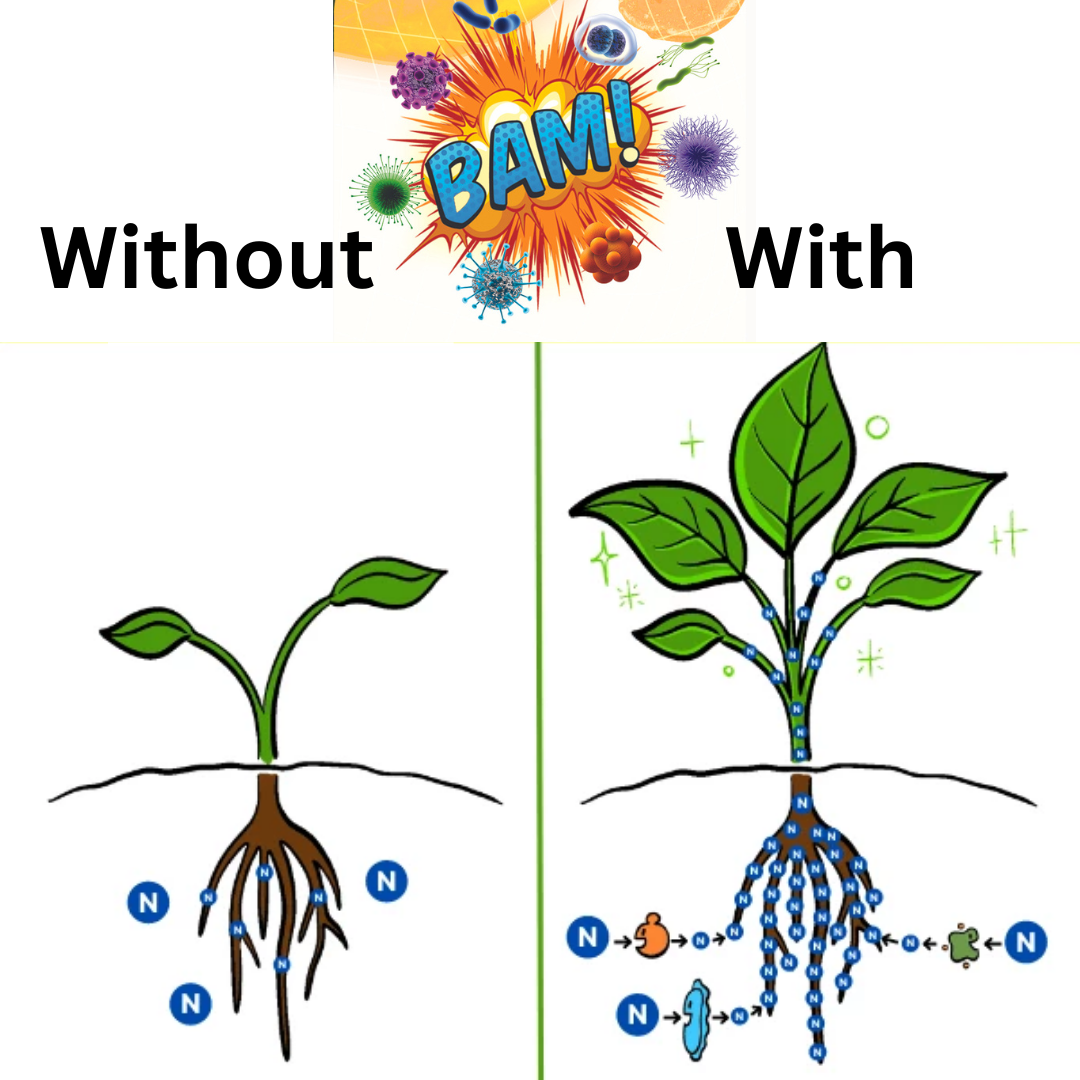
The relationship between minerals and soil microbiology is symbiotic. Traditional synthetic fertilizers often contain high salt indexes that can be toxic to beneficial soil microbes and mycorrhizal fungi. These microbes are the "delivery drivers" of the soil, breaking down organic matter and transporting minerals to the root zone.
When a concentrated mineral solution is applied, it doesn't just feed the plant; it nourishes the soil's biological community. Research suggests that plants receiving a diverse mineral profile are more effective at recruiting fungal partners. These fungi extend the reach of the root system, accessing pockets of moisture and nutrients that would otherwise be unreachable.
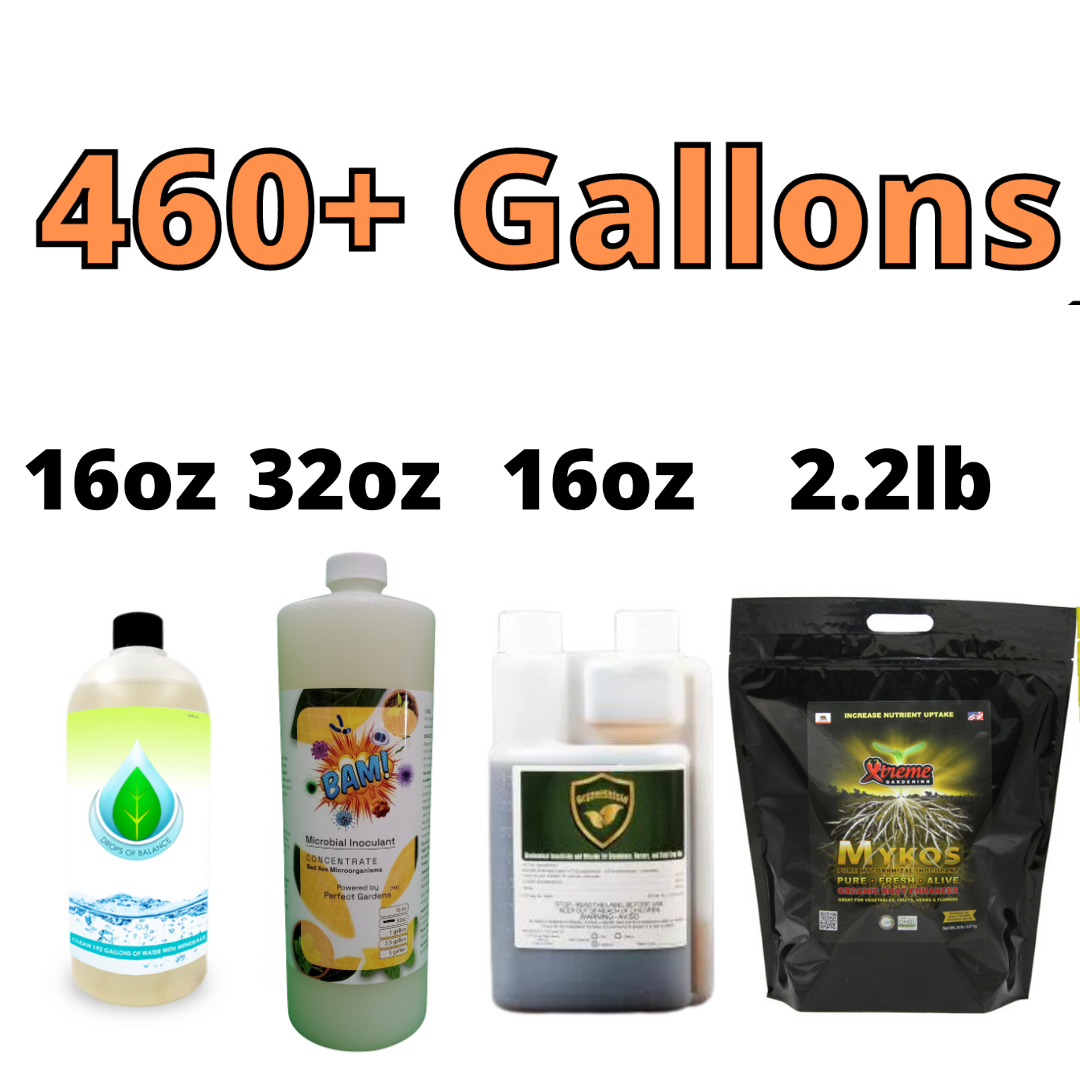
For growers looking for a comprehensive solution, products like the 460 gallon Water and Soil Treatment Solutions Bundle combine mineral concentrates with microbial inoculants and enzymes. This multifaceted approach ensures that the minerals provided are actually processed and absorbed by the plant rather than sitting stagnant in the soil.
Water Quality: The Foundation of Mineralization
A common mistake in plant care is using untreated tap water as the base for nutrient solutions. Tap water often contains chlorine, chloramines, and fluoride: chemicals designed to kill biological organisms in the water supply. When these are introduced to the garden, they can neutralize the very minerals and microbes you are trying to provide.
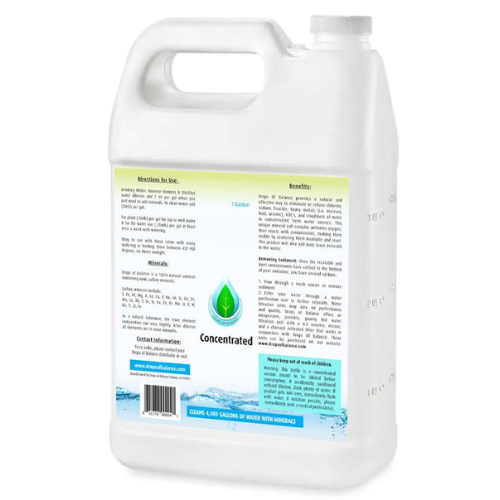
The purification process is a vital first step. A solution like the Drops of Balance 1 gallon concentrate works by neutralizing these toxins through a process of flocculation and precipitation. Once the harmful chemicals are mitigated, the solution replenishes the water with a concentrated dose of ionic sulfate minerals. This transforms ordinary tap water into a potent delivery vehicle for plant nutrition.
Sustainability and Environmental Impact
Beyond the health of the individual plant, the shift toward concentrated liquid minerals has significant environmental implications.
- Reduced Leaching: Because liquid minerals are more readily absorbed, there is less excess material to wash away into local watersheds. Traditional granular fertilizers are a leading cause of "dead zones" in oceans and lakes due to NPK runoff.
- Soil Conservation: By focusing on mineralization rather than just growth stimulation, liquid minerals help build long-term soil tilth and carbon sequestration capabilities.
- Efficiency: A single gallon of mineral concentrate can treat thousands of gallons of water. This drastically reduces the carbon footprint associated with transporting bulky bags of traditional fertilizer.
Conclusion: The "Liquid Gold" Standard
As we look toward the future of sustainable gardening and farming, it is clear that the "more is better" approach to macronutrients is falling out of favor. The "Liquid Gold" standard emphasizes the quality and spectrum of minerals over the sheer volume of nitrogen.
By utilizing concentrated trace minerals, growers can achieve:
- Higher nutrient density in food crops.
- Increased resistance to pests and disease.
- Enhanced soil microbial activity.
- Better water retention and overall plant vigor.
Whether you are managing a small indoor herb garden or an extensive outdoor farm, the transition to a mineral-centric approach is the most effective way to ensure your plants aren't just surviving, but thriving. For more information on how to integrate these solutions into your routine, explore our frequently asked questions or browse our full collection of mineral concentrates.