
The 'Invisible' Threat to Your Spring Garden: Chlorine vs. Soil Microbes
You've spent weeks building your soil. You've mixed in compost, added worm castings, maybe even splurged on a microbial inoculant. Your spring garden beds are finally ready, a living ecosystem of beneficial bacteria, fungi, and microorganisms ready to feed your plants.
Then you grab the garden hose and accidentally hit the reset button.
Most gardeners don't realize that the same tap water they use to nurture their plants is simultaneously working against them. Chlorine and chloramines, the disinfectants added to municipal water supplies, don't discriminate. They're designed to kill microorganisms, and they do their job exceptionally well. Unfortunately, they can't tell the difference between a pathogen in your drinking water and a beneficial bacterium in your soil.
Let's talk about what's really happening when you water your garden with untreated tap water, and why it matters more than you think.
The Microbial Massacre: What Chlorine Actually Does
When chlorinated water hits your soil, it doesn't just sit there politely. Chlorine is a powerful oxidizing agent, meaning it disrupts cellular processes in microorganisms. At typical municipal water concentrations (around 4 parts per million according to CDC recommendations), chlorine primarily affects organisms in the top half-inch of soil where it first makes contact.
Here's the part that seems reassuring at first: research shows that soil microbe populations can recover remarkably fast, sometimes within just two days after chlorinated water application stops. One study continuously applied highly chlorinated water to soil for 126 days, and microbial populations bounced back to pre-treatment levels within 48 hours of stopping.
But here's the catch: you're not stopping. You're watering every few days throughout the entire growing season.

The "One Step Forward, Two Steps Back" Problem
Think of it this way: imagine you're trying to build a business, but every two days someone comes in and fires half your staff. Sure, you can rehire and rebuild quickly, but you never actually get ahead. You're constantly in recovery mode instead of growth mode.
This is exactly what happens in your garden soil with regular tap water applications. While it's true that chlorine binds quickly to soil particles and organic matter (which limits its penetration depth), the constant disruption to microbial populations in that critical top layer creates a chronic problem.
That top half-inch of soil? That's precisely where most of the nutrient cycling action happens. This is the zone where organic matter gets broken down, where nutrients become plant-available, and where the soil food web does its most intensive work. Repeatedly knocking back these populations, even temporarily, means you're never allowing your soil ecosystem to reach its full potential.
Chloramine: The More Persistent Troublemaker
If you're thinking "well, at least it's only temporary," here's where things get more complicated. Many municipal water systems have switched from chlorine to chloramine, a combination of chlorine and ammonia that's more stable and doesn't dissipate as quickly.
Chloramine doesn't evaporate when you leave water sitting out overnight (unlike free chlorine). It doesn't break down as readily in soil. It's more persistent, which is exactly why water utilities prefer it, but that persistence is problematic for gardeners.
Research on hydroponic systems has shown that even low concentrations of chloramine (0.5 ppm) can affect plant growth within just one hour of exposure. Lettuce exhibits root browning, and sensitive plants like African violets show visible damage. While most garden plants are hardier than delicate hydroponics, the cumulative effect over an entire growing season adds up.
Why Spring Gardens Are Especially Vulnerable
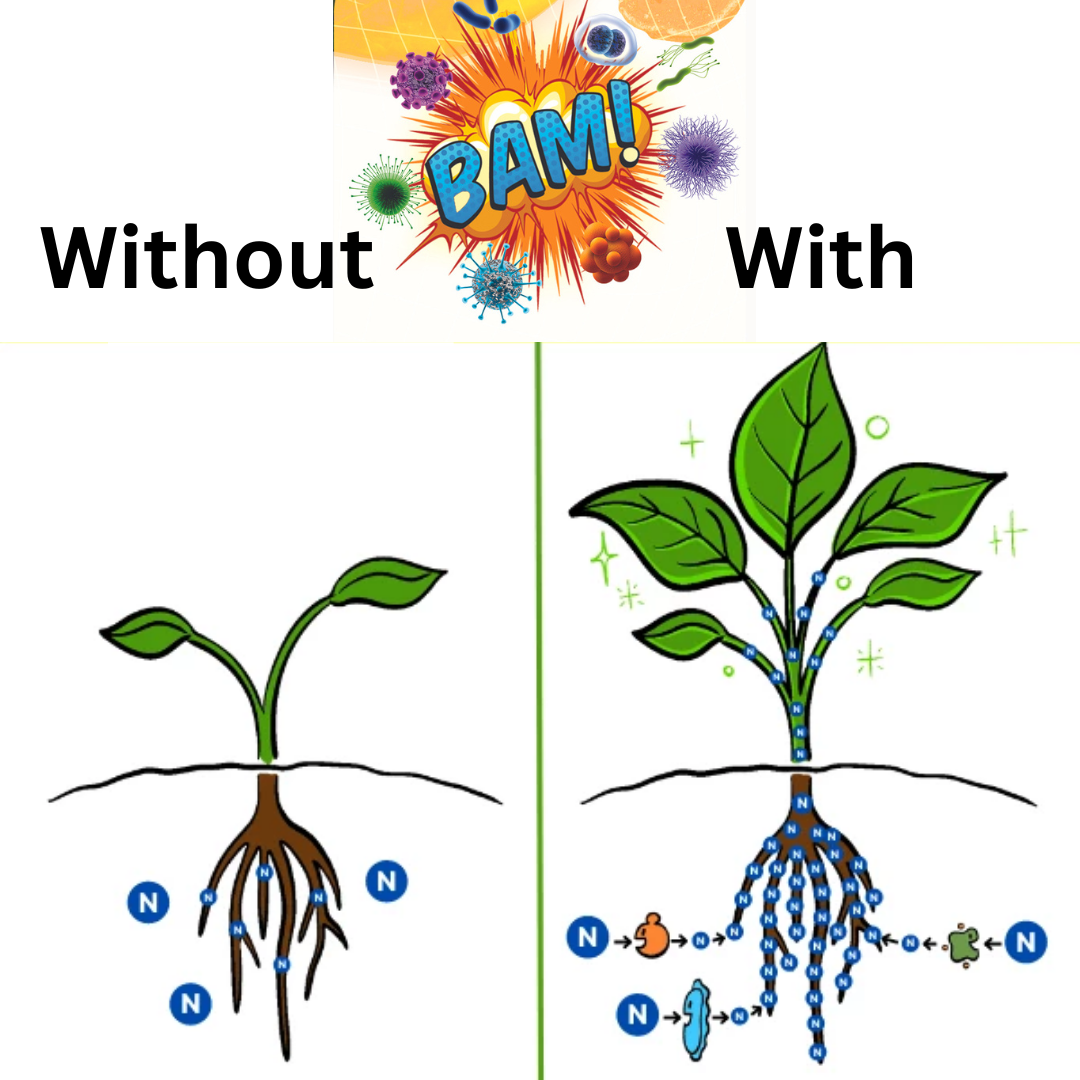
There's a reason this matters so much right now in spring. Your garden is in its most critical growth phase, seedlings are establishing root systems, transplants are recovering from shock, and all those beneficial microbes you've been cultivating are trying to colonize newly planted areas.
This is when disruption to soil biology hits hardest. Young plants rely heavily on microbial partnerships for nutrient uptake. Mycorrhizal fungi need time to establish connections with root systems. Nitrogen-fixing bacteria need stable populations to do their work. Every time you water with chlorinated tap water during this establishment period, you're setting back these crucial relationships.
It would take 65 ppm of chlorine to kill microorganisms throughout the top six inches of soil, more than 10 times the concentration in drinking water. But you don't need to sterilize your soil to cause problems. Even partial, repeated suppression of microbial activity during peak growing season means slower nutrient cycling, reduced disease suppression, and ultimately, less productive plants.
The Pool Water Warning
Before we move to solutions, here's an important note: if you've ever been tempted to use pool water for your garden (maybe you're draining it for the season or changing the water), don't. Pool water contains chlorine concentrations many times higher than tap water, easily enough to cause lasting damage to soil biology. This is one of those "too good to be true" temptations that can actually set your garden back months.
The Solution: Neutralize and Mineralize
The good news? You don't need to install an expensive whole-house filtration system or haul water from a spring. The solution is actually remarkably simple, you just need to neutralize those disinfectants before they reach your soil.
Drops of Balance addresses this problem in two ways simultaneously. First, it neutralizes chlorine and chloramines on contact, not by letting them off-gas over 24 hours, but instantly, so you can water immediately. Second, it adds back the trace minerals that modern water treatment removes but that your soil microbes and plants actually need.
Think of it as flipping the script: instead of water being a threat to your soil biology, it becomes a delivery system for both protection and nutrition.

How to Implement This in Your Garden Routine
The application is straightforward: for garden watering, add 0.5 ml of Drops of Balance per gallon of tap water. Mix it in your watering can or add it to your hose-end sprayer reservoir. The solution works instantly, so there's no waiting period.
For a standard 5-gallon bucket (what most gardeners use for hand-watering), that's just 2.5 ml, about half a teaspoon. For those running drip irrigation or soaker hoses, you can add the concentrate to your water source or use an injection system for larger gardens.
The trace minerals in the formula, including ionic magnesium, calcium, potassium, and over 70 other elements, aren't just beneficial for your plants. They're also food for your soil microbes. Many of these elements play crucial roles in microbial metabolism and enzyme function, essentially supporting the very organisms you're protecting from chlorine damage.
The Bigger Picture: Soil Health is a Long Game
Here's the reality that research doesn't always capture: yes, microbe populations can recover quickly from chlorine exposure. But "recovery" and "thriving" are two different things. A soil ecosystem that's constantly bouncing back from disruption is not the same as a soil ecosystem that's been allowed to develop complex, stable microbial communities over time.
Mature, undisturbed soil biology provides benefits that go far beyond basic nutrient cycling. Established fungal networks improve drought resistance. Diverse bacterial populations enhance disease suppression. Complex soil food webs create more stable, resilient growing conditions overall.
When you protect your soil microbes from the constant chlorine disruption cycle, you're giving these communities the chance to truly establish themselves: not just exist, but thrive. That's the difference between an okay garden and an exceptional one.
The "Why Risk It?" Principle
Even if the scientific literature suggests that chlorine at drinking water levels poses only minimal, temporary threats to soil biology, there's a fundamental question worth asking: why take the risk at all when the solution is so simple?
Gardening is already full of variables you can't control: weather, pests, genetic variation in seeds. Why not eliminate one variable you can control? Especially when doing so takes less than a minute and costs pennies per watering session.
This is particularly relevant for gardeners who've invested in building their soil through composting, cover cropping, or purchasing microbial inoculants. If you've spent money on beneficial bacteria products or time brewing compost tea, it makes little sense to then water with something that works against those efforts: even partially.
Moving Forward This Spring
As you head into the peak of spring planting season, consider this: every watering is either building up your soil ecosystem or knocking it back down. The difference between these two paths isn't dramatic or immediate: it's cumulative, showing up over weeks and months as the difference between plants that merely survive and plants that truly thrive.
Your spring garden is counting on you to give it the best possible start. That means nurturing not just the plants you can see, but the invisible army of microorganisms working beneath the surface. Protecting them from chlorine while simultaneously feeding them with trace minerals is one of the simplest, highest-impact interventions you can make.
The choice is yours: keep hitting the reset button every few days, or give your soil biology the stable foundation it needs to do what it does best: feed your plants and build genuine soil health that compounds over time.
Your garden: and those billions of hardworking microbes( will thank you for it.)