
The Sourdough Secret: Why Your Tap Water Might Be Killing Your Starter
If you have ever spent a week meticulously feeding a flour-and-water mixture only to have it sit there like a grey, bubbly-less puddle of disappointment, you aren’t alone. We often blame the flour, the temperature of the kitchen, or some mysterious "bread ghost" that just didn’t want us to have toast that morning. But more often than not, the culprit is the very thing we think is keeping us hydrated: our tap water.
At Drops of Balance, we talk a lot about the intersection of water chemistry and health. Usually, that’s about human health or plant vitality. But today, we’re looking at a different kind of life form: the wild yeast and lactic acid bacteria living in your sourdough starter. Here is the scientific reality of why your municipal water might be working against your baking goals and how a few drops of minerals can turn your "lazy" starter into a powerhouse.
The Micro-Ecosystem of Sourdough
Sourdough isn't just a recipe; it’s a biological culture. A healthy starter is a symbiotic colony of wild yeast (primarily Saccharomyces exiguus) and lactic acid bacteria (LAB). These microorganisms are incredibly sensitive to their environment. They rely on the minerals in the water to build cell walls and facilitate enzymatic reactions.
When everything is in balance, the yeast consumes the sugars in the flour, producing carbon dioxide (which makes the bread rise) and ethanol. Meanwhile, the bacteria produce lactic and acetic acids, giving sourdough its characteristic tang and preserving the bread from spoilage. However, municipal water treatment is designed specifically to prevent this kind of microbial growth in our pipes.

A rustic scene showing the bubbling activity of a healthy, mineral-rich sourdough starter next to a freshly baked loaf.
The Antimicrobial Attack: Chlorine and Chloramine
The biggest hurdle for any baker is the disinfectant used by the city. Municipalities use chlorine or chloramine to kill pathogens like E. coli and Giardia. The problem is that these chemicals don’t discriminate between "bad" bacteria in the pipes and "good" bacteria in your jar.
- Chlorine: This is a volatile gas. If your city uses straight chlorine, you might have heard the old trick of letting your water sit out overnight so the gas can evaporate. While partially effective, it’s not foolproof, and residual levels can still inhibit yeast activity.
- Chloramine: This is a combination of chlorine and ammonia. It is much more stable than chlorine, meaning it doesn’t evaporate. No amount of sitting on the counter or boiling for twenty minutes will get rid of it. If your water contains chloramine, it is actively working to sterilize your starter every time you feed it.
From a scientific standpoint, these halogens work by oxidizing the cellular membranes of microorganisms. For a tiny yeast cell, a "safe" level of chlorine in drinking water can be a lethal dose. This leads to a starter that is slow to rise, has a weak aroma, or eventually develops mold because the beneficial bacteria aren't strong enough to keep the pH low.
Fluoride: The Metabolic Disruptor
While chlorine attacks the outside of the cell, fluoride can mess with the inside. Fluoride is frequently added to municipal water for dental health, but in the world of microbiology, it can act as an enzyme inhibitor. Research suggests that fluoride can interfere with glycolysis: the process by which yeast breaks down sugar into energy.
When your yeast can’t process sugar efficiently, you get less CO2. This results in a "heavy" bread with a tight crumb rather than those beautiful, airy holes (the "open crumb") that sourdough bakers strive for. You can learn more about what we test for in our Safety Testing reports.
Why Distilled Water Isn't the Answer
Once bakers realize their tap water is the problem, they often swing to the other extreme: distilled or Reverse Osmosis (RO) water. While these options remove the toxins, they also remove the "good stuff."
Microorganisms require minerals like calcium, magnesium, and potassium to thrive. In a distilled environment, the osmotic pressure changes. Because the water has zero mineral content, it can actually "pull" minerals out of the yeast cells to reach equilibrium, weakening the culture. This is why many professional bakers prefer spring water: it has the mineral "backbone" that supports fermentation.
The Drops of Balance Solution: Flocculation and Mineralization
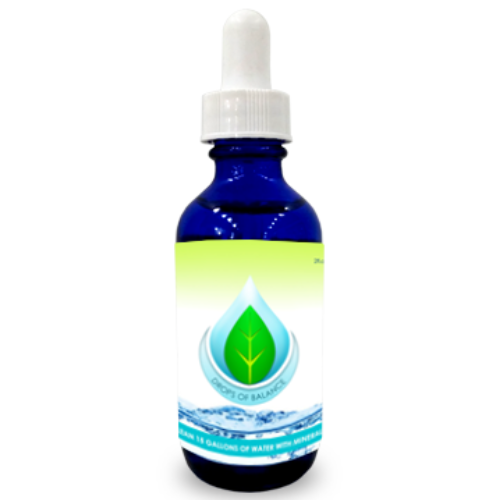
This is where the science of Drops of Balance comes into play. Our concentrated mineral solution uses ionic sulfate minerals to clean and optimize water specifically for biological life.
How it works:
When you add Drops of Balance to your tap water, a process called flocculation begins. The sulfate minerals bind to toxins like chlorine, fluoride, and heavy metals, causing them to clump together and become insoluble. These neutralized toxins then settle to the bottom or are easily filtered out.
But we don't just take the bad stuff out. We are adding back a complex profile of over 70 trace minerals in a bioavailable, ionic form. For your sourdough starter, this is like a shot of adrenaline.
- Magnesium: Acts as a cofactor for over 300 biochemical reactions in yeast, including the production of ATP (energy).
- Calcium: Strengthens the cell walls of the yeast, making the culture more resilient to temperature fluctuations.
- Trace Minerals: Zinc, selenium, and copper support the long-term health and "evolution" of your wild yeast strain.
You can explore our full range of mineral solutions in our Collections.

A microscopic view showing healthy, dividing yeast cells, illustrating the biological vitality supported by mineral-rich water.
Practical Steps: Improving Your Bake Tomorrow
If you want to see the difference for yourself, you don't need a lab. You just need a jar.
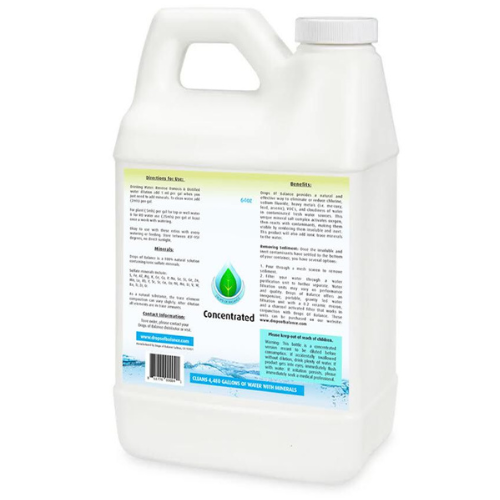
- Treat Your Water: Add the recommended dose of Drops of Balance to a gallon of tap water (usually about 2.5ml for municipal water). Let it sit for a few minutes to allow the minerals to work their magic. For specific ratios, check out our FAQ.
- The "Split Test": If you’re feeling adventurous, split your starter into two jars. Feed one with untreated tap water and the other with Drops of Balance treated water.
- Observe the Rise: Watch the treated jar. You’ll likely notice a more vigorous rise and a "cleaner" fermentation smell: think fruity and tangy rather than vinegary or chemical.
A Holistic Approach to Fermentation
At the end of the day, bread is a living thing. The same principles that apply to the soil in your garden: removing toxins and providing diverse minerals: apply to the "soil" of your sourdough starter. When we respect the biology of the microorganisms we are working with, they reward us with better flavor, better texture, and better nutrition.
By using a mineral-based water treatment, you aren't just making better bread; you’re ensuring that the water you use to hydrate your dough is as clean and life-supporting as the organic flour you're mixing it with.
If you're ready to take your fermentation game (and your overall health) to the next level, check out our About Us page to learn more about our mission to bring mineral-rich, clean water to every home.
Happy baking, and may your starter always be bubbly!