
Happy Hens, Healthy Eggs: Why Your Backyard Flock Needs More Than Just Scratch
If you’ve spent any time in the backyard chicken community, you know the "chicken math" is real, and the obsession with deep orange yolks is even more real. We bring these birds into our lives for fresh eggs, pest control, and: let’s be honest: the entertainment value of their "flock talks." But as many new homesteaders quickly discover, keeping a flock alive is easy; keeping a flock thriving is a science.
One of the most common mistakes in poultry management is the over-reliance on "scratch" grains. While scratch is a fantastic high-energy treat that encourages natural foraging behavior, it is essentially the avian equivalent of a granola bar. It’s calorie-dense but nutritionally incomplete. To produce those rock-hard shells and nutrient-dense yolks we crave, hens require a complex symphony of minerals and clean water that the average tap-and-grain setup simply doesn't provide.
The Biological Toll of an Egg
To understand why your flock needs more support, we have to look at the sheer biological effort required to produce a single egg. An eggshell is approximately 90% pure calcium carbonate. A high-producing hen will lay around 250 to 300 eggs a year. That is a massive amount of mineral output. If that calcium isn't readily available in her diet, her body will actually pull the minerals from her own skeletal structure to ensure the egg is formed. This leads to brittle bones, "caged layer fatigue," and a shortened lifespan.
However, calcium doesn't work alone. For a hen to metabolize calcium effectively, she needs phosphorus, Vitamin D, and a suite of trace minerals. Scientific research shows that happy, well-fed hens produce eggs with significantly higher nutritional profiles: often containing up to 66% more Vitamin A and twice the amount of Vitamin E compared to commercial, factory-farmed eggs.

Why Tap Water is the Weak Link
We talk a lot about feed, but we rarely talk about the medium that carries those nutrients through the bird’s body: water. Water makes up about 75% of a hen’s body weight and nearly 65% of the egg itself. If the water quality is poor, the bird’s health will follow suit.
Most backyard flocks are hydrated using standard municipal tap water. While this water is "safe" by human standards, it contains two major disruptors for poultry health: chlorine and fluoride.
- Chlorine: Chlorine is a powerful antimicrobial designed to kill bacteria. The problem is that it doesn't distinguish between "bad" bacteria in the pipes and the "good" bacteria in your hen's gut. A chicken’s digestive system is the engine of her immune system. Constant exposure to chlorinated water can strip the gut microbiome, leading to poor nutrient absorption and increased susceptibility to diseases like Coccidiosis.
- Fluoride and Heavy Metals: These can interfere with mineral uptake. When a hen’s system is busy dealing with toxic load, it has fewer resources to dedicate to feather quality and egg production.
By treating your flock's water with Drops of Balance, you aren't just cleaning the water; you are restructuring it. Our mineral solution uses a 100-million-year-old geological source of sulfated minerals to pull toxins like chlorine and fluoride out of the water while simultaneously infusing it with over 100 ionic trace minerals.
The Role of Trace Minerals in Feather and Immune Health
Beyond the egg, minerals are the building blocks of the hen herself. Consider the "molt": the annual process where chickens shed their old feathers and grow new ones. Feathers are made of keratin, a protein that is incredibly high in sulfur.
If a hen is deficient in trace minerals, especially sulfur-based compounds, her molt will be long, ragged, and stressful. You’ll see "feather picking" behaviors where the flock starts pecking at each other to find the minerals they are missing. By adding a concentrated mineral solution to their waterer, you provide the bioavailable sulfur needed for rapid, healthy feather regrowth.
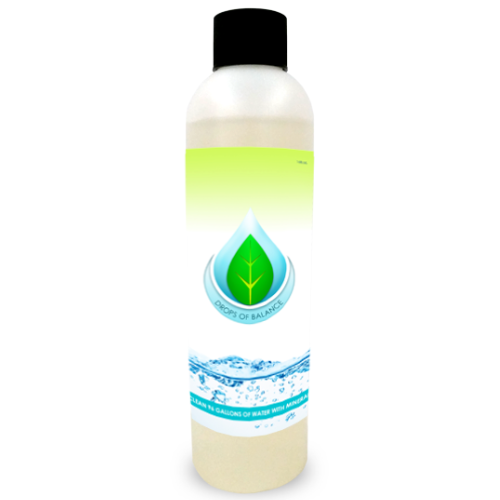
Using a smaller bottle like our 8oz Drops of Balance is an easy way to start. A few milliliters per gallon of water is all it takes to transform standard tap water into a mineral-rich tonic that mimics the natural springs and mineral deposits a wild bird would seek out.
The "Invisible" Benefit: Deep Orange Yolks
We’ve all seen the difference. The store-bought egg has a pale, yellow yolk that breaks if you look at it wrong. The backyard egg has a deep, saffron-colored yolk that stands tall. While this color primarily comes from the carotenoids in greens and bugs, the density and nutrient profile of that yolk are stabilized by mineral balance.
When a hen is hydrated with mineral-rich water, her metabolic efficiency increases. She is better able to extract the nutrients from her organic feed and the forage she finds in the yard. This creates a "multiplier effect." Better water leads to better digestion, which leads to better nutrient extraction, which leads to a superior egg.
How to Implement a Mineral Routine for Your Flock
Integrating Drops of Balance into your coop management is straightforward. Whether you use a gravity-fed waterer, nipple drinkers, or a simple galvanized bucket, the process remains the same:
- Step 1: Clean the Waterer. Before adding minerals, ensure your waterer is free of algae and biofilm.
- Step 2: Treat the Water. Add the recommended dosage of Drops of Balance (typically 2.5ml per gallon for standard cleaning, or less if you are just looking for a mineral boost).
- Step 3: Observe. Within a few weeks, many poultry keepers notice their hens have shinier feathers, more vibrant combs, and shells that are noticeably harder to crack.

For those managing larger homesteads or multiple coops, our larger concentrate options provide a more cost-effective way to treat hundreds of gallons at a time. It’s a small investment that pays dividends in bird longevity and the nutritional quality of the food you put on your family’s table.
The Connection Between Soil, Water, and Bird
At Drops of Balance, we believe in a holistic approach to health. The same minerals that help your garden thrive are the same minerals your livestock need. There is a direct line from the quality of the soil to the quality of the grass, the health of the hen eating that grass, and finally, the health of the human eating that egg.
If you are interested in how minerals affect the rest of your homestead, you can check out our About Us page to learn about our mission, or dive into our Safety Testing to see exactly how we handle contaminants.
Your hens do a lot for you. They turn your kitchen scraps into breakfast and your yard waste into high-quality fertilizer. Returning the favor with clean, mineral-dense water is the least we can do to ensure they live long, "egg-cellent" lives.
Summary Checklist for a Healthy Flock:
- Move Beyond Scratch: Use a high-quality layer pellet or ferment your grains for better digestibility.
- Provide Grit and Calcium: Always have oyster shells or crushed eggshells available free-choice.
- Clean the Water: Eliminate chlorine and fluoride using Drops of Balance.
- Support the Molt: Ensure high sulfur and trace mineral intake during the fall.
- Encourage Foraging: Give them access to fresh pasture or garden "over-growth" to boost Vitamin A and Omega-3s.
By focusing on these foundational elements, you aren't just raising chickens: you're cultivating a tiny, productive ecosystem right in your backyard.
Want to learn more about the science of minerals? Explore our FAQ or browse our collection of educational books.