
The Ultimate Guide to Trace Minerals for Soil: Everything You Need for a Better Vegetable Harvest
For decades, conventional agriculture and home gardening have focused almost exclusively on a "Big Three" approach to plant nutrition: Nitrogen (N), Phosphorus (P), and Potassium (K). While these macronutrients are essential for structural growth and basic survival, they represent only a fraction of the nutritional spectrum required for high-vitality plants. In the pursuit of maximizing yields, we have inadvertently ignored the intricate dance of trace minerals that dictate flavor, nutrient density, and systemic resilience.
Modern soil depletion is a well-documented phenomenon. Intensive farming practices and the reliance on synthetic fertilizers have stripped the earth of the 70 to 80 essential trace elements necessary for optimal biological function. This guide explores the scientific necessity of remineralizing your soil and how to use precision mineral solutions to achieve a superior vegetable harvest.
The Science of Mineral Depletion in Modern Soils
Research indicates that the nutritional profile of our food has significantly declined over the last half-century. A tomato grown today may contain significantly less Vitamin C, calcium, and iron than one grown in the 1950s. The root cause is not just the variety of the plant, but the state of the soil. When we apply N-P-K fertilizers, we stimulate rapid growth, but we do not replace the complex minerals the plant extracts from the earth.
Trace minerals, nutrients required in minute quantities, act as enzymatic cofactors. Without them, the biochemical pathways responsible for producing antioxidants, vitamins, and complex sugars are compromised. For an organic gardener, soil health is the primary metric of success. If the minerals are missing from the soil, they will be missing from your plate.
Essential Trace Minerals and Their Physiological Roles
To master vegetable nutrition, one must understand the specific functions of micronutrients. While plants require dozens of elements, several are frequently deficient in standard garden soils.
Zinc (Zn)
Zinc is fundamental for the synthesis of auxins, the hormones responsible for stem elongation and leaf expansion. It also plays a critical role in the transformation of carbohydrates. A deficiency often manifests as stunted growth and small, distorted leaves.
Boron (B)
Boron is essential for cell wall formation and the structural integrity of the plant. More importantly for the vegetable gardener, boron facilitates the transport of sugars from the leaves to the fruit or roots. Without adequate boron, tomatoes may develop hollow centers, and root crops like carrots may become brittle or develop "heart rot."
Copper (Cu)
Copper is a key component in photosynthesis and respiration. It assists in the metabolism of carbohydrates and proteins and intensifies the flavor and color in vegetables. Copper also contributes to the strength of the plant’s vascular system, helping it stand upright and transport water efficiently.
Manganese (Mn) and Iron (Fe)
These elements are the engines of chlorophyll production. Manganese is involved in the "water-splitting" reaction of photosynthesis, while iron is necessary for enzyme functions that manage energy transfer. Iron deficiency is easily spotted by interveinal chlorosis, where the leaves turn yellow while the veins remain green.
The Mineral-Microbe Synergy: Why BAM! is Critical
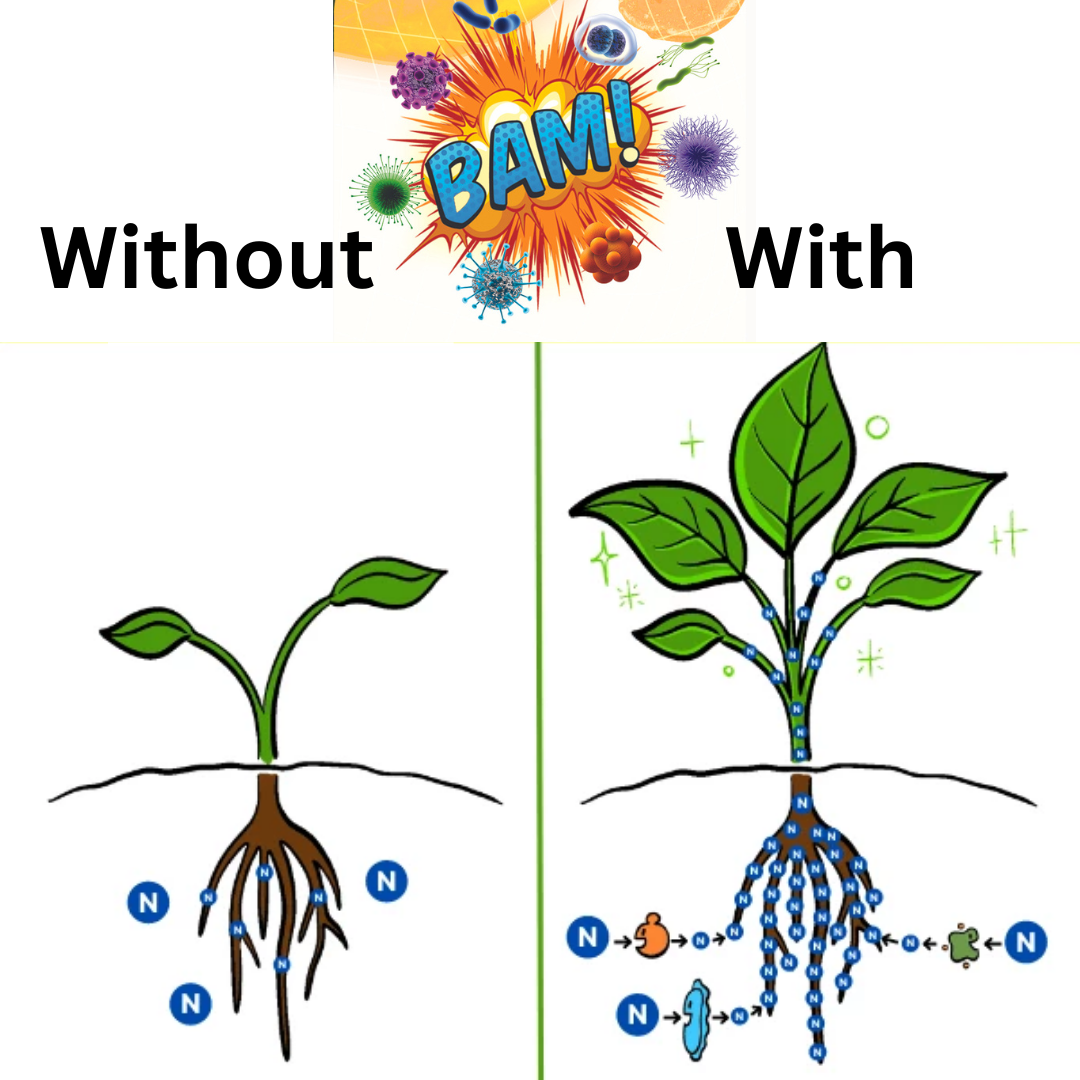
Applying minerals to the soil is only half the battle. Minerals in their raw, rock-based form are often "locked" and unavailable to plant roots. In a healthy ecosystem, soil microbes, bacteria and fungi, secrete organic acids that dissolve these minerals, converting them into an ionic, plant-available form.
This is where the relationship between mineral supplements and microbial inoculants becomes vital. Products like BAM! (Beneficial Adaptive Microbes) provide the biological labor force needed to process these nutrients. By introducing a diverse consortium of microorganisms, you ensure that the trace minerals you add are actually being absorbed by the plant’s root system.

When you combine a mineral-rich water source with a microbial inoculant like BAM!, you create a "nutrient loop." The microbes break down minerals for the plant, and in exchange, the plant provides the microbes with carbon-rich exudates (sugars) produced during photosynthesis. This synergy is the hallmark of truly healthy, living soil.
The Hidden Culprit: How Tap Water Undermines Your Soil
Many gardeners spend significant resources on organic compost and mineral amendments, only to undermine their efforts every time they pick up the hose. Municipal water supplies are treated with chlorine or chloramine to kill pathogens. Unfortunately, these chemicals do not distinguish between harmful pathogens and the beneficial soil microbes required for nutrient cycling.
Furthermore, tap water often contains high levels of fluoride and dissolved solids that can lead to mineral lockout, where the chemical composition of the water prevents plants from absorbing the very nutrients they need.
To combat this, treating your irrigation water is essential. Drops of Balance utilizes a concentrated solution of sulfated trace minerals that work through a process called coagulation and flocculation. This process neutralizes toxins like chlorine and fluoride while simultaneously infusing the water with a full spectrum of ionic minerals.

Using the 2 oz Drops of Balance concentrate allows you to transform standard tap water into a mineral-dense, biological-friendly hydration source for your garden. This ensures that your soil biology remains intact and your plants receive a steady "IV drip" of essential elements.
Steps to Mastering Plant Nutrition with Trace Minerals
- Assess and Remineralize: Start by adding high-quality rock dusts (like basalt or glacial rock flour) to your garden beds in the fall or early spring. This provides a long-term reservoir of elements.
- Neutralize Toxins: Use Drops of Balance to treat your garden water. Removing chlorine and chloramine is non-negotiable if you want to maintain a healthy soil microbiome.
- Inoculate the Rhizosphere: Regularly apply a microbial inoculant like BAM!. These microbes will colonize the root zone (rhizosphere) and begin the process of mineral solubilization.
- Foliar Feeding: Trace minerals are often absorbed very efficiently through the leaves. Using a diluted solution of Drops of Balance as a foliar spray can provide an immediate boost during the peak of the growing season.
- Maintain Moisture: Microbes and mineral ion exchange require moisture. Ensure your soil remains consistently damp (but not waterlogged) to keep the biological engine running.
The Connection to Human Health
The ultimate goal of adding trace minerals to your soil is the production of nutrient-dense food. The human body requires the same spectrum of 70+ minerals for its own enzymatic and hormonal functions. When we consume vegetables grown in remineralized soil, we are obtaining these elements in their most bioavailable, "pre-digested" form.
At Drops of Balance, our mission is rooted in the understanding that clean water and mineral-rich environments are the foundations of life. Whether you are treating your family’s drinking water or your backyard garden, the principle remains the same: balance the minerals, and you balance the health of the organism.
To learn more about our commitment to purity and mineral science, you can visit our About Us page or explore our full range of Water Treatment Solutions.
Conclusion: A Shift in Perspective
Transitioning from a macronutrient-focused mindset to a trace mineral-focused one is the "secret" to professional-grade organic gardening. By focusing on soil health through the lens of mineral density and microbial diversity, you move away from treating symptoms (like pests and disease) and toward building a systemic immunity within your garden.
A better vegetable harvest isn't just about size: it's about the vibrancy of the leaves, the depth of the flavor, and the nutritional value of every bite. Start with your water, support your soil biology, and watch as your garden reaches its full genetic potential.