
10 Reasons Your Fertilizer for Tomatoes Isn't Working (And How to Fix It)
It is mid-summer, and the expectations for a bumper crop of juicy, vine-ripened tomatoes are high. You’ve followed the instructions on the bag, applied your organic fertilizer religiously, and ensured your plants have plenty of sun. Yet, you’re staring at yellowing leaves, stunted growth, or: perhaps most frustratingly: beautiful green plants that simply refuse to set fruit.
If your fertilizer for tomatoes seems to be failing, you aren’t necessarily doing something "wrong" in terms of effort. Rather, there is often a breakdown in the biological and chemical communication between your plant, your water, and your soil. In the world of plant physiology, nutrients are only as good as their bioavailability.
Here are 10 scientific reasons why your fertilization strategy might be hitting a wall, and how you can pivot for a successful harvest.
1. The NPK Trap: Missing the Micronutrients
Most gardeners focus exclusively on NPK (Nitrogen, Phosphorus, Potassium). While these are the "macronutrients" required in the largest quantities, they are essentially the fuel, not the engine. To metabolize these elements, tomatoes require trace minerals: zinc, iron, manganese, boron, and molybdenum, among others.
Trace minerals act as enzymatic cofactors. Without them, the biochemical pathways that allow a plant to convert nitrogen into protein or phosphorus into energy (ATP) simply shut down. If your organic fertilizer lacks a full spectrum of trace minerals, your NPK is just sitting in the soil, unused.
2. Nitrogen Overload (The "All Leaf, No Fruit" Syndrome)
Nitrogen is the primary driver of vegetative growth. However, excessive nitrogen: especially after the plant has reached its reproductive stage: signals the tomato to keep producing stems and leaves rather than flowers.
Scientifically, high nitrogen levels can inhibit the uptake of other essential minerals and cause "lush" growth that is highly attractive to pests but biologically "lazy" regarding fruit production. If your plants are deep green and massive but have zero tomatoes, your nitrogen-to-phosphorus ratio is likely skewed.
3. Soil pH and Nutrient Lockout
You could have the best fertilizer for tomatoes in the world, but if your soil pH is outside the 6.0 to 7.0 range, the nutrients become chemically "locked." In highly alkaline or acidic environments, minerals form insoluble complexes. For instance, in high pH soil, phosphorus binds with calcium or magnesium, making it impossible for the roots to absorb it. Monitoring your soil’s chemical balance is as important as the fertilizer itself.
4. Inconsistent Watering and Blossom End Rot
Blossom end rot is the bane of tomato growers, characterized by a sunken, black leathery patch on the bottom of the fruit. While many attribute this to a calcium deficiency, it is often a transport issue.
Calcium is a relatively immobile nutrient; it moves through the plant via the transpiration stream (the movement of water from roots to leaves). If watering is inconsistent: swinging from bone-dry to flooded: the plant cannot maintain a steady flow of calcium to the developing fruit. This results in cellular collapse at the furthest point from the stem: the blossom end.
5. The Role of Ionic Trace Minerals
This is where Drops of Balance changes the game. Traditional fertilizers often provide minerals in complex forms that require microbial breakdown. Drops of Balance provides minerals in an ionic, sulfate-based form.
Because these minerals are already "disassociated" in water, they are immediately bioavailable. When you treat your irrigation water with these minerals, you aren't just adding nutrients; you are restructuring the water to act as a more efficient delivery vehicle. This helps mitigate the "lockout" issues mentioned earlier and ensures that calcium and other trace elements actually reach the fruit.
6. Cold Soil Immobilization
Early in the season, even if your air temperature is warm, the soil may remain cool. At soil temperatures below 65°F (18°C), phosphorus uptake slows down significantly. This is why many young tomato plants turn purple: a classic sign of phosphorus deficiency. No amount of fertilizer will fix this until the soil warms, or unless you use a highly soluble, mineral-rich foliar spray to bypass the roots entirely.

7. Salinity Stress and Root Burn
Chemical fertilizers, and even some concentrated organic ones, are essentially salts. If applied too heavily or without adequate water, they increase the osmotic pressure in the soil. This can actually pull water out of the roots (reverse osmosis), leading to "fertilizer burn." Signs include brown, crispy leaf edges. Switching to a mineral-based water treatment approach ensures you are providing nutrients without the high salt index of traditional fertilizers.
8. Poor Timing of Application
Tomatoes have different nutritional needs at different life stages:
- Establishment: High phosphorus for root development.
- Vegetative: Balanced NPK for structure.
- Flowering/Fruiting: High Potassium and Trace Minerals for fruit quality and disease resistance.
Applying a high-nitrogen "growth" fertilizer when the plant is trying to set fruit is a common timing error that halts production.
9. The Missing Microbial Link
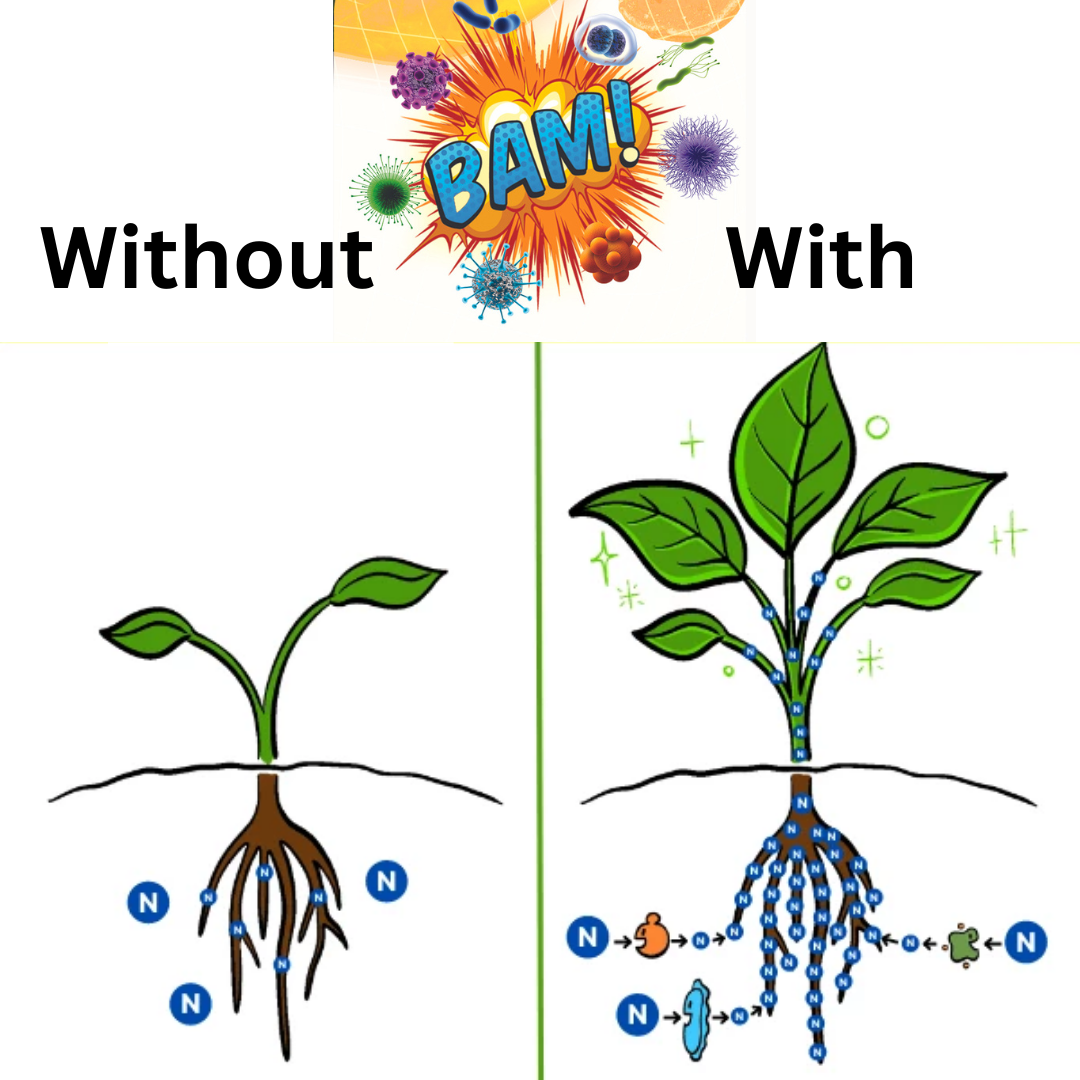
Fertilizer is only one half of the equation; the other half is the soil microbiome. Beneficial bacteria and fungi (mycorrhizae) act as the "digestive system" for the plant. They break down organic matter and deliver it to the roots in exchange for sugars.
If your tap water contains high levels of chlorine or fluoride, you are effectively "sanitizing" your soil every time you water, killing off these essential microbes. Using BAM (Beneficial Active Microbes) alongside a mineral treatment helps rebuild this ecosystem, ensuring your organic fertilizer is actually converted into plant-available food.

10. Temperature-Induced Pollen Sterility
Sometimes, the fertilizer is working perfectly, the plant is healthy, but the fruit won't set. If daytime temperatures exceed 90°F (32°C) or nighttime temperatures stay above 75°F (24°C), tomato pollen can become sterile. The flowers will simply drop off.
While you can't control the weather, you can improve plant resilience. Trace minerals like boron and zinc play a critical role in pollen tube formation and reproductive success. Ensuring your plant is "mineral-complete" gives it a better chance of setting fruit during heat waves.
How to Fix Your Tomato Strategy
To move beyond the limitations of standard fertilizer for tomatoes, you must address the quality of your water and the diversity of your minerals.
- Purify and Mineralize: Use a solution like Drops of Balance to remove harmful toxins from your water while adding back 70+ trace minerals. This ensures your water is a "solute" that can actually carry nutrients into the plant.
- Inoculate: Introduce beneficial biology using microbial inoculants to ensure the soil-root interface is active and healthy.
- Balance your NPK: Once the first flowers appear, back off the nitrogen and focus on potassium-rich organic sources and trace minerals.
- Monitor Moisture: Aim for consistent dampness (like a wrung-out sponge) rather than cycles of drought and flood to prevent blossom end rot.
By shifting your focus from "just adding fertilizer" to "optimizing the mineral environment," you provide your tomatoes with the biological tools they need to thrive. Whether you are dealing with heavy clay, sandy soil, or a container garden, the science remains the same: balance the minerals, support the microbes, and the fruit will follow.
For more information on how to optimize your garden's water and soil health, explore our full collection of mineral solutions and see the difference that trace minerals can make this season.