

5 Fertilizer for Tomatoes Mistakes That Kill Your Harvest (Plus the 2-Minute Water Fix That Changes Everything)
Growing healthy, productive tomatoes requires more than just good intentions and regular watering. Even experienced gardeners frequently make critical fertilization errors that drastically reduce harvest yields, often without realizing the connection between their feeding practices and poor fruit production. Research indicates that improper fertilization practices can reduce tomato yields by up to 40% while simultaneously increasing susceptibility to pest infestations and disease.
Understanding these common mistakes: and implementing scientifically-backed corrections: can transform your tomato harvest from disappointing to abundant. The following analysis examines five critical fertilization errors that consistently undermine tomato production, along with a simple water treatment protocol that enhances nutrient uptake efficiency.
Mistake #1: The High-Nitrogen Fertility Trap
The most prevalent and destructive fertilization error involves applying fertilizers with excessive nitrogen content relative to phosphorus and potassium. Standard all-purpose fertilizers often contain NPK ratios like 24-8-16, where nitrogen dominates the formula. While nitrogen promotes vigorous vegetative growth, research demonstrates that excessive nitrogen application during reproductive phases actively suppresses flowering and fruit development.
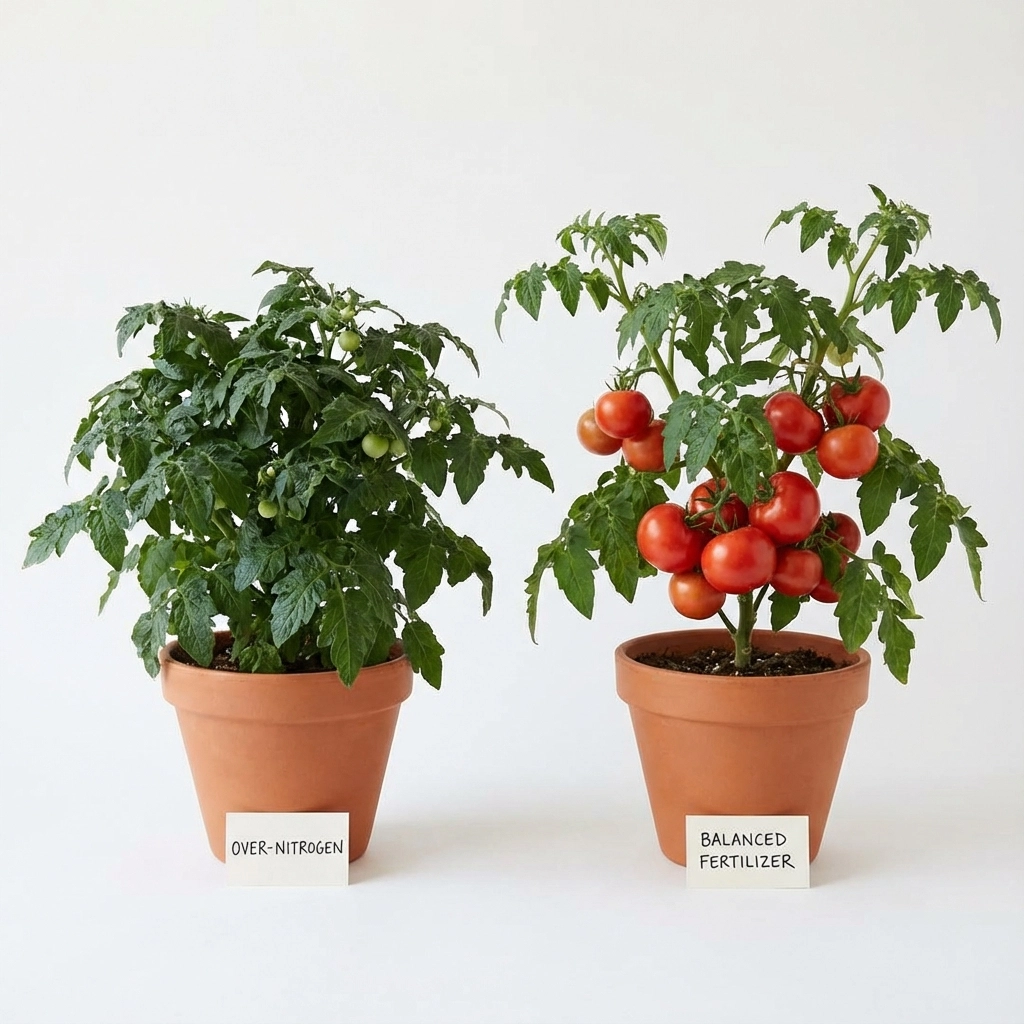
High nitrogen levels redirect the plant's metabolic resources toward leaf and stem production rather than reproductive structures. This physiological response, known as vegetative dominance, creates the paradox of healthy-looking plants that produce minimal fruit. Additionally, studies have shown that over-nitrogenized tomato plants exhibit increased susceptibility to aphid infestations, as the elevated nitrogen content in plant tissues attracts these pests.
Optimal fertilization during the growing season requires transitioning to lower-nitrogen formulations with enhanced phosphorus content, such as bloom boosters with NPK ratios of 15-30-15. This nutritional adjustment redirects plant energy toward flower production and fruit development, resulting in significantly improved yields.
Mistake #2: Fertilizing Drought-Stressed Soil
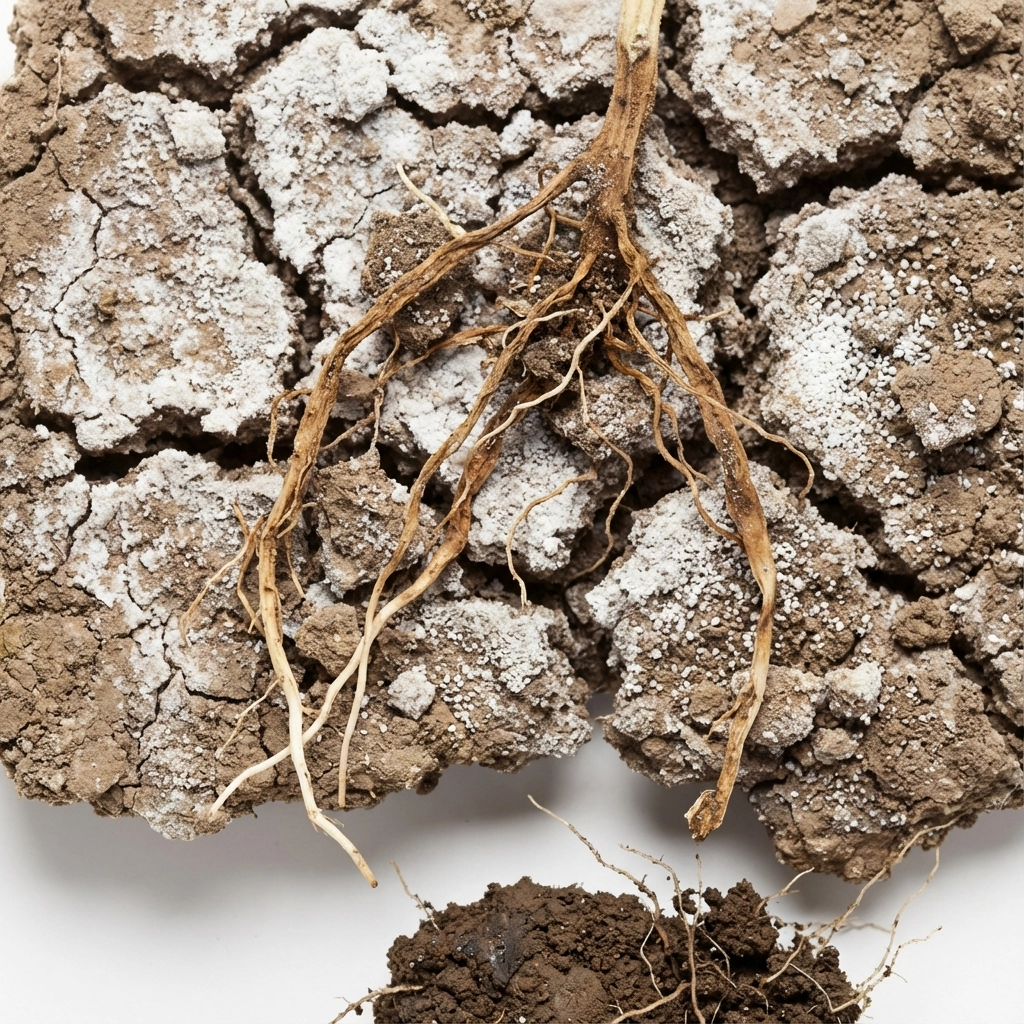
Applying fertilizer to dry soil represents a fundamental violation of plant physiology principles that frequently results in severe root damage. When synthetic fertilizer salts contact moisture-deficient root zones, they create concentrated ionic solutions that can chemically burn delicate root tissues. This damage occurs rapidly and often proves irreversible, particularly during periods of heat stress.
The osmotic stress caused by high salt concentrations in dry soil disrupts normal water uptake mechanisms, creating a condition where plants become increasingly dehydrated despite the presence of nutrients. Research indicates that fertilizer burn can reduce root function by up to 60%, severely limiting the plant's ability to access both water and nutrients throughout the growing season.
Mistake #3: Excessive Liquid Fertilizer Concentration
Many gardeners assume that following package instructions precisely: or even exceeding recommended concentrations: will enhance plant performance. This approach frequently backfires due to the cumulative effect of repeated applications and variations in soil conditions that affect nutrient availability.
Scientific analysis of fertilizer burn incidents reveals that even slight overdosing can create toxic soil conditions. When mixing liquid fertilizers, optimal results occur when using approximately 75% of manufacturer recommendations. For example, if instructions specify one tablespoon per two gallons of water, using three-quarters of a tablespoon provides adequate nutrition while maintaining a safety margin against toxicity.
This conservative approach acknowledges that soil chemistry, pH levels, organic matter content, and existing nutrient reserves all influence how plants process applied fertilizers. Reducing concentration slightly ensures that these variables don't combine to create harmful conditions.
Mistake #4: Inconsistent Fertilization Protocols
Successful tomato cultivation requires systematic nutrient management that accounts for fertilizer type, application timing, and plant developmental stages. Many gardeners employ random fertilization schedules or switch between different products without considering how these changes affect overall soil chemistry and plant nutrition.
Granular fertilizers typically provide sustained nutrient release over 6-8 weeks, making them suitable for early-season application with a mid-season supplemental feeding. Water-soluble fertilizers require more frequent application but offer precise control over nutrient timing and concentration. Mixing these approaches randomly or changing protocols mid-season disrupts nutrient availability patterns and can create deficiency or toxicity conditions.
Research demonstrates that consistent fertilization protocols, even with slightly suboptimal products, produce better results than sporadic applications of premium fertilizers. Plants develop metabolic rhythms based on nutrient availability patterns, and disrupting these rhythms through inconsistent feeding reduces overall performance.
Mistake #5: Compensatory Over-Fertilization During Production Slowdowns
When tomato plants experience midsummer production decreases, many gardeners incorrectly diagnose nutrient deficiency and respond with increased fertilization. This reaction typically worsens the situation by creating salt accumulation in the root zone and further stressing already challenged plants.
Midsummer production slowdowns often result from heat stress, irregular watering, or natural plant cycles rather than nutrient deficiencies. Adding more fertilizer during these periods increases soil salt concentrations, which impairs water uptake and exacerbates stress conditions. Field studies indicate that over-fertilized tomato plants during stress periods show 30% greater yield reduction compared to plants receiving consistent, moderate nutrition.

The 2-Minute Water Fix That Changes Everything
The critical intervention that prevents most fertilization disasters involves ensuring adequate soil moisture before any fertilizer application. This simple protocol requires approximately two minutes but dramatically improves fertilizer safety and effectiveness.
The procedure involves thoroughly watering the planting area until water penetrates at least 6 inches into the soil profile. This preliminary irrigation serves multiple functions: it dilutes fertilizer salts as they dissolve, facilitates uniform nutrient distribution, and ensures that roots are fully hydrated before encountering fertilizer solutions.
Scientific measurements show that pre-irrigation reduces fertilizer salt concentrations by 40-60% in the immediate root zone while maintaining adequate nutrient levels for plant uptake. This dilution effect prevents osmotic shock while preserving fertilizer effectiveness.
Water Quality's Hidden Impact on Fertilizer Performance
The effectiveness of any fertilization program depends heavily on water quality, yet most gardeners overlook this critical factor. Municipal water treatment introduces chlorine, fluoride, and other chemicals that can interfere with nutrient uptake and soil biology. These additives create an environment where even properly applied fertilizers may not perform optimally.
Chlorine, commonly used in municipal water systems, disrupts beneficial soil microorganisms that play crucial roles in nutrient cycling and plant health. Studies indicate that chlorinated water can reduce soil microbial activity by up to 30%, significantly impacting the soil's ability to process organic matter and make nutrients available to plants.
Additionally, the absence of essential trace minerals in treated water creates an incomplete nutritional foundation for plant growth. While NPK fertilizers address primary macronutrients, they don't provide the full spectrum of micronutrients that plants require for optimal health and productivity.
Optimizing Water for Enhanced Fertilizer Effectiveness
Professional agricultural operations increasingly recognize that water treatment represents a fundamental component of successful crop production. By removing harmful chemicals while simultaneously adding essential trace minerals, treated water creates an optimal foundation for fertilizer programs.
The Drops of Balance water treatment system addresses these challenges by neutralizing chlorine, fluoride, and heavy metals while introducing beneficial trace minerals that support plant health. This dual-action approach creates water that enhances rather than hinders fertilizer effectiveness.
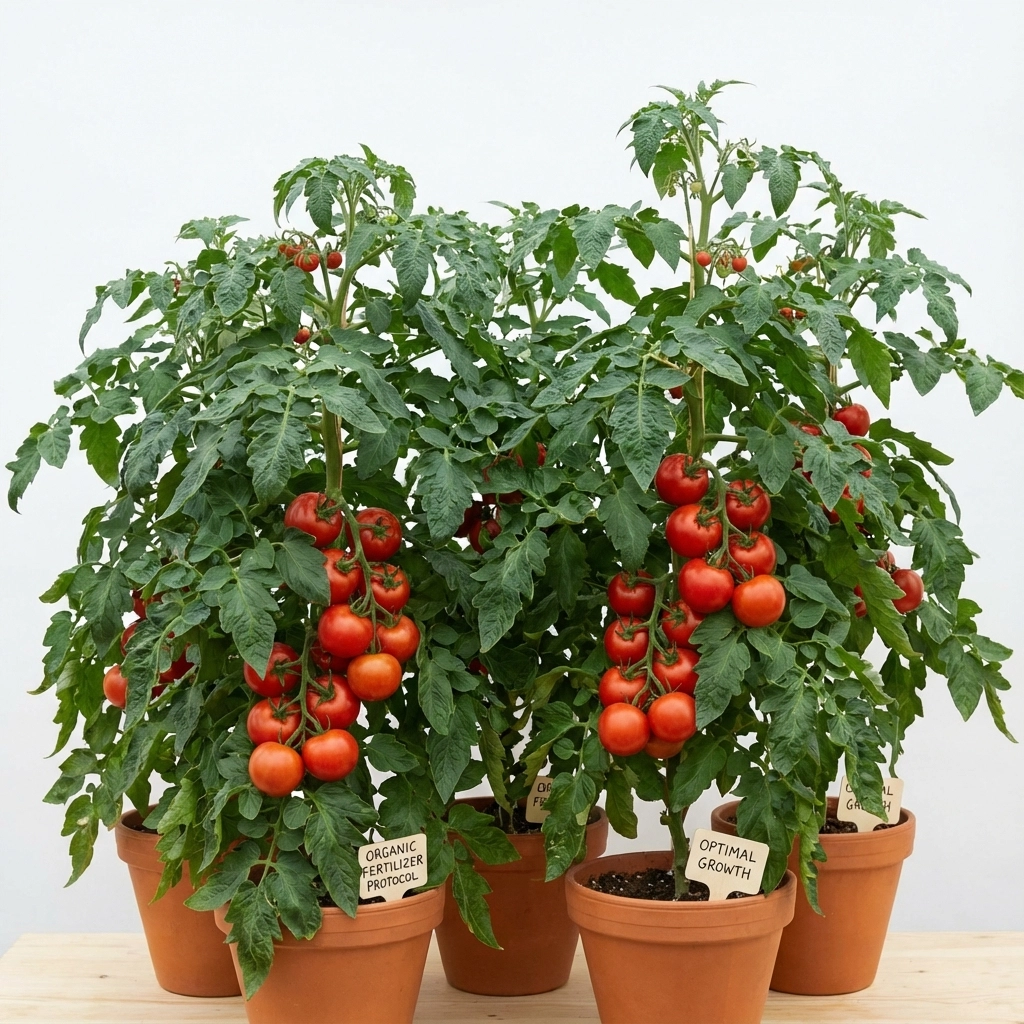
When plants receive both proper fertilization and mineral-rich, toxin-free water, the synergistic effect often exceeds the sum of individual improvements. Root systems function more efficiently, nutrient uptake increases, and plants demonstrate improved resistance to environmental stresses.
Research conducted on various crop species shows that combining optimized fertilization practices with treated water can increase yields by 15-25% compared to standard approaches using municipal water and conventional fertilization methods.
Implementation Strategy for Maximum Results
Successful implementation of these principles requires a systematic approach that addresses both fertilization practices and water quality simultaneously. Begin by establishing a consistent watering schedule using treated water, then implement fertilization protocols that account for your soil conditions and tomato varieties.
Monitor plant response carefully during the first growing season, noting differences in growth patterns, flowering timing, and fruit production compared to previous years. Most gardeners observe noticeable improvements within 3-4 weeks of implementing proper fertilization and water treatment protocols.
The combination of avoiding common fertilization mistakes while ensuring optimal water quality creates conditions where tomato plants can achieve their full genetic potential, resulting in harvests that consistently exceed expectations while requiring less intervention and troubleshooting throughout the growing season.