
Can You Neutralize Pesticides in Your Soil? How to Restore Soil Health for Your Next Crop
So you sprayed your crops last season. Maybe it was glyphosate to knock out stubborn weeds. Maybe Myclobutanil to fight off fungal infections. Either way, the job got done, but now you're staring at your garden beds wondering: what's still lurking in that soil?
Here's the thing. Those chemicals don't just disappear when the growing season ends. Many herbicides and pesticides stick around, breaking down slowly over months or even years. And if you're planning to replant or rotate to a new crop, that residue can seriously mess with your soil health and your next harvest.
The good news? Yes, you absolutely can neutralize pesticides in your soil. Let's break down what's happening underground, why it matters, and how to get your garden back to a clean slate.
The Problem: Chemical Buildup in Your Soil
When you apply pesticides or herbicides, they don't just target the pests or weeds you're after. A significant portion ends up in your soil, where it binds to organic matter, clay particles, and soil microbes. Some compounds, like glyphosate, are water-soluble and can move through your soil profile with irrigation or rain.
Common culprits that persist in garden soil include:
- Glyphosate (Roundup): Half-life of 1-174 days depending on soil conditions
- Myclobutanil: A systemic fungicide that can accumulate in soil over repeated applications
- Aminopyralid: Notorious for surviving composting and persisting for years
- Atrazine: Can remain active in soil for several growing seasons
These chemicals don't just sit there doing nothing. They actively interfere with soil biology, plant development, and nutrient cycling, even at low concentrations.
How Pesticide Residue Harms Your Soil and Future Crops
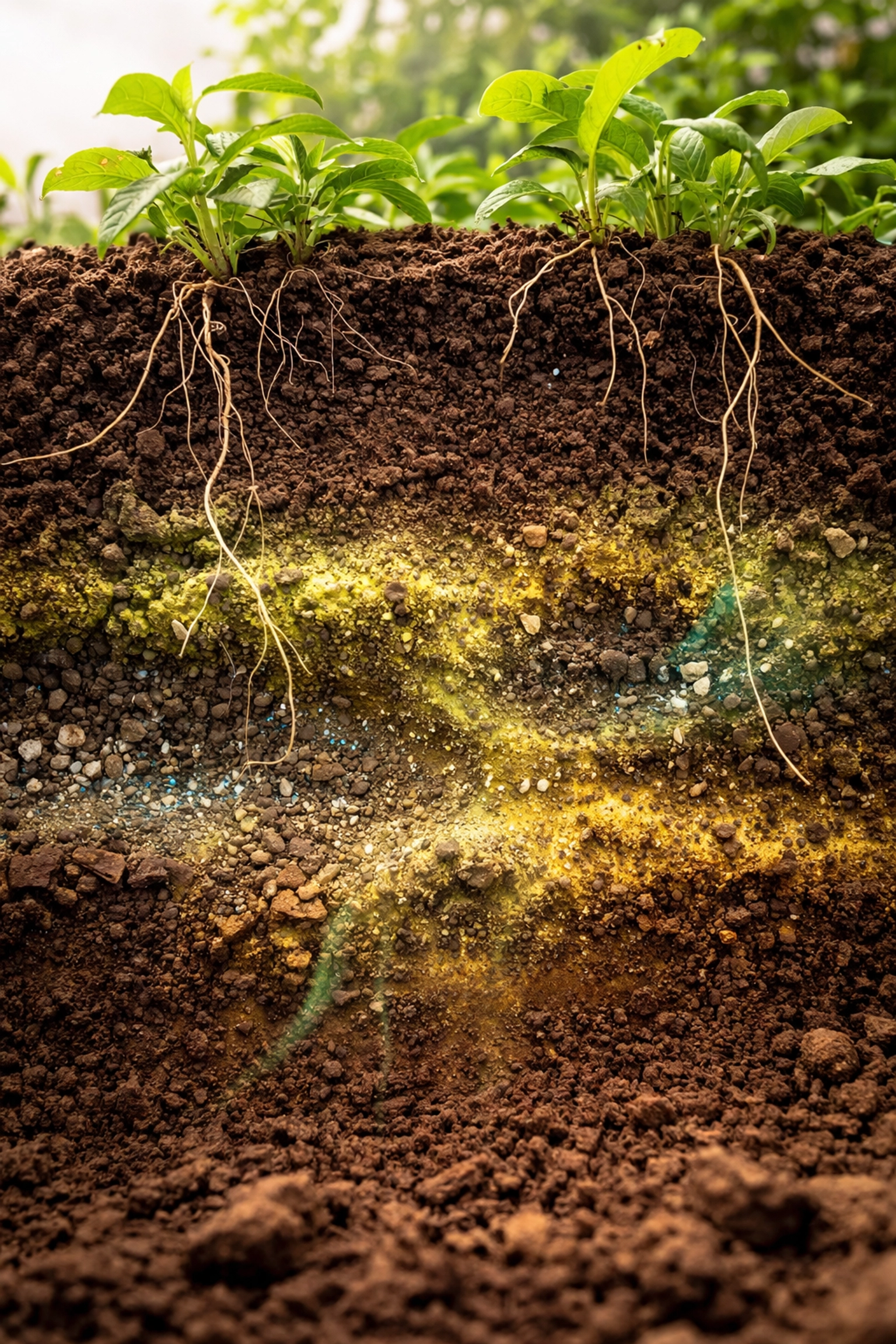
Your soil is a living ecosystem. Billions of microorganisms, bacteria, fungi, protozoa, work together to break down organic matter, cycle nutrients, and support plant root systems. When pesticide residue accumulates, this delicate balance gets disrupted.
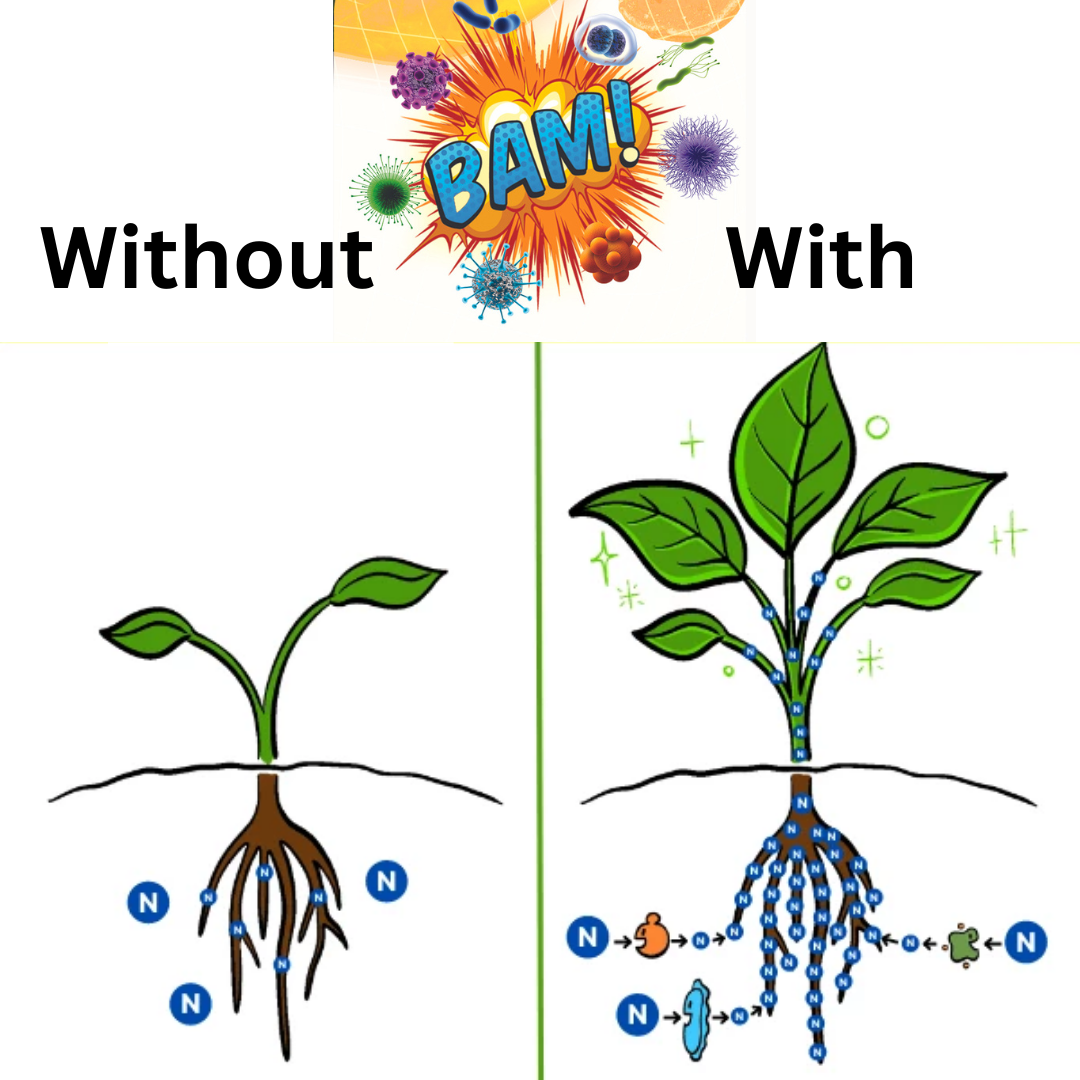
Microbial die-off: Many pesticides are broad-spectrum, meaning they don't discriminate. They'll kill beneficial soil microbes just as readily as target organisms. Research shows that glyphosate, for example, can significantly reduce populations of beneficial mycorrhizal fungi that help plants absorb nutrients.
Nutrient lockout: Some herbicides bind to essential minerals in your soil, making them unavailable to plant roots. Your soil test might show adequate levels of zinc, manganese, or iron, but if those minerals are chemically bound to herbicide residue, your plants can't access them.
Root damage: Residual herbicides can stunt root development in sensitive crops. Tomatoes, peppers, beans, and leafy greens are particularly vulnerable to herbicide carryover. You might see twisted leaves, stunted growth, or complete crop failure, even from trace amounts.
Bioaccumulation concerns: Some pesticides accumulate in plant tissues. If you're growing food crops, this means potential exposure through your harvest.
Proven Methods to Neutralize Pesticides in Soil
The scientific literature points to several effective remediation strategies. The best approach depends on how severe your contamination is, your timeline, and your budget.
1. Microbial Degradation (Bioremediation)
This is the most effective and economical method for most home gardeners. Soil microorganisms naturally break down pesticides when given optimal conditions. You can accelerate this process by:
- Tilling to introduce oxygen (many pesticides degrade faster in aerobic conditions)
- Maintaining moisture at 40-60% of field capacity
- Adding non-contaminated organic matter to feed beneficial microbes
Bioremediation takes time, typically several months, but it's low-cost and environmentally sustainable.
2. Cover Crops for Bioaccumulation
Certain plant species can pull herbicides out of contaminated soil through their roots. Research shows that sunflowers, oats, radishes, corn, and wheat are particularly effective at bioaccumulating herbicide residue.
The strategy: Plant a cover crop, let it grow through the season, then remove the entire plant (roots and all) and dispose of it properly, don't compost it. The contaminated biomass leaves with the plant, reducing soil concentrations.
3. Carbon-Rich Soil Amendments
Biochar and activated charcoal bind to herbicide particles, rendering them inactive. For home garden applications, a typical rate is approximately one pound of activated charcoal dissolved in one gallon of water per 150 square feet.
This approach is fast-acting but works best as part of a combination strategy.
4. The Water Fix: Addressing Water-Soluble Toxins
Here's what most guides miss: a huge portion of pesticide contamination involves water-soluble compounds that move through your soil every time you irrigate. If you're watering with untreated tap water, you might also be adding chlorine, fluoride, and other chemicals that further stress your soil biology.
This is where Drops of Balance enters the picture.
How Drops of Balance Helps Restore Your Soil
Drops of Balance is an EPA-certified water treatment solution that neutralizes water-soluble toxins while adding essential sulfated trace minerals back into your water and soil.
When you treat your irrigation water with Drops of Balance, you're doing two things simultaneously:
Neutralizing contaminants: The sulfated mineral formula binds to water-soluble pesticide residue, chlorine, fluoride, and heavy metals, preventing them from further contaminating your soil or being taken up by plant roots.
Restoring mineral balance: Pesticide-damaged soil is often mineral-depleted. Drops of Balance adds back essential trace minerals in sulfated form, which plants can readily absorb. This helps rebuild the nutrient cycling that pesticides disrupted.
Think of it as cleaning up your soil's water environment while simultaneously restocking the mineral pantry your plants need to thrive.
A Practical Protocol for Soil Restoration
Based on the research, here's a combination approach that delivers the best results for most contaminated garden soils:
Month 1-2: Assessment and Preparation
- Stop all pesticide and herbicide applications immediately
- Test your soil if possible (many extension offices offer affordable testing)
- Till lightly to introduce oxygen
- Begin treating all irrigation water with Drops of Balance
Month 2-4: Active Remediation
- Plant a cover crop appropriate for your climate (oats, radishes, or sunflowers work well)
- Apply activated charcoal at recommended rates
- Continue watering with treated water only
- Maintain consistent soil moisture
Month 4-6: Transition
- Remove and properly dispose of cover crop biomass
- Add non-contaminated compost to rebuild organic matter
- Consider a bioassay test: plant sensitive indicator species (beans or tomatoes) in small containers of your soil to check for residual damage
- Continue using Drops of Balance in all irrigation
Research combining bioremediation methods with cover crops has achieved herbicide reductions of up to 78%, significantly outperforming single-method approaches.
Prevention: Keeping Your Soil Clean Going Forward
Once you've restored your soil, you'll want to protect it. Some practical steps:
- Choose targeted, low-persistence treatments when pest control is absolutely necessary
- Always treat your irrigation water with Drops of Balance to prevent introducing new contaminants
- Rotate crops to prevent pest and disease buildup that leads to pesticide dependence
- Build soil biology through regular compost additions and minimal tillage
The healthier your soil ecosystem, the less you'll need chemical interventions in the first place. It's a virtuous cycle.
The Bottom Line
Yes, you can neutralize pesticides in your soil. The science supports multiple remediation strategies: microbial degradation, cover cropping, carbon amendments, and treating your water to address water-soluble contaminants.
The key is using a combination approach and being patient. Soil restoration isn't an overnight fix, but with consistent effort over a growing season, you can transform contaminated ground into healthy, productive garden beds.
Start by addressing what goes into your soil with every watering. Treating your irrigation water with Drops of Balance is one of the simplest, most effective steps you can take to stop adding toxins and start rebuilding mineral balance: giving your next crop the clean foundation it needs to thrive.