
Clean Water, Sharp Minds: Optimizing Hydration for the School Season
As the academic calendar shifts into full gear this September, parents and educators alike focus on the traditional pillars of student success: curriculum, study habits, and sleep. However, a critical physiological variable often remains overlooked in the quest for academic excellence: cellular hydration.
Scientific inquiry increasingly demonstrates that the state of a student’s hydration is not merely a matter of thirst, but a foundational requirement for cognitive processing. In the high-pressure environment of the classroom, where concentration, memory recall, and executive function are tested daily, even marginal fluctuations in hydration can lead to significant shifts in performance.
The Physiological Link Between Water and Cognition
The human brain is approximately 75% water. Consequently, its operational capacity is highly sensitive to water availability. Research indicates that even a mild state of dehydration: defined as a 1% to 2% loss of body water: can impair cognitive domains essential for learning. These impairments often manifest as reduced short-term memory, diminished visual attention, and slower processing speeds.
A study conducted with children aged 7 to 9 revealed startling results: after consuming just 25ml of water, students experienced a 31% increase in visual attention. Similarly, research involving eight-year-olds demonstrated that memory recall was significantly improved following a 300ml intake of water. These findings suggest that the brain's ability to retrieve information and maintain focus is directly proportional to its hydration status.

The academic benefits extend into the examination hall. Quantitative analysis of student performance has shown that those who have access to water during exams perform, on average, 4.8% higher than those without. This "hydration advantage" is likely due to the reduction of physiological stress and the maintenance of electrochemical signaling within the brain.
Decoding the "Afternoon Slump"
One of the most pervasive challenges in the school day is the "afternoon slump": a period typically occurring between 1:00 PM and 3:00 PM characterized by lethargy, irritability, and a noticeable drop in concentration. While often attributed solely to post-lunch glucose fluctuations or circadian rhythms, chronic mild dehydration is a primary physiological driver of this mid-day fatigue.
When the body lacks sufficient water and essential electrolytes, blood volume decreases, causing the heart to work harder to pump oxygenated blood to the brain. This results in a state of systemic fatigue. For students, this translates to "brain fog," where the effort required to process new information becomes exponentially higher.
Furthermore, dehydration triggers the release of cortisol, the body's primary stress hormone. Elevated cortisol levels in the afternoon can lead to irritability and an inability to regulate emotions, further disrupting the learning environment for both the student and their peers.
Beyond H2O: The Role of Mineralization
While "drinking more water" is a standard recommendation, the quality and composition of that water are equally vital. Modern municipal water treatment processes often strip water of its natural mineral content while introducing chemical additives like chlorine and fluoride. Furthermore, many families turn to Reverse Osmosis (RO) or distilled water to avoid contaminants. While these methods produce "clean" water, they also produce "empty" water: liquid that is devoid of the trace minerals necessary for optimal physiological function.
Cognitive function relies on bio-electrical signals. These signals require electrolytes: minerals like magnesium, potassium, calcium, and sodium: to travel across neural pathways. Without these minerals, the body must leach them from its own tissues to process the water being consumed. This can lead to mineral deficiencies that exacerbate the very fatigue students are trying to avoid.
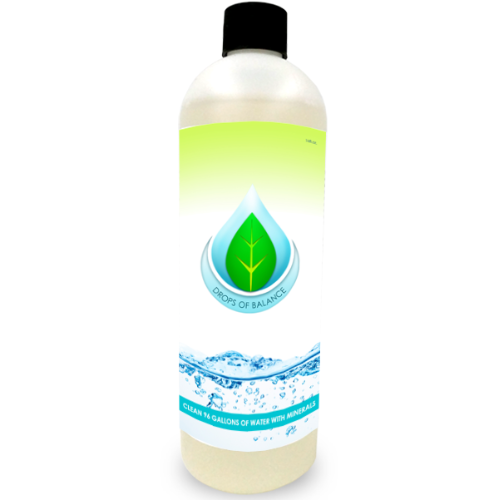
Integrating a solution like Drops of Balance ensures that water is not only purified but also re-mineralized. By adding a concentrated mineral solution to tap or filtered water, we introduce over 70 trace minerals that support cellular conductivity and pH balance.

For students, a 2oz bottle of Drops of Balance is an ideal addition to a backpack or lunchbox. A few drops added to a reusable water bottle throughout the day can ensure that the water they consume is bioavailable, aiding in sustained energy levels and preventing the dreaded afternoon crash.
The Impact of Water Contaminants on Focus
The presence of heavy metals and chemical disinfectants in school drinking water is a growing concern for cognitive health. Lead, for example, is a known neurotoxin that can impair IQ and executive function even at low levels. Chlorine, while effective at killing pathogens, can react with organic matter to form disinfection byproducts (DBPs) that may impact long-term wellness.

Utilizing advanced filtration, such as a micro-ceramic filter, provides a critical line of defense. When combined with mineralizing drops, the process moves beyond simple hydration into "functional hydration." The sulfate-based ionic minerals in Drops of Balance act to neutralize harmful contaminants through a process of precipitation and ion exchange, ensuring the water is as safe as it is revitalizing. You can review our safety testing data to see how this process impacts various water contaminants.
Practical Strategies for School Hydration
To optimize cognitive performance throughout the school season, a systematic approach to hydration is required. It is not enough to drink water only when thirsty; by the time the thirst mechanism is triggered, the body is already in a state of mild dehydration.
- The Morning Prime: Start the day with 8–12 ounces of mineralized water. This rehydrates the body after overnight fluid loss and prepares the brain for the first block of learning.
- The Portable Solution: Encourage students to carry a high-quality, BPA-free water bottle. The Drops of Balance 16oz bottle is a versatile size for home or school use, providing enough treated water to last through several classes.
- Scheduled Hydration: Teachers and parents should encourage "water breaks" every 60 to 90 minutes. Schools that have implemented filtered bottle-filling stations report fewer student complaints of headaches and energy dips.
- The Mineral Advantage: For high-school and college students facing rigorous exams, ensure their water is enriched with electrolytes. This supports the visual attention and memory recall necessary for complex problem-solving.
A Holistic Approach to Student Wellness
The link between clean, mineralized water and a sharp mind is undeniable. By addressing the quality of the water our students consume, we provide them with a fundamental tool for academic success. Hydration is not just a biological necessity; it is a cognitive enhancer.
As we navigate the 2026 school year, let us prioritize the fuel that drives the mind. By reducing the chemical load in our water and restoring its natural mineral balance, we can help our students overcome the afternoon slump and reach their full potential.
For more information on how to integrate mineralized hydration into your family's routine, visit our FAQ page or explore our range of concentrated mineral solutions.