
Does Fluoride in Your Drinking Water Really Matter in 2026? Here's the Truth
Fluoride has been a cornerstone of public health policy for over seven decades. But in 2026, the conversation around this controversial mineral has reached a tipping point. With federal agencies reassessing decades of recommendations and states like Utah and Florida already banning public water fluoridation, you might be wondering: does fluoride in your drinking water actually matter anymore?
The short answer? Yes, but perhaps not in the way you've been told.
Let's break down the science, the controversy, and what this means for both your health and your garden.
The Fluoride Debate: Where We Stand in 2026
For years, fluoridated water was considered one of public health's greatest achievements. The Centers for Disease Control (CDC) has historically credited fluoridation with reducing tooth decay in children by 40-70% and tooth loss in adults by 40-60%. The economic argument was compelling too, one year of fluoridated water in the U.S. reportedly saves an estimated $6.5 billion in dental treatment costs.
But 2026 marks a significant shift in the narrative.
The Environmental Protection Agency (EPA) is currently conducting an accelerated review of fluoride's health risks, specifically examining potential effects on brain development and IQ in children. This follows Health Secretary Robert F. Kennedy Jr.'s announcement of intent to direct the CDC to reverse its long-standing fluoridation recommendation.
What changed? A 2024 National Toxicology Program (NTP) report stated with "moderate confidence" that fluoride exposure exceeding 1.5 mg/L is associated with lower IQ in children. While this threshold is more than double the CDC's recommended 0.7 mg/L concentration, the report has reignited concerns that had been dismissed for decades.
The Human Health Perspective
The fluoride debate isn't black and white. Here's what the current research tells us:
The case for fluoride: Studies continue to show that optimal fluoride levels (0.7 mg/L) don't increase the risk of bone fractures, and the American Dental Association points to Australian research showing no measurable effect on cognitive neurodevelopment or IQ scores in children at recommended levels.
The case against fluoride: The NTP report has legitimized concerns that were previously considered fringe. While the studies involved countries where pregnant women and children had substantially higher exposures than typical U.S. residents, the acknowledgment of "insufficient data" to determine safety within recommended levels has raised eyebrows among researchers and consumers alike.
Real-world consequences have emerged from both sides of the debate. When Juneau, Alaska discontinued fluoridation in 2007, cavity-related dental procedures increased by nearly 50% in children and adolescents. Similarly, Calgary, Canada saw measurably more tooth decay in children after removing fluoride in 2011 compared to Edmonton, which maintained fluoridation.
The takeaway? The dose makes the poison. But for many consumers, the uncertainty alone is enough to seek alternatives.
What Nobody's Talking About: Fluoride and Your Soil Microbes
Here's where things get interesting for gardeners and anyone who cares about the broader ecosystem.
While most fluoride discussions focus on human health, fluoride's impact on soil microbiology is often overlooked. Research has demonstrated that fluoride can inhibit enzyme activity in soil microorganisms, disrupting the delicate biological processes that make nutrients available to plants.
Soil microbes are the unsung heroes of your garden. They break down organic matter, fix nitrogen, solubilize phosphorus, and create the conditions plants need to thrive. When you water your garden with fluoridated tap water, you're potentially introducing a compound that interferes with these beneficial organisms.
The concentration matters, of course. Municipal water fluoride levels (typically 0.7 mg/L) are lower than what's been studied in agricultural contexts. However, cumulative exposure over time, especially in container gardens or raised beds that don't benefit from natural groundwater dilution, can create conditions where microbial activity suffers.
For organic gardeners who've invested in building healthy soil biology, this presents a frustrating contradiction: your careful composting and cover cropping efforts may be undermined every time you turn on the hose.
Beyond Fluoride: The Full Picture of Tap Water Toxins
Fluoride isn't the only concern in your tap water. Chlorine, added to kill pathogens, doesn't discriminate between harmful bacteria and the beneficial microbes in your gut or your garden soil. Heavy metals like lead, arsenic, and cadmium can leach from aging infrastructure and accumulate in both human tissue and plant matter.
The cumulative effect of these contaminants creates a compelling case for water treatment, not just for drinking, but for every application where water quality matters.
If you're interested in learning more about the heavy metals lurking in your water supply, check out our deep dive on heavy metals in drinking water that nobody talks about.
The Drops of Balance Solution
So what can you do about fluoride, chlorine, and heavy metals in your water? Expensive reverse osmosis systems work, but they strip out beneficial minerals along with the harmful compounds. This creates what's essentially "dead" water that's been linked to mineral deficiencies with long-term use.
Drops of Balance takes a different approach. Our concentrated mineral solution neutralizes fluoride, chlorine, and heavy metals through a natural precipitation process while simultaneously adding essential sulfated trace minerals back into your water.
The result? Water that's not just safe, but actively beneficial for both human consumption and plant growth. The sulfated minerals in our formula support:
- Human health: Trace minerals like magnesium, zinc, and selenium that many modern diets lack
- Soil biology: Minerals in plant-available forms that feed beneficial microorganisms
- Plant nutrition: Direct mineral uptake through roots and foliar application
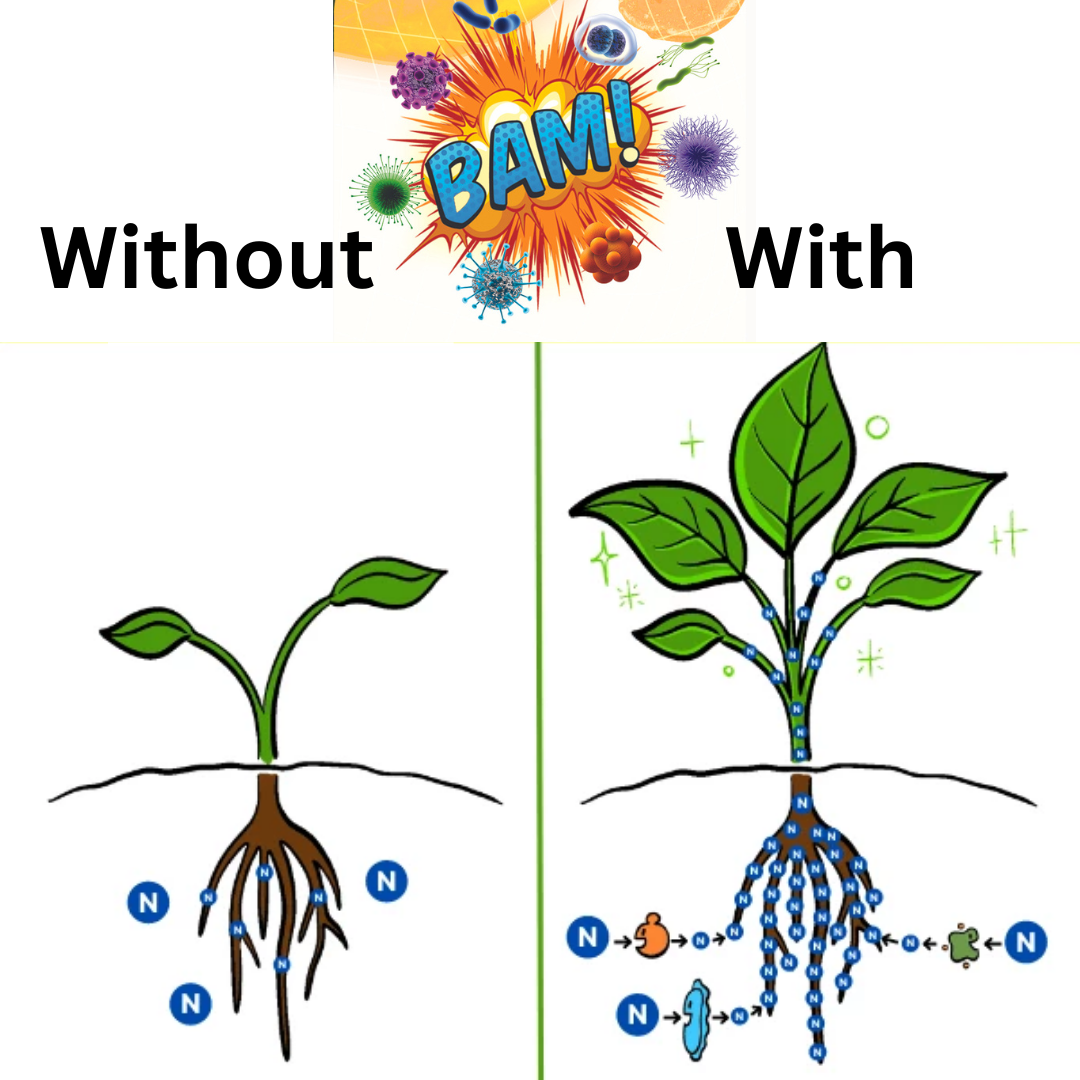
The BAM Plant Comparison image above demonstrates the difference this makes. Plants watered with untreated tap water show restricted growth and limited nutrient uptake. Plants receiving Drops of Balance-treated water display healthier root systems, more vigorous growth, and the kind of vitality that only comes from thriving soil biology.
Making the Switch: Practical Considerations
If you're concerned about fluoride in your water supply, here are some practical steps:
Know your water: Request a water quality report from your municipal supplier or have your well water tested. Understanding your baseline helps you make informed decisions.
Consider the application: Drinking water, garden water, and water for sensitive plants may have different requirements. Prioritize based on exposure and impact.
Think beyond filtration: Removing contaminants is only half the equation. Remineralization ensures you're not trading one problem for another.
For gardeners specifically, we've covered how to remove fluoride from water for plants in 5 minutes without expensive filters, a practical guide that complements this discussion.
The Bottom Line on Fluoride in 2026
Does fluoride in your drinking water matter? The evidence suggests yes, though the nature of that impact depends on concentration, individual sensitivity, and how you're using the water.
What's clear is that 2026 represents a turning point in how we think about water treatment. The days of accepting whatever comes out of the tap are ending. Consumers are demanding transparency, control, and solutions that address the full spectrum of water quality concerns.
Whether you're protecting your family's health, nurturing your garden, or both, understanding what's in your water is the first step. Taking action to improve it is the second.
The truth about fluoride isn't simple: but your solution can be.