
End-of-Summer Cleanup: How to Flush and Mineralize Your Irrigation Lines
As the peak heat of summer begins to wane and we transition toward the fall gardening season, the mechanical and chemical integrity of your irrigation system should be a primary concern. Over the course of a high-demand summer, irrigation lines: whether drip tapes, soaker hoses, or PVC laterals: accumulate more than just water. They become reservoirs for mineral precipitates, biofilms, and residual contaminants from municipal water sources.
Neglecting end-of-summer maintenance doesn't just lead to uneven watering; it sets the stage for system failure and compromised soil health in the coming season. By implementing a strategic "Flush and Mineralize" protocol, you can remove obstructive buildup and simultaneously prep your soil with essential trace elements.
The Science of Irrigation Clogging: Why "Just Water" Isn't Enough
Most gardeners assume that if water is flowing, the system is fine. However, beneath the surface, several chemical and biological processes are at work.
1. Mineral Precipitation (Scaling)
Most municipal and well water contains high levels of calcium and magnesium carbonates. As water sits in lines between irrigation cycles, especially in the heat of August, evaporation occurs at the emitters. This increases the concentration of dissolved solids, leading to the precipitation of "scale." This hard crust narrows the internal diameter of the tubing and eventually seals off emitters entirely.
2. Biofilm Development
Bacteria and algae thrive in the warm, moist environment inside irrigation pipes. These organisms secrete extracellular polymeric substances (EPS), creating a sticky "biofilm" that traps fine sediment and mineral flakes. This creates a sludge-like consistency that is resistant to simple water pressure.
3. Chemical Residues
If you are using untreated tap water, you are also introducing chlorine, chloramines, and fluoride into your lines. These chemicals can interact with organic matter in the soil and the plastic polymers of the irrigation lines, potentially leading to salinity stress in your garden.
Step 1: The High-Volume Flush
The first phase of maintenance is physical clearance. According to horticultural standards, irrigation zones should be flushed for at least 1–2 minutes to clear the heaviest debris.
- Open the Ends: Remove the end caps or open the flush valves on every lateral line in a specific zone.
- Activate the Zone: Turn on the water at full pressure. You will likely see "tea-colored" or cloudy water exiting the lines initially. This is the accumulated sediment and biofilm being purged.
- Monitor Clarity: Continue running the water until it runs perfectly clear.
- Inspect Emitters: While the lines are under pressure, check individual emitters for clogs. If an emitter is still failing after the flush, it likely has internal mineralization that requires chemical intervention.
Step 2: Mineralization and Contaminant Neutralization
Flushing clears the loose debris, but it does nothing to address the microscopic scale or the chemical toxins embedded in the system. This is where "Mineralizing" your lines becomes the game-changer for end-of-summer maintenance.
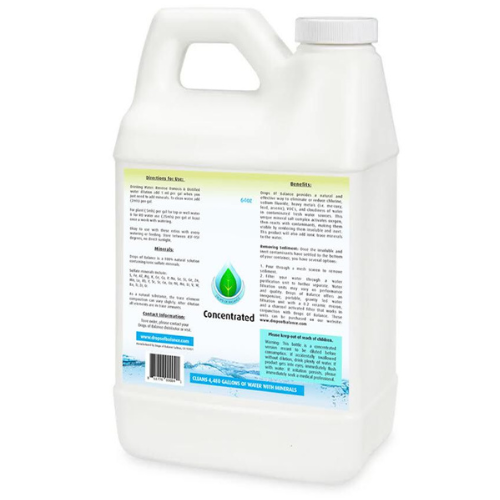
By introducing a concentrated solution of sulfated trace minerals, such as Drops of Balance, you initiate a chemical reaction that helps break down mineral deposits while neutralizing harmful additives like fluoride and chlorine.
The Role of Sulfated Trace Minerals
When you add Drops of Balance to your irrigation system, the sulfate-based minerals act as a gentle descaler. More importantly, they address the hidden truth about tap water that most gardeners ignore. The mineral complex binds to contaminants, causing them to precipitate out of the water in an inert form, preventing them from being absorbed by your plants or damaging your soil's delicate microbial balance.
How to Mineralize Your System for Fall Prep
To properly prep for the fall, you want to "charge" your lines with a mineral-rich solution and allow it to sit, ensuring it reaches both the irrigation components and the rhizosphere (root zone) of your plants.
The Protocol:
- Dose the Reservoir or Injector: If you use a fertigation tank or a siphon injector (like a Mazzei injector), add Drops of Balance at a ratio of 0.5 ml per gallon of water for standard maintenance. For a heavy "cleanup" dose at the end of summer, you can increase this to 1 ml per gallon.
- Run the System: Run your irrigation for 10–15 minutes: long enough to ensure the mineralized water has completely displaced the plain water throughout the entire length of the lines.
- The "Soak" Period: Turn off the system and let it sit for 24 hours. This allows the minerals to react with any remaining scale and gives the solution time to neutralize emerging soil contaminants.
- Final Cycle: Run a short cycle the following day to push the newly liberated minerals and neutralized water into the soil.

Why Mineralization Matters for Fall Gardening
August is the time when many gardeners begin planting brassicas, leafy greens, and root vegetables for the autumn harvest. These crops are particularly sensitive to soil health and nutrient availability.
Improving Soil Structure and Microbes
Standard irrigation maintenance often forgets the soil. By flushing with mineralized water, you are actively improving soil health and creating thriving microbes. Trace minerals are the "missing link" in soil biology; they act as catalysts for enzymatic reactions within the soil's microbial community.
Without these trace elements, even the best organic fertilizers may fail to produce results. When the soil has a full spectrum of minerals, the cation exchange capacity (CEC) is optimized, making nutrients more bioavailable to your fall starts.
Combating Abiotic Stress
The transition from summer to fall can be erratic, with temperature swings and varying moisture levels. This "abiotic stress" can stunt young fall plants. Mineralized water strengthens the cellular structure of plants, making them more resilient to these environmental shifts.
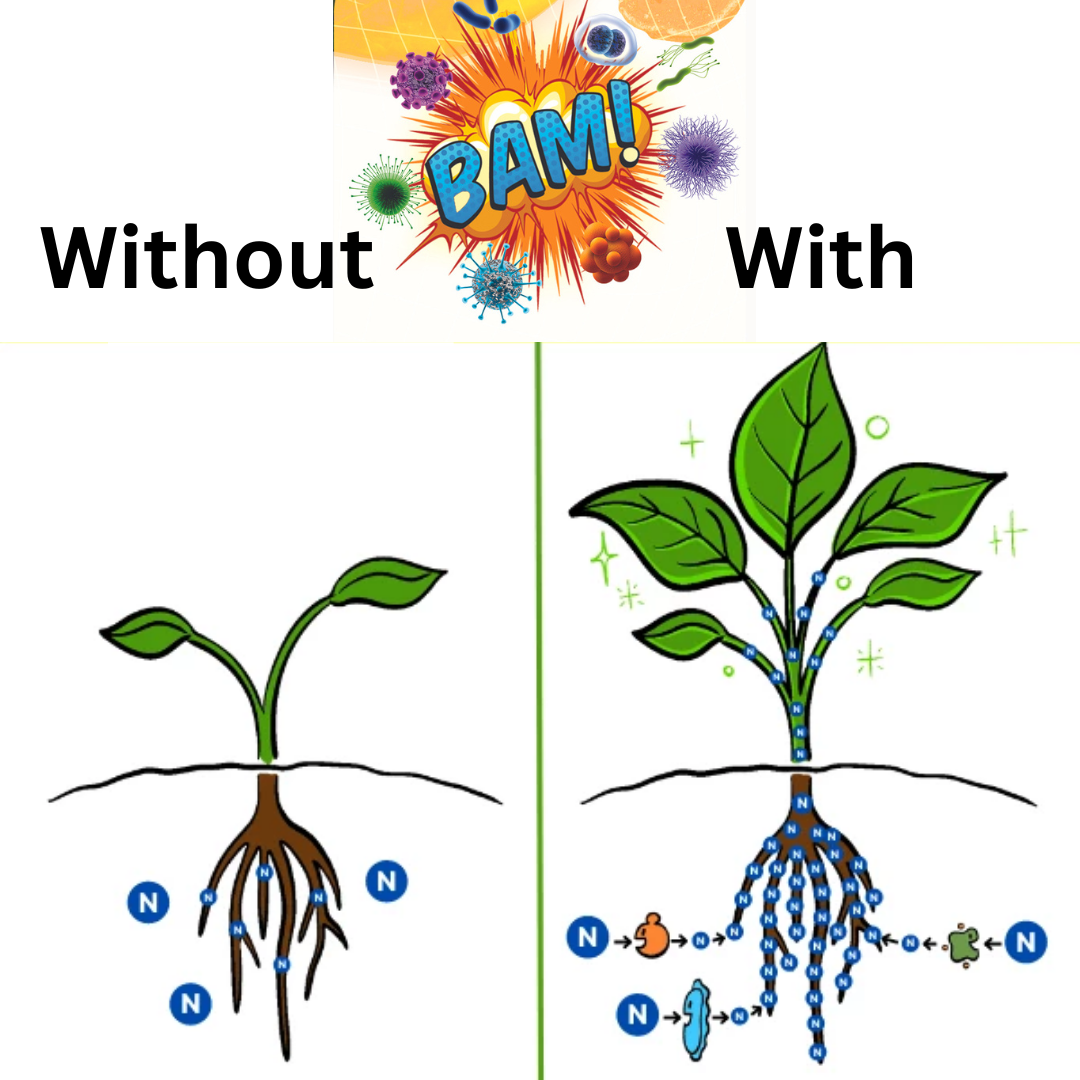
As seen in the comparison above, plants treated with a full spectrum of minerals and a clean water source (right) exhibit significantly more robust root systems and canopy growth compared to those struggling with the toxic load of untreated tap water (left).
Don't Forget the Fluoride
One of the most persistent issues in late-summer irrigation is the accumulation of fluoride in the soil. Unlike chlorine, which can evaporate, fluoride lingers and builds up over time, eventually reaching toxic levels for sensitive plants.
Using the end-of-summer cleanup to remove fluoride from water for your plants is one of the most cost-effective ways to ensure your garden remains productive for years to come. Drops of Balance facilitates this removal through a process of magnetic-like attraction, binding the fluoride ions into a harmless compound that won't interfere with plant uptake of beneficial nutrients.
Inventory Check: Scaling Up for Large Gardens
If you are managing a large homestead or a small farm, the 16oz bottles aren't enough for a full system flush. For agricultural-scale irrigation cleanup, we recommend the 1-gallon or 5-gallon concentrates.
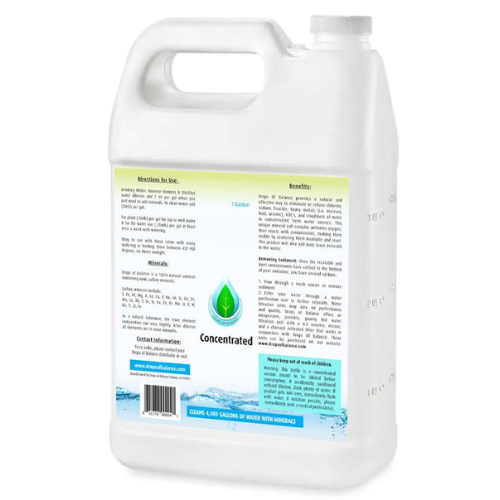
A single gallon can treat over 7,500 gallons of water for plants, making it the most economical way to maintain large-scale irrigation systems and ensure your garden's full potential is unlocked.
Summary Checklist for August 27th Maintenance:
- Zone Flush: 2 minutes per zone with end caps removed.
- Filter Clean: Remove and scrub all Y-filters or disc filters.
- Mineral Injection: Add Drops of Balance (0.5ml–1ml per gallon) to the system.
- Line Soak: Allow the mineralized solution to sit in the lines for 24 hours.
- Emitter Check: Walk the lines and replace any emitters that are still showing restricted flow.
- Soil Recharge: Ensure the final flush reaches the root zones of your new fall transplants.
By taking these steps now, you aren't just cleaning plastic pipes; you are restoring the biological integrity of your entire growing environment. A clean, mineralized system is the foundation for a vibrant fall harvest and a healthy garden for years to come.
For more deep dives into optimizing your garden's water chemistry, explore our latest news and research.