
Is Your Garden Drinking Lead? The Truth About Old Pipes and New Plants
If your home was built before 1986, there's a significant chance that lead is leaching into your tap water: and subsequently, into your garden soil. While municipal water treatment facilities work to maintain safe drinking standards, the infrastructure between the treatment plant and your garden hose often tells a different story. For gardeners committed to organic practices and soil health, understanding the lead pathway from aging pipes to plant roots is critical for both crop safety and long-term soil vitality.
The Infrastructure Reality: When Pipes Become Polluters
The United States Environmental Protection Agency (EPA) banned lead use in plumbing systems in 1986, but millions of older homes and municipal water lines still contain lead pipes, lead-soldered joints, or brass fixtures with significant lead content. When water sits in these pipes: particularly water with low pH or mineral content: lead dissolves into the water supply through a process called corrosion.
For residential gardeners, this presents a compounding problem. Every time you fill a watering can or connect a hose to an outdoor spigot, you're potentially introducing lead-contaminated water directly into your garden ecosystem. Unlike the minimal exposure from a single glass of drinking water, garden irrigation represents repeated, large-volume applications that can accumulate in soil over growing seasons.

The Accumulation Factor: How Lead Builds in Garden Soil
Lead doesn't break down or degrade in soil environments. Instead, it accumulates. When lead-contaminated water is applied to garden beds: whether through hose irrigation, sprinkler systems, or even collected rainwater from lead-contaminated gutters: the lead ions bind to soil particles and organic matter. Over time, this creates an increasing concentration gradient that can persist for decades.
The accumulation rate depends on several factors: irrigation frequency, water lead concentration, soil pH, and organic matter content. A garden watered daily with water containing even 5 parts per billion (ppb) of lead can accumulate significant soil concentrations within a single growing season. The EPA action level for lead in drinking water is 15 ppb, but many older systems exceed this threshold, particularly in morning water draws when water has been sitting in pipes overnight.
Plant Uptake: What the Science Actually Shows
Contrary to popular belief, the primary health risk from lead-contaminated garden environments doesn't come from eating the vegetables themselves: it comes from soil particle ingestion and inhalation. Research confirms that lead has relatively low bioavailability to plants when soil pH is maintained between 6.0 and 7.0, and when adequate phosphorus and organic matter are present.
Plant uptake patterns vary by crop type. Root vegetables like carrots, beets, and radishes show higher lead absorption than fruiting crops such as tomatoes, peppers, and cucumbers. However, even with elevated soil lead levels, the concentration in edible plant tissue remains proportionally lower than soil contamination would suggest. The greater concern is soil particles adhering to produce surfaces or becoming airborne during cultivation activities.
This doesn't minimize the risk: it clarifies where intervention is most critical. For organic gardeners committed to soil health, preventing lead accumulation in the first place protects both the soil microbiome and long-term garden productivity.

The Double Threat: Water Plus Existing Contamination
Many gardens, particularly in urban and older suburban areas, already contain baseline lead contamination from historical sources: weathered lead-based paint, leaded gasoline residues, or proximity to industrial sites. When lead-contaminated irrigation water is added to soil with existing contamination, the cumulative effect accelerates toxicity thresholds.
The EPA recommends avoiding vegetable cultivation in soil with total lead concentrations above 400 parts per million (ppm). However, soil testing typically measures existing contamination: not the ongoing contribution from irrigation water. A garden with baseline levels of 250 ppm might seem safe, but years of watering with lead-contaminated tap water can push concentrations beyond safe thresholds without the gardener's awareness.
Additionally, lead in irrigation water doesn't just affect soil chemistry: it impacts the soil microbiome. Beneficial bacteria and mycorrhizal fungi that drive nutrient cycling are sensitive to heavy metal toxicity. Chronic exposure to lead, mercury, and other contaminants disrupts microbial communities, reducing their capacity to mineralize organic matter and facilitate nutrient uptake by plant roots.
Testing: The First Line of Defense
Before implementing solutions, accurate testing establishes baseline conditions. Two types of testing are essential for comprehensive risk assessment:
Water testing should measure lead concentration in the water used for irrigation, not just at the municipal meter. Collect samples from the actual garden hose or outdoor spigot after water has sat in pipes overnight: this represents the worst-case exposure scenario. Many state extension services and certified laboratories offer low-cost water testing that includes heavy metal panels.
Soil testing should include both standard nutrient analysis and heavy metal screening for lead, mercury, arsenic, and cadmium. Soil samples should be collected from multiple locations within garden beds at depths of 0-6 inches where root activity is highest. Testing every 2-3 years monitors accumulation trends and helps assess whether mitigation strategies are effective.
Mitigation Strategies for Lead-Free Gardening
For gardeners with confirmed or suspected lead contamination in irrigation water, several evidence-based strategies reduce exposure and accumulation:
Flushing protocols eliminate water that has been sitting in pipes. Before watering gardens, run taps until water temperature stabilizes (typically 30-60 seconds), indicating fresh water from the main line rather than pipe-stored water. While this strategy helps, it doesn't eliminate lead from plumbing with active corrosion.
pH management reduces lead mobility in soil. Maintaining soil pH between 6.5 and 7.0 with lime amendments promotes lead binding to soil particles, reducing plant uptake. However, this doesn't prevent accumulation: it only limits bioavailability.
Organic matter incorporation through compost additions dilutes lead concentrations and enhances microbial activity that can sequester metals in less bioavailable forms. Adding 2-3 inches of high-quality compost annually provides ongoing dilution and soil health benefits.
Water treatment at point-of-use removes lead before it enters the garden ecosystem. This represents the most effective long-term strategy for preventing accumulation.
The Drops of Balance Approach to Heavy Metal Removal
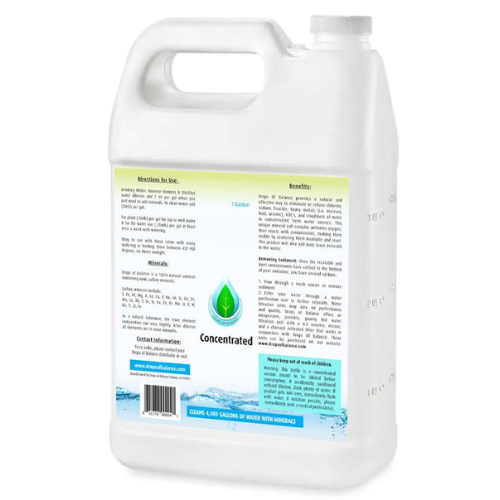
Drops of Balance offers a water treatment solution specifically formulated to address heavy metal contamination, including lead and mercury, while simultaneously supporting soil microbiology and plant health. Unlike passive filtration systems that require installation and maintenance, this concentrated mineral solution works through ionic exchange and precipitation mechanisms.
When added to irrigation water according to recommended ratios, Drops of Balance binds heavy metals through sulfated trace mineral interactions, rendering them insoluble and preventing soil accumulation. The same sulfated minerals that facilitate metal removal also provide bioavailable nutrition that supports beneficial soil microbes: addressing both contamination and soil vitality in a single application.
For gardeners managing existing soil contamination, treating irrigation water prevents further accumulation while the sulfated minerals help remediate soil by promoting microbial communities that can sequester existing lead in stable organic complexes. This dual-action approach aligns with organic gardening principles: remove toxins while building soil health. Learn more about how the solution works at Drops of Balance.
Addressing Multiple Contaminants Simultaneously
Lead rarely exists in isolation. Older municipal systems and home plumbing often contribute multiple contaminants: fluoride from treatment additives, chlorine and chloramine disinfectants, copper from pipe corrosion, and various industrial residues. Each impacts soil chemistry and microbial health differently.
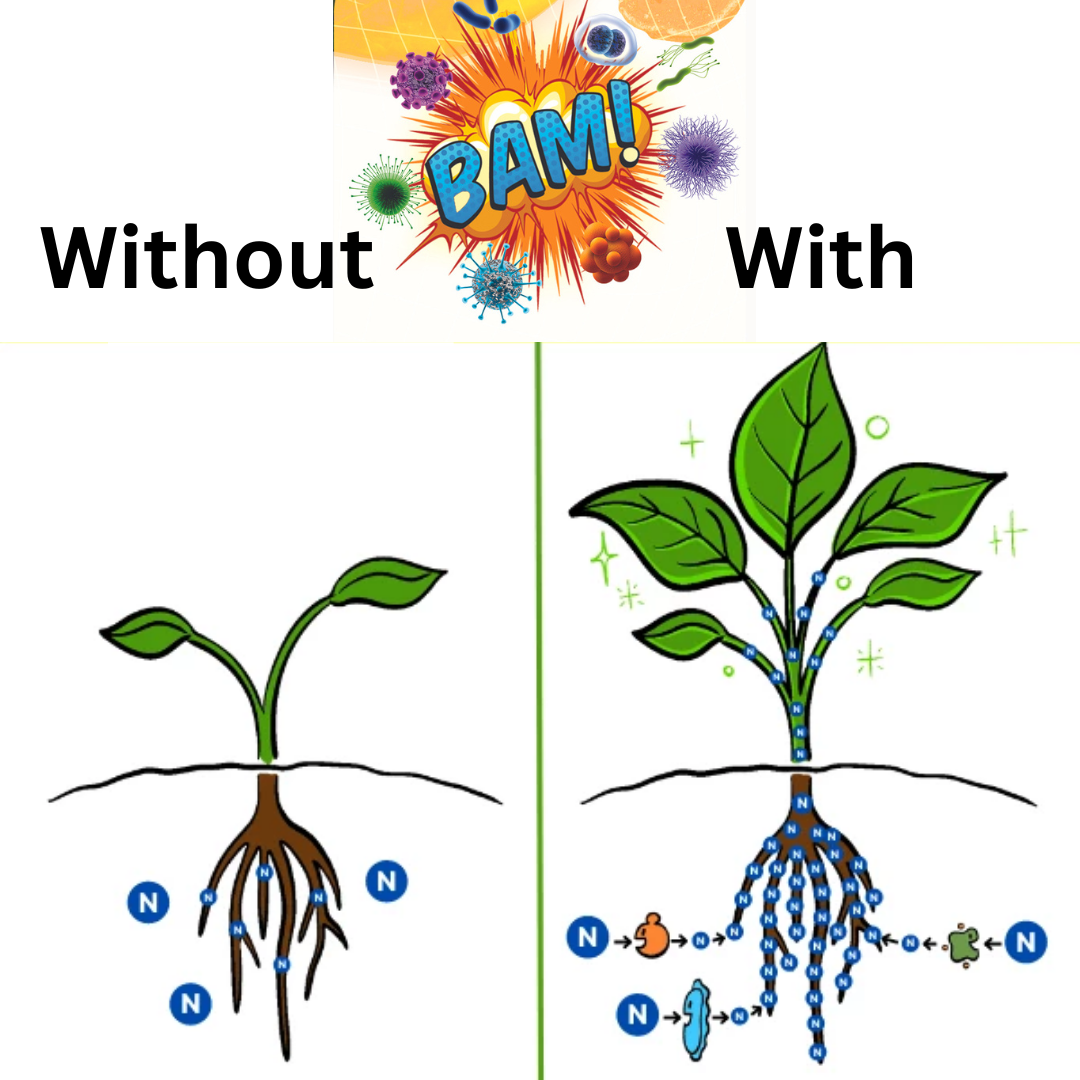
The advantage of comprehensive water treatment extends beyond single-contaminant removal. Drops of Balance addresses multiple toxins simultaneously: removing fluoride that can accumulate in plant tissues, eliminating chlorine that kills beneficial soil bacteria, and binding mercury and other heavy metals. For organic gardeners pursuing true soil health, addressing the complete contamination profile of irrigation water creates optimal conditions for both microbial activity and plant growth.
Fluoride, while added to municipal water for dental health, accumulates in soil and can interfere with plant enzyme systems. Chlorine, even at low concentrations, decimates the bacterial and fungal populations that drive nutrient cycling. When these contaminants are removed from irrigation water while essential trace minerals are added, gardens experience measurable improvements in plant vigor, disease resistance, and yield quality.
Long-Term Soil Stewardship
For gardeners committed to multi-season productivity and genuine organic practices, water quality represents a foundational input: as critical as compost, cover cropping, or crop rotation. Lead contamination from aging infrastructure poses a preventable threat to both immediate crop safety and long-term soil function.
By addressing irrigation water quality through targeted treatment, gardeners protect their investment in soil building while eliminating a major contamination pathway. Testing establishes baselines, treatment prevents accumulation, and ongoing monitoring confirms effectiveness.
The conversation about lead in gardens has traditionally focused on existing soil contamination from paint and industrial sources. It's time to expand that conversation to include the water we're adding every day. Your garden's health starts with what you pour into it( make sure it's clean.)