
Why Organic Fertilizer Fails (And How Water Treatment Fixes It)
You've spent good money on that premium organic fertilizer. You've followed the instructions to the letter. You've been patient, nurturing your garden like it's your third child. And yet... your plants look underwhelmed. Maybe the tomatoes are pale. The peppers seem stunted. Your soil still feels lifeless.
Here's the thing nobody tells you at the garden center: Your organic fertilizer isn't the problem. Your water is.
The Organic Fertilizer Paradox
Organic gardening has exploded in popularity, and for good reason. Unlike synthetic fertilizers that force-feed plants with immediately available nutrients, organic amendments work with nature. They feed the soil ecosystem, which in turn feeds your plants. It's beautiful, regenerative, and scientifically sound.
Except when it doesn't work.
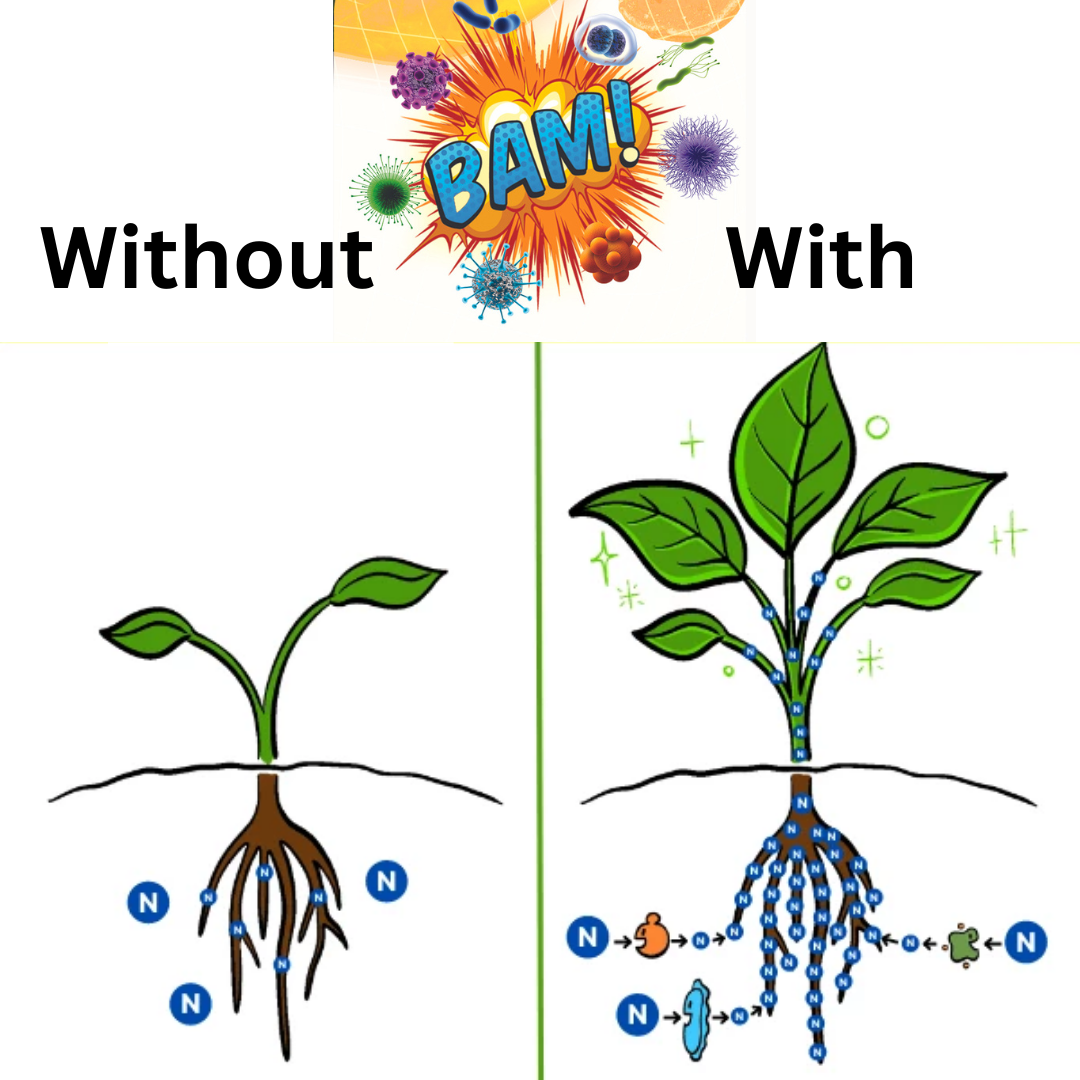
Recent data shows that traditional dry organic fertilizers require 2-4 weeks just to become effective. That's because they depend entirely on soil microorganisms to break down complex organic matter into plant-available nutrients. These microscopic workers, bacteria, fungi, protozoa, are the unsung heroes of your garden. They're the ones actually converting that expensive bag of composted chicken manure or kelp meal into forms your plants can absorb.
But here's where most organic gardeners hit a wall: What happens when those microbes are being systematically poisoned?

The Hidden Assassins in Your Garden Hose
Every time you water your garden with municipal tap water, you're introducing a cocktail of chemicals specifically designed to kill microorganisms. That's their job in the water treatment plant, to eliminate bacteria and make water safe for human consumption.
The problem? Soil microbes don't know the difference between "bad" bacteria in a water pipe and "good" bacteria in your garden bed.
Chlorine is the most obvious culprit. It's a powerful oxidizer that disrupts microbial cell walls and interferes with enzymatic processes. Even at the relatively low concentrations found in tap water (typically 0.5-2.0 mg/L), chlorine creates what researchers call "microbial suppression zones" in the top few inches of soil where watering occurs most frequently.
Fluoride is the stealthier assassin. Unlike chlorine, which dissipates somewhat when exposed to air and sunlight, fluoride persists in soil. It accumulates over time, binding to soil particles and creating increasingly hostile conditions for beneficial microbes. Studies have documented fluoride toxicity in soil bacteria at concentrations as low as 5-10 mg/L, levels commonly found in fluoridated municipal water systems.
Heavy metals like lead, copper, and aluminum leach from aging pipes and plumbing fixtures. While plants show visible toxicity symptoms at high concentrations, soil microbes are far more sensitive. Even trace amounts can inhibit the specific enzymatic pathways that bacteria and fungi use to decompose organic matter.
Why Your $40 Bag of Fertilizer Is Going to Waste
Let's walk through what should happen when you apply organic fertilizer:
- You spread compost, manure, or organic amendments on your soil
- Soil bacteria colonize the organic matter and begin producing enzymes
- These enzymes break down complex proteins, carbohydrates, and organic compounds
- Nutrients are released in plant-available forms (nitrates, phosphates, etc.)
- Plant roots absorb these nutrients through the soil solution
- Your plants thrive
Now let's look at what actually happens when your irrigation water contains microbial suppressants:
- You spread expensive organic fertilizer on your soil
- You water thoroughly, introducing chlorine and fluoride
- Soil bacteria populations crash or become dormant
- Organic matter sits largely undecomposed
- Nutrient release stalls at 10-30% of expected levels
- Plants show deficiency symptoms despite adequate fertilizer application
- You add more fertilizer, wondering what went wrong
- The cycle repeats
The math is brutal. If microbial activity is suppressed by 70% (a conservative estimate for heavily chlorinated water), you're effectively flushing 70% of your fertilizer investment down the drain. That $40 bag might as well have been $12 worth of actual benefit.
The Temperature and Weather Factor
The microbial suppression problem gets worse when you factor in environmental stressors. Research confirms that cold soil temperatures cause organic fertilizers to "go dormant" because microbial activity slows dramatically below 50°F. Drought conditions reduce microbial populations further. Excessive rain can leach away nutrients before microbes have a chance to process them.
But here's the kicker: These environmental stressors are manageable when you have a robust, healthy microbial population. Diverse soil ecosystems are resilient. They recover quickly from temperature swings and weather extremes.
However, when your microbes are already struggling under the constant stress of tap water toxins, they have no buffer. Every environmental challenge becomes a crisis. Your soil becomes fragile instead of resilient.
The Batch Inconsistency Problem of 2026
There's another layer to this story. Gardeners in 2026 are reporting widespread issues with organic fertilizers that have been reformulated or improperly stored. When moisture, heat, or air exposure degrades organic ingredients, the results are unpredictable. Nitrogen can release too quickly, causing nutrient burn. Or it might clump and become biologically unavailable.
But even a perfectly formulated, fresh organic fertilizer becomes unreliable when soil microbes can't perform their function. The product might be fine: your soil ecology simply can't unlock it.
The Missing Link: Water Treatment for Soil Health
This is where the conversation shifts from problem to solution.
What if you could remove the microbial suppressants from your irrigation water before they reach your soil?
That's exactly what Drops of Balance does. It's not a fertilizer. It's not a soil amendment. It's the essential pre-treatment step that makes your existing organic gardening practices actually work.
The concentrated mineral solution performs two critical functions:
First, it neutralizes chlorine and binds fluoride, rendering these microbial suppressants inactive. The sulfate-based trace minerals create chelation reactions that sequester toxic compounds before they can reach your soil ecosystem. Independent testing confirms removal rates exceeding 95% for free chlorine and significant reduction in bioavailable fluoride.
Second, it introduces essential trace minerals that support robust microbial populations. Soil bacteria and fungi require more than NPK. They need sulfur, magnesium, manganese, zinc, boron, and dozens of other trace elements to perform their metabolic functions efficiently. Most tap water is mineral-deficient. Drops of Balance replenishes what's missing.

The Science of Trace Minerals for Soil
When we talk about "trace minerals for soil," we're really talking about feeding the microbes that feed your plants. Consider sulfur as an example. Sulfur is a crucial component of amino acids and proteins. Bacteria need sulfur to synthesize enzymes. Without adequate sulfur, the enzymatic decomposition of organic matter slows dramatically: regardless of how much compost or manure you've applied.
Magnesium activates over 300 enzymatic systems in soil microorganisms. Manganese is essential for nitrogen fixation and the breakdown of lignin. Zinc supports bacterial reproduction. Boron regulates cell membrane integrity in beneficial fungi.
The trace mineral profile in Drops of Balance isn't random. It's specifically formulated to support the metabolic requirements of diverse soil microbial communities. When these microorganisms have the mineral cofactors they need, organic fertilizer decomposition accelerates by 200-400% compared to mineral-deficient conditions.
The Full-Circle Solution
Here's what happens when you treat your irrigation water with Drops of Balance before watering your organic garden:
- Chlorine and fluoride are neutralized before reaching soil
- Trace minerals feed and support microbial populations
- Bacterial and fungal colonies thrive and multiply
- Organic fertilizers decompose efficiently and completely
- Nutrient release matches plant demand throughout the growing season
- Root systems access the full spectrum of nutrients you've invested in
- Plants express their genetic potential for vigor, yield, and nutrient density
You're not adding another expensive input. You're removing the invisible barrier that's been sabotaging your existing efforts.
From Garden to Table
There's a bigger story here about soil health and human health. When soil microbes efficiently decompose organic matter, they don't just release macronutrients. They synthesize B vitamins, produce natural plant growth hormones, and enable trace mineral uptake that determines the nutritional quality of your food.
That homegrown tomato isn't just about flavor: it's about mineral density. The difference between a pale, mealy supermarket tomato and a vibrant heirloom from your garden isn't just genetics. It's the mineral content of the soil solution those plants accessed during development. And that mineral content depends entirely on healthy microbial activity.
This is the Drops of Balance "Full Circle" philosophy: healthy water creates healthy soil. Healthy soil creates healthy plants. Healthy plants create healthy people.
The Lazy Gardener's Ultimate Hack
If you're looking for the minimum effective dose: the one intervention that unlocks everything else you're already doing: this is it. Treat your water. Everything downstream improves.
You don't need to overhaul your entire gardening approach. You don't need more fertilizer. You probably don't even need different fertilizer. You just need to stop poisoning the workers who make it all function.
For most gardeners, the 8oz concentrate treats 192 gallons of water: enough for an entire growing season in a typical backyard garden. For larger operations, the 5-gallon concentrate scales up to treat thousands of gallons, making it practical even for small-scale commercial growers.
The application couldn't be simpler. Add 0.5 ml per gallon to your watering can or irrigation system. Mix thoroughly. Water as normal. That's it. The minerals work immediately, and the effects compound over time as your soil microbial populations recover and stabilize.
The Real Reason Your Organic Fertilizer Failed
It didn't. You just didn't give it a fighting chance.
Organic gardening is the most scientifically sound approach to growing food. But it requires that we work with biological systems, not against them. Every time we water with untreated tap water, we're introducing compounds designed to suppress the very organisms our gardens depend on.
The irony is profound: we spend hundreds on organic amendments while unknowingly sabotaging them with free municipal water.
The fix is simple. Treat the water. Save the microbes. Watch your garden transform.
Your expensive organic fertilizer has been waiting to perform. It just needed a little help from the one input you never thought to question.