

Micro-Managing Your Soil: How Sulfated Trace Minerals Create Happy Microbes
You can spend hundreds on organic amendments, compost tea, and mycorrhizal inoculants, but if your soil microbes are starving for the right minerals, you're essentially throwing a party with no food. The secret ingredient most gardeners overlook? Sulfated trace minerals: the metabolic fuel that transforms dormant soil into a microbial metropolis.
The Mineral-Microbe Connection Nobody Talks About
When we ask "what do plants need to grow," the typical answer includes sunlight, water, and NPK fertilizers. But this oversimplification ignores the underground economy that actually delivers nutrients to plant roots. Soil microorganisms: bacteria, fungi, and archaea: are the biological machinery responsible for converting inert minerals into plant-available forms. Without adequate trace minerals in sulfate form, these microbial workers can't perform their metabolic functions.
Sulfated trace minerals aren't just another garden amendment. They're the electron donors and acceptors that power microbial respiration, the building blocks for enzymatic processes, and the catalysts for biogeochemical cycling that determines soil health at the microscopic level.

Sulfate-Reducing Bacteria: Your Soil's Detox Crew
In anaerobic microsites throughout your soil: even in well-drained gardens: sulfate-reducing bacteria (SRB) carry out critical detoxification work. These specialized microorganisms use sulfate (SO₄²⁻) as a terminal electron acceptor during anaerobic respiration, reducing it to hydrogen sulfide (H₂S) while generating cellular energy.
This might sound like obscure microbiology, but the practical implications are profound. When SRB reduce sulfate to hydrogen sulfide, this byproduct immediately reacts with dissolved metal ions: including toxic heavy metals like lead, cadmium, and mercury: to form insoluble metal sulfides. Research demonstrates that this microbial precipitation process can remove over 98% of various metal ions from soil solution, effectively immobilizing contaminants that would otherwise enter your vegetables or damage beneficial soil organisms.
For gardeners dealing with urban soils, contaminated sites, or legacy pollution from old plumbing, supporting SRB populations through adequate sulfate availability represents a biological remediation strategy that works 24/7 without expensive interventions.
The Sulfur Cycle: A Continuous Mineral Exchange
Soil health depends on active biogeochemical cycling, and the sulfur cycle exemplifies how trace minerals in sulfated form drive ecosystem productivity. Sulfur-oxidizing bacteria like Acidithiobacillus ferrooxidans and Thiobacillus neapolitanus perform the opposite reaction of SRB: they oxidize reduced sulfur compounds back to sulfate, creating plant-available forms that support protein synthesis and enzymatic functions in growing plants.
This bidirectional cycling creates a dynamic sulfur reservoir. Microorganisms continuously mineralize sulfur-containing organic matter (decomposing plant residues, dead microbes, and organic amendments), releasing inorganic sulfate that replenishes the available pool. Meanwhile, plants and microbes incorporate sulfate into amino acids, proteins, and cofactors, temporarily removing it from circulation until it's mineralized again.
The rate-limiting factor in this cycle? Adequate sulfate substrate. When sulfated trace minerals are present in irrigation water or soil amendments, microbial populations can maintain high metabolic activity, accelerating nutrient turnover and increasing the nutrient density of your harvest.
Beyond Sulfur: Trace Minerals as Enzymatic Cofactors
While sulfate drives specific microbial metabolisms, the trace minerals delivered in sulfate form: including zinc, manganese, copper, iron, and molybdenum: serve as essential cofactors for hundreds of microbial enzymes. Research on SRB consortia reveals that active sulfate-reducing communities exhibit enhanced production of critical enzymes like NADH:ubiquinone reductase, which contributes to energy metabolism across diverse microbial populations.
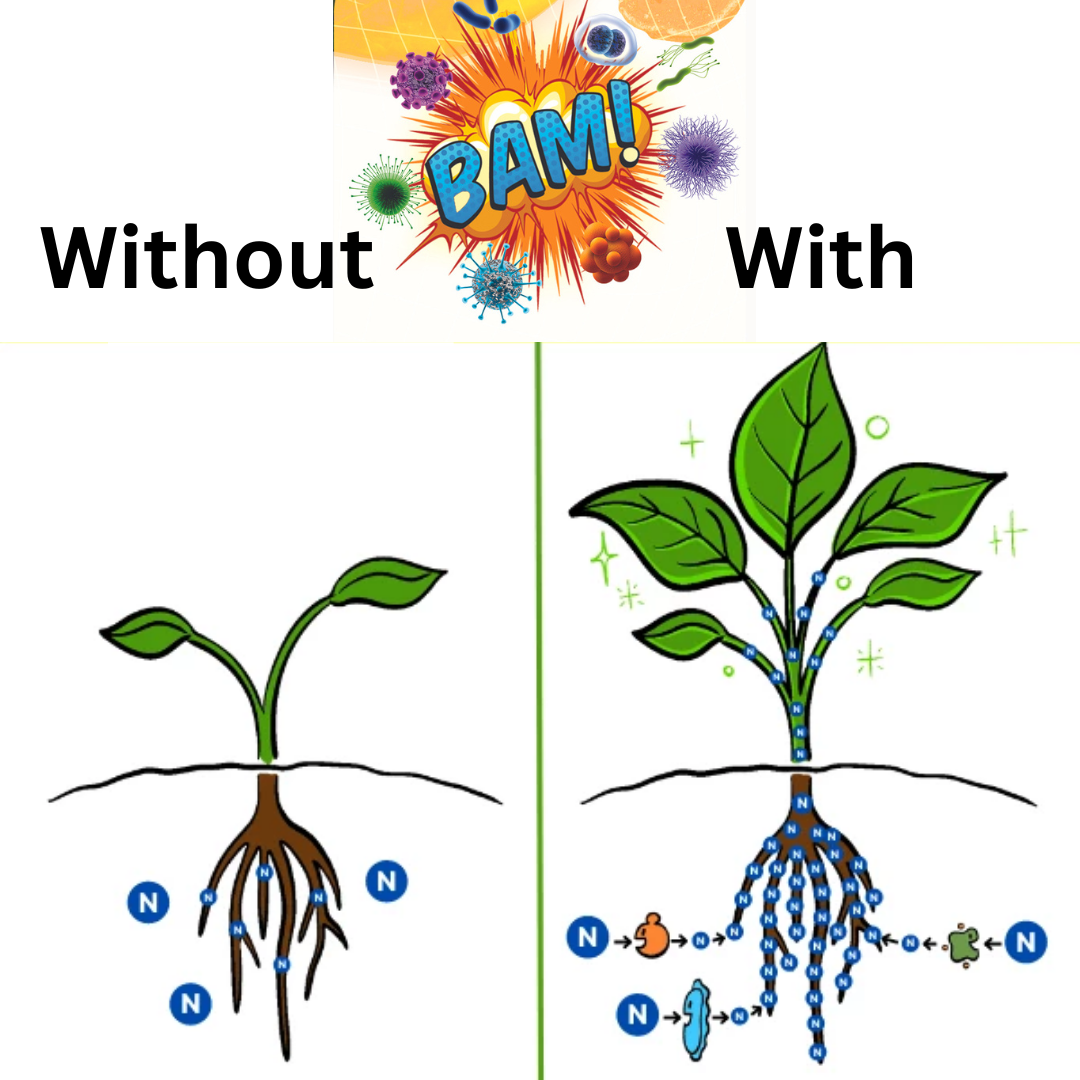
These enzymatic systems don't just benefit the microbes producing them. Enhanced microbial enzyme activity accelerates the breakdown of complex organic molecules, phosphorus solubilization from mineral forms, nitrogen fixation in legume symbioses, and the degradation of recalcitrant compounds like lignin. The result is soil that processes nutrients faster, retains less toxic intermediates, and delivers more bioavailable minerals to plant roots.
The pH Modification Effect
One underappreciated benefit of supporting SRB activity is the pH buffering effect these microorganisms provide. As SRB metabolize sulfate and reduce it to sulfide, they consume protons (H⁺ ions) from the soil solution, gradually raising soil pH. This is particularly valuable in acidic soils where low pH limits nutrient availability and microbial diversity.
Research confirms that soils with active SRB populations show measurable increases in pH alongside reduced sulfate concentrations. For gardeners battling acid soil conditions without resorting to excessive lime applications, encouraging native SRB through sulfate provision offers a biological pH management strategy that works incrementally and sustainably.

Practical Application: Feeding Your Microbial Workforce
Understanding the science is one thing; applying it is another. Most municipal water supplies contain chlorine and chloramines that actively suppress soil microbial populations. Even if you're adding compost and organic fertilizers, irrigating with microbially-hostile water undermines your investment.
The solution involves two components: removing microbial inhibitors from irrigation water and simultaneously providing sulfated trace minerals that fuel microbial metabolism. Mineral-based water treatment systems that chelate chlorine and heavy metals while introducing bioavailable sulfate and trace elements address both requirements in a single application.
For gardeners using Drops of Balance or similar sulfated mineral concentrates, the dosing is straightforward: typically 0.5 mL per gallon for irrigation water. This concentration provides adequate sulfate substrate for microbial populations without over-saturating soil solution. For establishing new beds or remediating damaged soils, foliar applications at 2 mL per gallon can deliver trace minerals directly to leaf surfaces while also enriching soil when the solution drips to ground level.
The Microbial Networking Effect
Recent research reveals that SRB don't work in isolation: they're networked into complex microbial communities where metabolic byproducts from one species become substrates for others. This syntrophic cooperation means that supporting SRB through sulfate provision creates cascading benefits across the entire soil microbiome.
When SRB are metabolically active, they modify local chemical conditions in ways that favor other beneficial microorganisms. The precipitation of metal sulfides removes toxins that would otherwise inhibit fungal populations. The pH increase from sulfate reduction creates favorable conditions for nitrogen-fixing bacteria. The organic acids produced during sulfate metabolism chelate phosphorus from mineral forms, making it available to mycorrhizal fungi that then transfer it to plant roots.
This is why trace minerals for soil health can't be evaluated in isolation. Sulfated trace minerals don't just feed individual microbes: they activate interconnected metabolic networks that amplify soil functionality far beyond what any single nutrient addition could accomplish.

Signs Your Soil Microbes Are Mineral-Starved
How do you know if your soil would benefit from sulfated trace mineral supplementation? Several indicators suggest microbial populations are operating below their metabolic potential:
Slow organic matter decomposition: Undecomposed mulch, persistent thatch layers, or organic amendments that don't break down indicate limited microbial activity. Adequate trace minerals accelerate enzymatic processes that drive decomposition.
Poor nutrient response: If plants show minimal improvement after fertilization, the issue likely isn't nutrient availability but rather nutrient accessibility. Microbes convert nutrients into bioavailable forms: without active microbial populations, even abundant nutrients remain locked up.
Persistent soil toxicity symptoms: Stunted growth, chlorosis, or other toxicity indicators despite soil tests showing acceptable contamination levels suggest that natural detoxification processes (like SRB metal precipitation) aren't functioning optimally.
pH instability: Soils that require frequent pH adjustments may lack the buffering capacity that active microbial communities provide through their metabolic activities.
Looking Forward: Regenerative Soil Management
The shift toward regenerative agriculture emphasizes biological approaches to soil fertility rather than chemical interventions. At the foundation of these systems lies a simple truth: healthy soil microbiomes require adequate trace mineral nutrition just as plants do.
By understanding how sulfated trace minerals fuel microbial metabolism: from sulfate-reducing bacteria that detoxify heavy metals to sulfur-oxidizing bacteria that maintain nutrient cycling: gardeners can make informed decisions about water treatment and soil amendments that work with biology rather than against it.
Your soil contains trillions of microorganisms capable of extraordinary biochemical transformations. They can immobilize toxins, solubilize minerals, fix atmospheric nitrogen, and synthesize plant growth hormones: but only when they have the metabolic fuel to do so. Sulfated trace minerals aren't optional extras in this system. They're the fundamental substrates that determine whether your soil microbiome operates at subsistence level or peak performance.
The difference shows up in your harvest.