
Supercharge Your Compost: The Role of Trace Minerals in Decomposition
For many gardeners and sustainable farmers, composting is viewed through a relatively simple lens: the balance of "greens" (nitrogen-rich materials) and "browns" (carbon-rich materials). While maintaining a Carbon-to-Nitrogen (C:N) ratio of approximately 30:1 is a fundamental requirement for a healthy compost pile, this chemical framework only tells half the story. To truly supercharge the decomposition process, one must look toward the microscopic level: specifically, the role of trace minerals in fueling microbial metabolism.
Decomposition is not a passive event; it is a complex biological process driven by billions of bacteria, fungi, and actinomycetes. These microorganisms require more than just fuel and structural materials; they require biological catalysts. In the world of biochemistry, these catalysts are enzymes, and many enzymes cannot function without the presence of specific trace minerals.
The Microbial Engine: Why Minerals Matter
The primary goal of composting is the stabilization of organic matter into humus. This transformation is carried out by aerobic microorganisms that "burn" carbon for energy and use nitrogen to build proteins and cellular structures. However, the metabolic pathways that allow a bacterium to break down a piece of cellulose or a lignin molecule are dependent on enzymatic activity.
Trace minerals: including iron, manganese, copper, zinc, boron, and calcium: act as essential cofactors. A cofactor is a non-protein chemical compound that is required for an enzyme's biological activity. Think of an enzyme as a high-powered machine; the trace mineral is the spark plug or the specific gear that allows that machine to turn over. Without these micronutrients, microbial populations may exist, but their metabolic rate slows down significantly, leading to "cold" compost piles that take months or even years to fully break down.
Key Minerals and Their Biological Functions
Research into microbial ecology highlights several specific minerals that are non-negotiable for efficient decomposition:
- Iron (Fe): Essential for the respiratory chain. Microbes use iron-containing proteins (cytochromes) to transfer electrons during the oxidation of organic matter.
- Calcium (Ca): While often considered a secondary nutrient, calcium is vital for maintaining the structural integrity of microbial cell walls and plays a role in enzymatic signaling. It also helps stabilize the pH of the compost pile, preventing it from becoming too acidic during the initial breakdown phases.
- Copper (Cu) and Zinc (Zn): These are vital components of various metalloenzymes that facilitate the breakdown of complex carbohydrates and proteins.
- Boron (B): Important for the structural integrity of fungal cell walls, which are primary decomposers of woody, carbon-heavy materials.
By ensuring these minerals are present in a bioavailable form, you provide the "tools" necessary for microbes to work at peak efficiency.
Accelerating Decomposition Through Mineral Supplementation
Most traditional composting guides assume that trace minerals are naturally present in the organic waste being added to the pile. While this is often true for high-quality organic matter, modern agricultural residues are frequently grown in depleted soils. If the source material is mineral-deficient, the resulting compost will be as well, and the decomposition process will lag.
Introducing a concentrated mineral solution, such as Drops of Balance, into your composting routine can provide the immediate catalytic support microbes need. When these minerals are introduced in a water-soluble form, they become immediately accessible to the microbial biofilm covering the organic matter. This leads to a measurable increase in microbial respiration and, consequently, an increase in the internal temperature of the compost pile. High temperatures are critical not only for speed but for the destruction of pathogens and weed seeds.

The Symbiosis of Minerals and Microbes
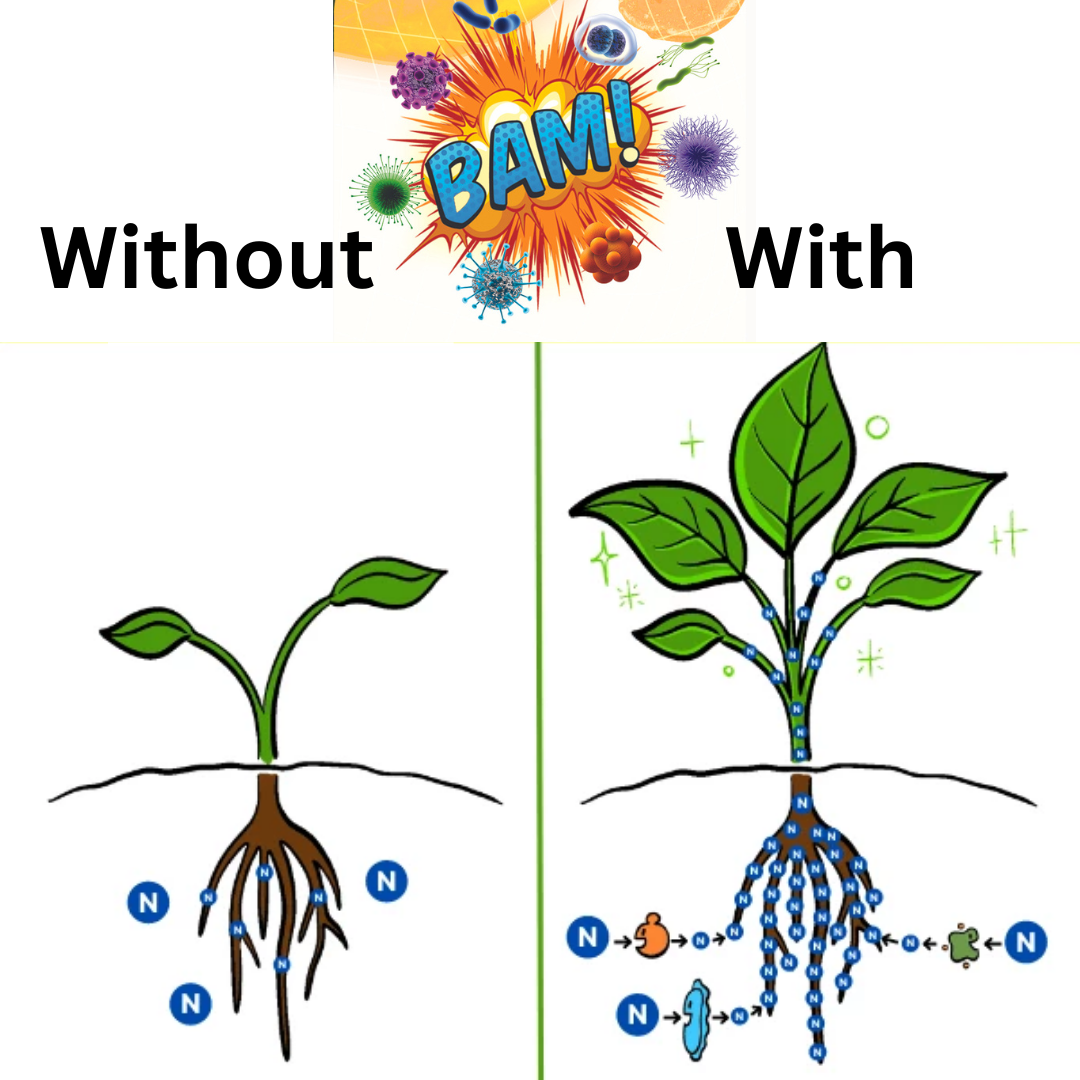
Minerals alone do not decompose organic matter; they empower the organisms that do. This is why the most effective composting strategies combine mineral supplementation with microbial inoculation. Products like BAM! (Beneficial Microorganisms) introduce a diverse array of specialized bacteria and fungi that are specifically selected for their ability to cycle nutrients and break down tough organic bonds.
When you add a microbial inoculant alongside trace minerals, you are essentially providing both the workers and the specialized tools they need to perform. This synergy ensures that the decomposition process stays aerobic and efficient.

Beyond the Pile: Finished Compost as a Soil Conditioner
The benefits of mineral-rich composting extend far beyond the speed of decomposition. The end goal of any composting effort is to produce a high-quality soil amendment. Trace minerals that are utilized by microbes during the composting process do not disappear; they are sequestered within the microbial biomass and the resulting humus.
When this finished compost is applied to a garden or field, it acts as a slow-release reservoir of micronutrients. Because these minerals have been "processed" by microorganisms, they are often in a more bioavailable state for plants than synthetic mineral fertilizers.
Furthermore, mineral-rich compost plays a crucial role in soil remediation. Scientific studies have shown that compost amended with trace elements can reduce the bioavailability of harmful heavy metals, such as cadmium and lead, in contaminated soils. The humic substances in the compost bind to these toxins, while the trace minerals help regulate the soil pH and promote the sorption of contaminants onto soil colloids, effectively "locking" them away from plant roots.
Maintaining the Balance: Practical Tips
To supercharge your compost using the principles of trace mineral science, follow these guidelines:
- Monitor Moisture with Mineral Solutions: Instead of using plain tap water (which may contain chlorine that inhibits microbial growth), use water treated with Drops of Balance. This removes harmful chemicals while simultaneously adding a spectrum of trace minerals to the pile.
- Aerate Regularly: Microbial metabolism requires oxygen. Trace minerals facilitate the transfer of electrons, but oxygen is the ultimate electron acceptor in aerobic respiration. Use a compost turner or fork to ensure the center of the pile receives adequate airflow.
- Balance Your Ratios: Stick to the 30:1 C:N ratio by mixing high-nitrogen "greens" (kitchen scraps, fresh grass clippings) with high-carbon "browns" (leaves, straw, PittMoss).
- Inoculate Early: Add microbial concentrates like BAM! during the initial buildup of the pile to establish a dominant population of beneficial organisms from the start.

The Scientific Edge in Soil Health
In the transition toward more regenerative and scientific approaches to gardening, we must recognize that soil health is a function of biological diversity and chemical availability. Trace minerals are the bridge between the two. By viewing compost not just as a waste disposal method but as a biological manufacturing process, we can optimize the output to create nutrient-dense soil that supports robust plant growth.
Whether you are managing a small backyard bin or a large-scale agricultural operation, the addition of specific micronutrients can transform a sluggish decomposition process into a powerhouse of nutrient cycling. Investing in the microscopic needs of your decomposers pays dividends in the health of your soil and the vitality of your plants.
For those looking to integrate these scientific principles into their own growing practices, exploring comprehensive solutions like the Xtreme Gardening line or our specialized mineral bundles can provide the necessary inputs to bridge the mineral gap.

By focusing on the trace mineral requirements of microbial metabolism, you aren't just making compost; you are engineering a high-performance biological system. The result is faster turnaround times, higher nutrient density, and a more resilient ecosystem in your garden.