
The Glyphosate Problem: Is Your Tap Water Poisoning Your Veggie Patch?
You've invested in heirloom seeds. You've composted religiously. You've banned synthetic pesticides from your property. But here's the uncomfortable truth: if you're watering your organic garden with untreated tap water, you might be introducing one of agriculture's most controversial herbicides directly into your soil ecosystem: glyphosate.
This isn't a conspiracy theory. It's measurable chemistry with documented consequences for soil health, microbial communities, and ultimately, the vitality of your vegetable patch.
What Is Glyphosate and Why Is It in Your Water?
Glyphosate is the active ingredient in Roundup and numerous other herbicides, making it the most widely used weed killer in global agriculture. As a non-selective herbicide, glyphosate doesn't discriminate: it's designed to kill nearly any plant it contacts by disrupting the shikimic acid pathway, a critical metabolic route in plants and microorganisms.
The compound's prevalence creates an inevitable problem: agricultural runoff. When glyphosate is applied to fields, lawns, and public spaces, rainfall and irrigation carry residues into groundwater, streams, and eventually, municipal water supplies. Despite filtration processes at treatment facilities, detectable levels persist in tap water across residential areas.
Recent analysis of 85 U.S. tap water samples revealed glyphosate presence in 35 cases, with concentrations reaching up to 0.3 parts per billion (ppb). While this remains well below the EPA's legal limit of 700 ppb for drinking water, regions with intensive agricultural activity show elevated levels. In Veneto, Italy, for example, tap water samples measured 0.17 micrograms per litre: nearly double the European Union's regulatory norm.

The Soil Microbiome Under Siege
Here's where organic gardening intersects with water chemistry in unexpected ways. The same shikimic acid pathway that glyphosate targets in weeds exists in soil bacteria and fungi: the microscopic workforce responsible for nutrient cycling, disease suppression, and plant communication.
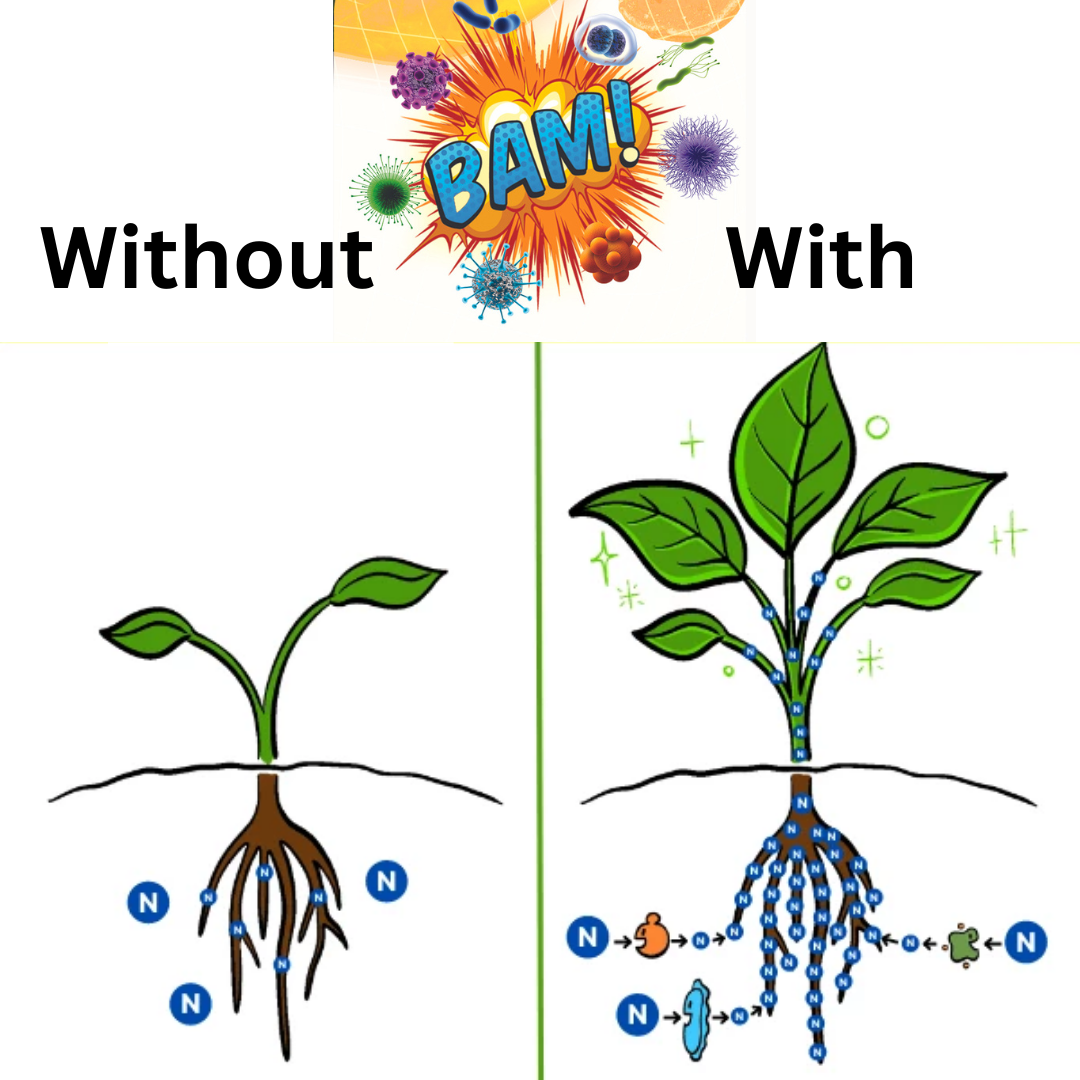
Soil health depends entirely on microbial diversity. Beneficial bacteria convert atmospheric nitrogen into plant-available forms. Mycorrhizal fungi extend root systems through hyphal networks, accessing water and minerals beyond a plant's physical reach. Actinomycetes decompose organic matter and produce natural antibiotics that protect roots from pathogens.
When glyphosate enters this ecosystem: even at sub-herbicidal concentrations: it doesn't need to kill plants directly to cause damage. Research indicates that chronic low-level exposure can:
- Reduce populations of nitrogen-fixing bacteria (Bradyrhizobium, Rhizobium species), limiting natural fertility
- Disrupt mycorrhizal colonization, weakening drought resistance and nutrient uptake efficiency
- Shift microbial community composition toward glyphosate-resistant species, which aren't necessarily beneficial for plant health
- Decrease enzyme activity in soil, slowing decomposition and nutrient release from organic matter
For the organic gardener, this creates a bitter irony: you're adding compost and cover crops to feed soil biology, while simultaneously watering with a substance that undermines that very biology.
The Cumulative Effect: Why Low Levels Still Matter
Defenders of current glyphosate limits often point to the massive gap between detected tap water levels (0.1-0.3 ppb) and concentrations used for herbicidal applications (thousands of ppm). This misses the fundamental difference between acute toxicity and chronic ecosystem disruption.
Gardens aren't watered once. Over a growing season, a modest 10x10 foot vegetable bed might receive 200-300 gallons of water. If that water contains even 0.2 ppb glyphosate, the cumulative introduction into your soil's top six inches becomes significant when measured against the microscopic scale at which bacteria and fungi operate.
Consider also the persistence factor. Glyphosate's half-life in soil ranges from 2 to 197 days depending on microbial activity, pH, and temperature. In compacted, low-oxygen conditions: common in urban soils: degradation slows considerably. This means each watering adds to an existing reservoir, particularly in gardens that receive daily irrigation during summer.
For organic gardeners pursuing certification, this creates an additional regulatory concern. While USDA organic standards don't currently require testing for glyphosate in irrigation water, the philosophy of organic production centers on minimizing synthetic inputs and protecting soil biology. Using contaminated water runs counter to these principles, even if technically permissible.
The Private Well Problem
Municipal water users at least benefit from monitoring and public reporting. Private well owners: common in rural homesteading communities: operate without routine testing for glyphosate. Wells located near agricultural land, golf courses, or landscapes managed with conventional herbicides face the highest contamination risk.
Unlike chlorine or fluoride, which have obvious sensory signals (taste, odor), glyphosate is colorless, odorless, and undetectable without laboratory analysis. Your well water could contain levels significantly above the municipal samples discussed earlier, with zero indication until you commission specific testing: which most homeowners never do.

Water Treatment as Agricultural Defense
Recognizing glyphosate contamination is one thing. Removing it from irrigation water requires specific treatment approaches, as conventional filtration methods prove largely ineffective.
Standard activated carbon filters, widely used for chlorine and taste improvement, show minimal glyphosate reduction. The compound's molecular structure and water solubility allow it to pass through most mechanical and chemical filtration systems designed for municipal contaminants.
Advanced treatment options include:
- Reverse osmosis systems, which remove 90-95% of glyphosate but waste significant water (typically 3-4 gallons rejected per gallon produced) and strip all minerals
- Activated alumina filters, effective but requiring frequent replacement and producing aluminum-laden backwash
- Specialized ion exchange resins, expensive and requiring professional installation
For agricultural applications where hundreds or thousands of gallons are required weekly, these systems become cost-prohibitive and impractical.
This is where EPA-certified concentrated mineral solutions offer a distinct advantage. Drops of Balance utilizes sulfated trace minerals that chemically bind and neutralize glyphosate molecules through a process called chelation: essentially sequestering the herbicide into an inert, non-bioavailable form that won't interfere with soil microbiology.
The EPA certification validates this removal capacity through standardized testing protocols, providing documented efficacy rather than marketing claims.
Beyond Removal: Restoring Mineral Balance
Glyphosate removal addresses only half of the water quality equation for optimal soil health. Municipal treatment processes, particularly chlorination, destroy beneficial minerals and leave behind compounds that further suppress microbial activity.
High-quality mineral concentrates simultaneously perform two critical functions:
- Neutralize toxins including glyphosate, chlorine, chloramine, and fluoride
- Replenish bioavailable trace minerals (sulfur, magnesium, boron, zinc, manganese) that support both plant metabolism and microbial enzyme systems
This dual action transforms tap water from a potential soil contaminant into a fertility tool. The same sulfated minerals that bind glyphosate also feed beneficial bacteria, essentially turning your irrigation water into a dilute microbial inoculant with every application.
For gardens incorporating compost tea, worm castings, or commercial biological products, treating your base water becomes even more critical. There's little point in brewing expensive microbial solutions if you're diluting them with glyphosate-containing water before application.
Practical Implementation for the Home Gardener
Addressing glyphosate in irrigation doesn't require industrial equipment or agronomic expertise. A concentrated mineral solution approach scales efficiently from a few container plants to multi-acre homesteads:
- Small gardens (under 100 sq ft): A 2-8 oz bottle treats 50-200 gallons, sufficient for an entire season of container gardens or raised beds
- Standard vegetable gardens (100-1000 sq ft): A 16-32 oz bottle handles seasonal irrigation needs for most suburban plots
- Large-scale applications: Gallon and 5-gallon concentrates provide cost-effective treatment for greenhouse operations, market gardens, or homesteads with extensive irrigated acreage
The treatment rate: typically 0.5 ml per gallon for plant water: means a little concentrate goes remarkably far. Unlike reverse osmosis systems that require expensive installation and constant maintenance, mineral treatment involves simply adding measured concentrate to your watering can, drip system reservoir, or rain barrel.

Testing and Transparency
Organic gardening principles emphasize verification over assumption. If you're serious about protecting your soil biology from glyphosate, periodic water testing provides baseline data and validates treatment effectiveness.
Certified laboratories offer glyphosate-specific analysis, typically for $100-200 per sample. Test both your source water and treated water to quantify removal rates. For private well owners in agricultural areas, annual testing should be considered a baseline best practice.
Beyond personal verification, demand transparency from water treatment products. EPA certification, third-party laboratory validation, and published mineral analysis separate legitimate solutions from unsubstantiated marketing.
The Bigger Picture
Glyphosate in tap water represents a larger truth about modern organic gardening: isolation from industrial agriculture is increasingly impossible. Wind drift, runoff, contaminated compost, and now irrigation water create persistent challenges for growers committed to truly clean production.
The solution isn't perfection: it's informed intervention. Understanding what's in your water, how it affects soil health, and which treatment methods offer genuine protection allows you to make strategic decisions that align with organic principles.
Your soil microbiome can't read ingredient labels or choose its water source. But you can. Every gallon you treat is an investment in the microscopic workforce that determines whether your garden thrives or merely survives.
Because at the end of the day, organic gardening isn't just about what you don't spray on your plants. It's about what you do put into your soil: including the water that carries either contamination or restoration with every irrigation cycle.