
The Secret to Summer Tomatoes: Why Clean Water is More Important Than Fertilizer in July
As July temperatures climb across the country, gardeners often notice a shift in their tomato plants. The vigorous green growth of June may give way to curling leaves, dropped blossoms, or a general lack of vitality. The instinctive reaction for many is to reach for a high-potassium "bloom booster" or a heavy dose of nitrogen-rich fertilizer. However, scientific observation of plant physiology suggests that during the peak of summer, the bottleneck for tomato productivity isn't a lack of nutrients: it is the quality of the water being used to deliver them.
In the high heat of July, tomato plants enter a state of maximum transpiration. They move incredible volumes of water from the soil, through the xylem, and out through the stomata in their leaves to maintain metabolic cooling. When this water is laden with municipal additives like chlorine and fluoride, the "delivery system" for your fertilizer becomes a delivery system for toxins that can paralyze the plant’s internal chemistry.
The July Transpiration Trap
To understand why water quality trumps fertilizer in July, we must look at the rate of consumption. In cooler months, a plant might need a gallon of water every few days. In the 90°F+ heat of mid-summer, that same plant may require a gallon or more every single day.
If you are using municipal tap water, you aren't just giving the plant H2O; you are providing a steady stream of chlorine, chloramines, and fluoride. In small doses during the spring, the soil biology can sometimes buffer these chemicals. But in July, the sheer volume of water required means these toxins accumulate in the soil and the plant tissues at an accelerated rate.
This creates a "Transpiration Trap." The plant needs more water to survive the heat, but the more it drinks, the more it accumulates chemicals that hinder its ability to process the very fertilizer you’ve provided.
The Invisible Saboteurs: Chlorine and Soil Microbiology
The most significant impact of poor water quality is not on the plant itself, but on the rhizosphere: the thin layer of soil surrounding the roots. This area is home to billions of beneficial bacteria and fungi (mycorrhizae) that act as the "stomach" for your tomato plants.
Fertilizer, whether organic or synthetic, is rarely in a form that plants can absorb immediately. Soil microbes must break these nutrients down into bioavailable ions. Municipal water is treated with chlorine specifically because it is a potent biocide: it is designed to kill microorganisms.
When you water your garden with chlorinated tap water in July, you are effectively "sanitizing" your soil daily. This kills the beneficial microbes responsible for nutrient cycling. You can add all the fertilizer you want, but if the microbial "delivery crew" has been decimated by chlorine, those nutrients will sit in the soil, unused, leading to nutrient lockout.
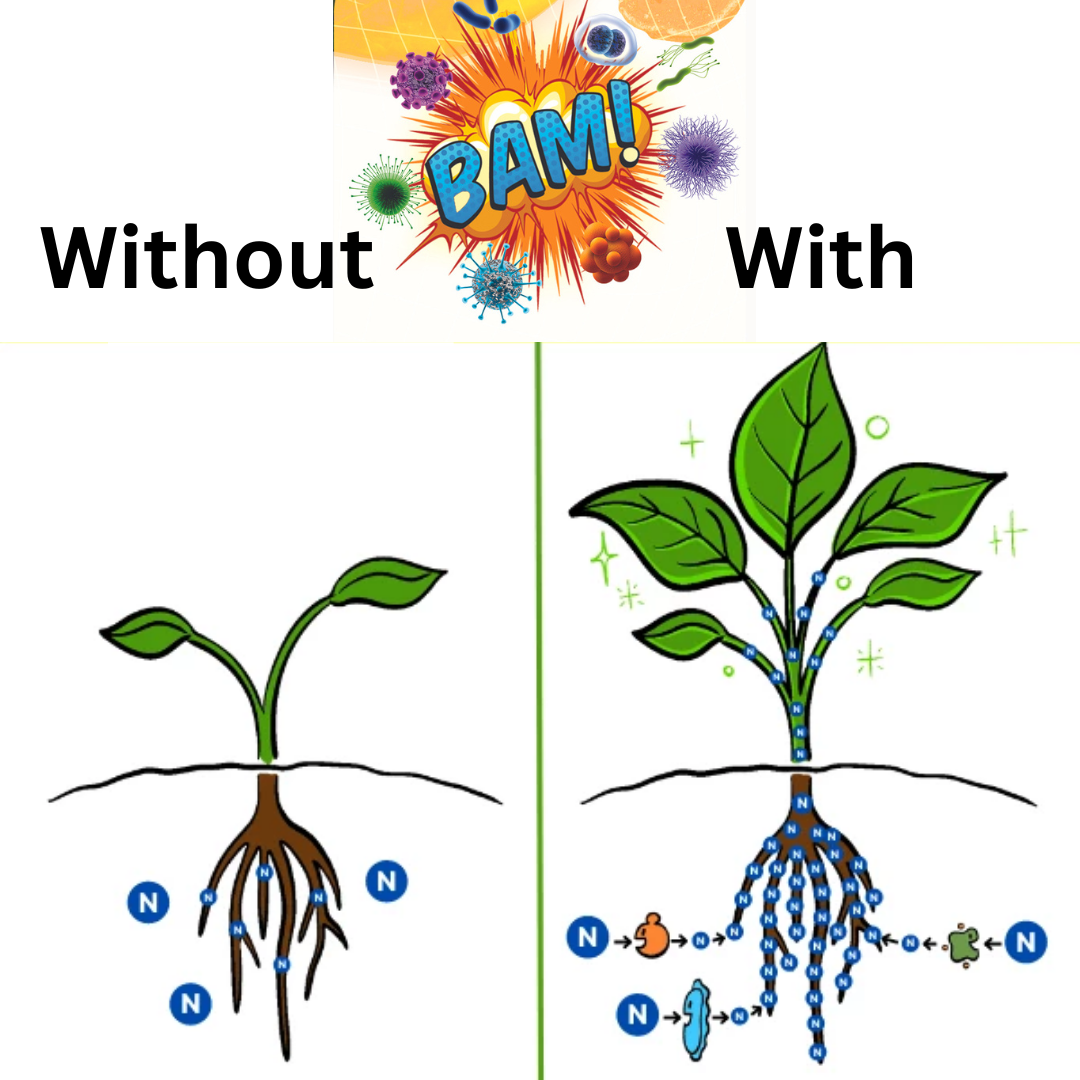
As seen in the comparison above, plants provided with a treated, mineral-rich environment (using solutions like Drops of Balance) show significantly more robust root structures and foliage. This is because the water has been stripped of its biocidal properties, allowing the soil's natural biology to thrive.
Fluoride: The Enzymatic Inhibitor
While chlorine attacks the soil, fluoride often attacks the plant directly. Unlike chlorine, which can dissipate into the air over time, fluoride remains in the water and accumulates in the plant’s vascular system.
Scientific studies have shown that fluoride can inhibit several key enzymatic processes within plants, specifically those related to respiration and photosynthesis. In tomatoes, high fluoride levels can lead to "tip burn" or necrosis, where the edges of the leaves turn brown and die. This reduces the surface area available for photosynthesis, meaning the plant has less energy to put into fruit production. No amount of fertilizer can fix a plant whose internal "engine" is being stalled by fluoride accumulation.
For those interested in the technicalities of removing these persistent chemicals, understanding how to remove fluoride from water for plants is essential for any serious summer gardener.
Why Fertilizer Can Sometimes Make Things Worse
In July, the soil is often dry and the salt index of many fertilizers becomes a risk. Many commercial fertilizers are essentially "salts." When water quality is low and evaporation is high, these salts can build up in the root zone.
If you add more fertilizer to a plant that is already struggling with water stress and chemical toxicity, you increase the osmotic pressure in the soil. This makes it even harder for the roots to pull in water: a phenomenon known as "physiological drought." The plant may be sitting in wet soil, but because the salt and chemical concentration is too high, it cannot absorb the moisture it needs. This is a primary cause of blossom end rot, which is fundamentally a calcium deficiency caused by inconsistent or poor-quality water uptake.

Restoring the Balance with Mineralization
The solution to summer tomato success isn't to stop fertilizing, but to ensure your water is an asset rather than a liability. This is where the science of mineralization comes into play.
Using a concentrated mineral solution like Drops of Balance allows you to treat tap water through a process of precipitation and ion exchange. The sulfated trace minerals in the solution bind to toxins like fluoride, chlorine, and heavy metals, rendering them inert. This "cleans" the water, making it safe for the delicate microbiology of the soil.
Furthermore, these solutions add back essential trace minerals that are often missing from standard N-P-K fertilizers. These trace minerals act as catalysts for the plant’s immune system and metabolic functions. You can explore the full range of these trace mineral benefits to see how they support high-yield gardening.
Practical Steps for July Success
To maximize your tomato harvest during the hottest month of the year, prioritize your water management strategy over your fertilization schedule:
- Treat Your Water: Use a solution like the Drops of Balance 1-gallon concentrate to treat your irrigation water. This ensures you aren't poisoning your soil microbes every time you hydrate your plants.
- Water Deeply and Early: Water at the base of the plant before the sun is at its peak. This reduces evaporation and ensures the water reaches the root zone where it is needed most.
- Mulch Heavily: Protect the soil surface with straw or wood chips. This keeps the soil temperature lower, preserving the microbial life you are working so hard to protect with clean water.
- Foliar Feeding: During extreme heat, plants may struggle to pull nutrients through their roots. A light foliar spray of mineralized water can provide a quick boost without increasing the salt load in the soil.

The Verdict: Water is the Foundation
While fertilizer provides the raw "fuel" for plant growth, water quality is the "engine" that determines if that fuel can be used. In the demanding environment of July, the engine is under extreme stress. By removing the inhibitors: chlorine and fluoride: and replacing them with supportive trace minerals, you allow the plant to function at its peak genetic potential.
This summer, before you reach for the next bag of fertilizer, take a look at your water source. Investing in clean, mineralized water is the single most effective way to ensure your tomato plants don't just survive the July heat, but thrive through it, producing the heavy, nutrient-dense fruit you’ve been working for all season.
For those managing larger garden plots or looking to scale their organic production, exploring wholesale mineral solutions can provide a cost-effective way to ensure every drop of water in your garden is contributing to health rather than hindering it.
Remember: A plant can survive with lean nutrients if its water is pure, but it will never thrive on the best nutrients if its water is toxic. Focus on the water, and the fruit will follow.