

Why pH Isn't Everything: The Role of Mineral Density in Water
Every gardener has heard the pH sermon. "Test your soil pH!" "Adjust your water pH!" "Blueberries need acidic conditions!" While pH management matters, the gardening community's near-obsessive focus on this single metric has overshadowed an equally critical factor: mineral density.
Here's the insider truth that experienced agronomists know but rarely gets discussed in mainstream gardening advice: pH is merely a measure of hydrogen ion concentration. It tells you nothing about the actual mineral content available for plant uptake. You can have perfectly pH-balanced water that's nutritionally barren, or mineral-rich water with suboptimal pH that still outperforms "balanced" but demineralized alternatives.
Understanding this distinction transforms how you approach plant nutrition and water treatment for plants.
The pH Myth: What the Number Actually Measures
pH quantifies acidity or alkalinity on a scale from 0 to 14, with 7 being neutral. This measurement reflects the concentration of hydrogen ions (H⁺) in solution. When gardeners obsess over achieving that "perfect" 6.0-6.5 pH range for most vegetables, they're attempting to optimize nutrient availability: not nutrient presence.
This is the critical distinction. pH influences how readily plants can access minerals already present in the soil solution. If those minerals aren't there to begin with, perfect pH becomes irrelevant. It's like having a perfectly tuned radio with no broadcast signal.
Consider reverse osmosis (RO) water, which typically measures around 6.5-7.0 pH: ideal for most plants. Yet RO filtration removes 92-99% of beneficial minerals including calcium, magnesium, and essential trace elements. Despite its "perfect" pH, RO water contributes virtually nothing to plant nutrition and may even leach minerals from soil over time through osmotic pressure.
Mineral Density: The Overlooked Factor in Plant Nutrition
Mineral density refers to the concentration and diversity of dissolved mineral ions in water. These include macronutrients (calcium, magnesium, potassium, sulfur) and micronutrients (iron, manganese, zinc, copper, boron, molybdenum).
Research in human health provides compelling evidence for mineral density's importance independent of pH. Studies of 255 postmenopausal women found that regular consumption of calcium-rich mineral water significantly increased bone mass density compared to low-calcium water: regardless of pH levels. Each 100 mg/day increase in calcium intake from water correlated with a 0.5% increase in femoral bone density.
Plants exhibit similar mineral dependencies. The mineral composition of irrigation water directly affects:
Nutrient uptake efficiency: Minerals don't work in isolation. Calcium facilitates the transport of other nutrients across cell membranes. Magnesium activates enzymatic processes essential for photosynthesis and protein synthesis. Sulfur enables the formation of amino acids and chlorophyll.
Root development and structure: Calcium strengthens cell walls in root tissue, enabling plants to push through compacted soil and resist pathogen invasion. Boron regulates calcium utilization and affects cell division in growing root tips.
Stress resistance: Potassium regulates stomatal function, helping plants manage water stress. Silica (often present in mineral-rich water) strengthens plant tissues against physical damage and fungal infection.
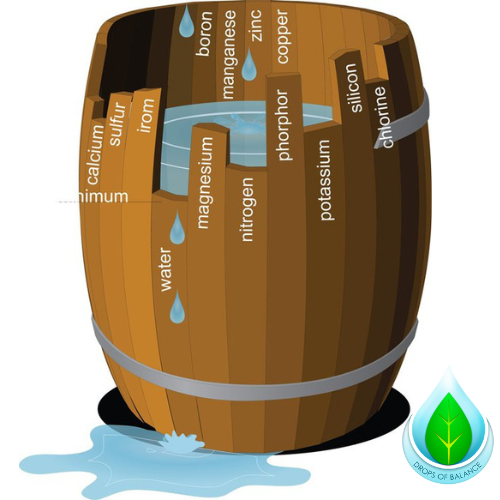
Liebig's Law and the Limiting Factor Principle
Justus von Liebig's Law of the Minimum states that plant growth is controlled not by the total resources available, but by the scarcest resource (the limiting factor). Even if all other nutrients exist in abundance, deficiency in a single element constrains overall growth.
This principle explains why pH obsession can backfire. You might achieve perfect pH while inadvertently creating mineral deficiencies that become the new limiting factors. A soil at pH 6.5 with depleted calcium, magnesium, and boron will underperform compared to soil at pH 7.2 with robust mineral density.
High-quality water treatment for plants addresses this by simultaneously managing both pH influence and mineral availability. Sulfated trace minerals, for example, naturally buffer pH while delivering bioavailable nutrients. Sulfate forms are particularly valuable because sulfur itself functions as a macronutrient and the sulfate ion enhances mineral solubility.
Soil Buffering Capacity: The Mineral Connection
Soil buffering capacity: its resistance to pH change: depends almost entirely on mineral content, particularly calcium carbonate and magnesium carbonate. Soils rich in these minerals maintain stable pH even when acidifying or alkalizing inputs are added. Mineral-poor soils experience dramatic pH swings from minor disturbances.
When you irrigate with mineral-dense water, you're continuously replenishing the soil's buffering capacity. Each watering deposits small quantities of calcium, magnesium, and other minerals that stabilize the soil chemistry. Over time, this creates a more resilient growing environment that self-regulates pH within acceptable ranges.

Conversely, consistent irrigation with demineralized water (RO, distilled, or highly filtered municipal water) gradually depletes soil minerals through leaching. The soil loses buffering capacity, becomes more vulnerable to pH fluctuations, and requires increasingly aggressive pH adjustment interventions.
The Microbiome Factor
Recent soil science research emphasizes the critical role of beneficial microorganisms in nutrient cycling. These bacteria, fungi, and archaea break down organic matter, solubilize minerals, and form symbiotic relationships with plant roots.
Here's where mineral density becomes especially relevant: beneficial microbes require minerals for their own metabolic processes. Studies show that magnesium, calcium, and sulfur support microbial populations that enhance nutrient availability. Low-mineral water creates conditions where microbial activity declines, regardless of pH.
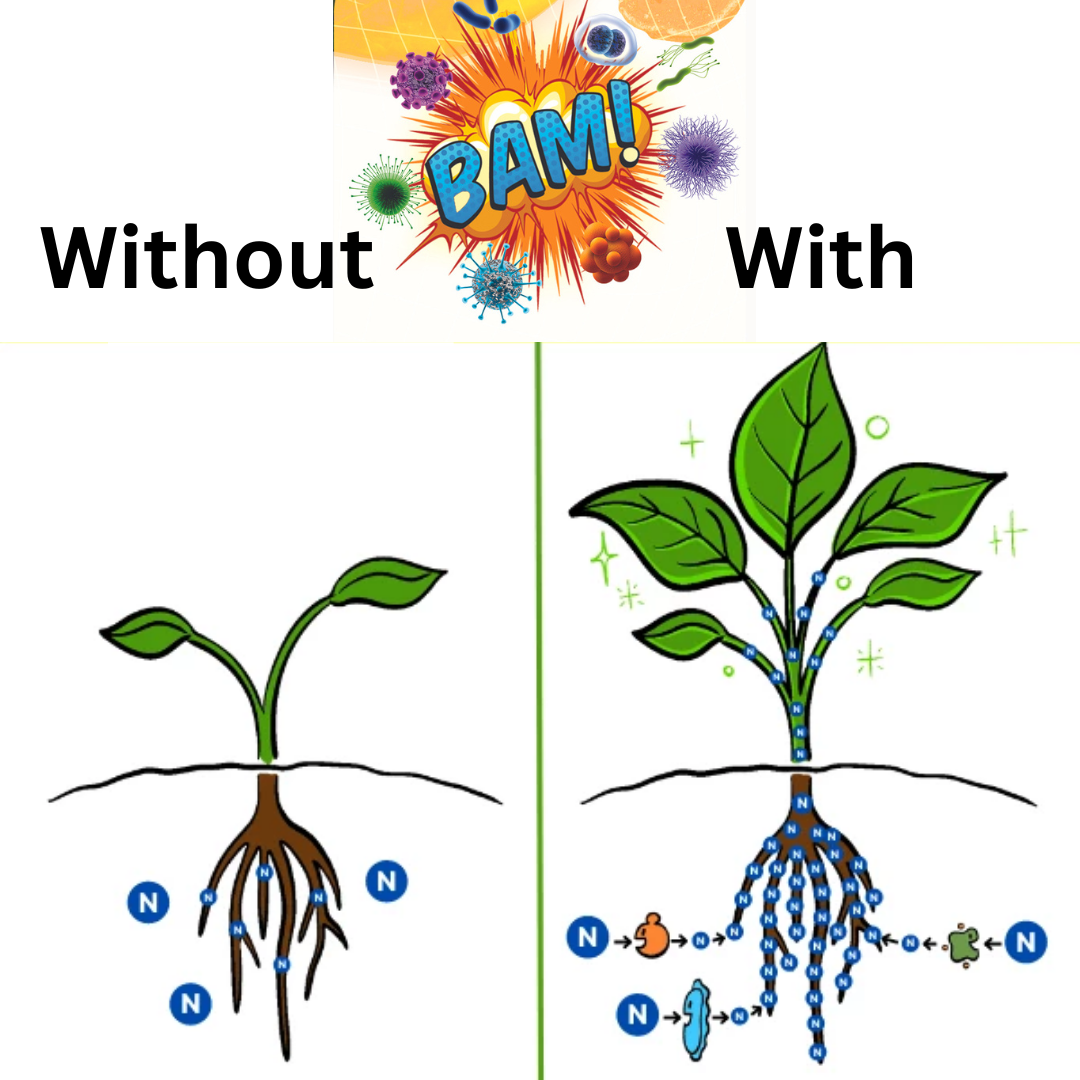
The visible difference between plants grown with mineral-rich versus demineralized water often reflects microbial health as much as direct mineral uptake. Robust microbial populations create a multiplier effect: they transform relatively insoluble minerals into plant-available forms and produce growth-promoting compounds that extend beyond basic nutrition.
Practical Implications for Water Treatment
Professional growers increasingly recognize that optimal irrigation water contains both appropriate pH and adequate mineral density. This dual optimization requires a different approach than conventional pH-only adjustment:
Avoid over-filtration: While removing chlorine, chloramine, and heavy metals is essential, complete demineralization creates more problems than it solves. Target filtration systems that remove contaminants while preserving beneficial minerals.
Remineralize when necessary: If you use RO water or naturally soft water, remineralization isn't optional: it's essential for long-term plant health. Concentrated mineral solutions provide a practical method to restore calcium, magnesium, and trace elements without complicated mixing protocols.
Consider sulfated minerals: Sulfate forms (calcium sulfate, magnesium sulfate, potassium sulfate) offer superior bioavailability compared to carbonate forms. They also contribute sulfur, which many soils lack and most fertilizers don't adequately address.
Monitor electrical conductivity (EC): While not a complete picture, EC measurements indicate total dissolved solids, providing a proxy for mineral density. For most vegetables, irrigation water with EC between 0.8-1.5 mS/cm indicates adequate mineral content.
The Best Plant Food: Water That Works With Biology
The most effective plant nutrition strategy recognizes that water serves as both a delivery mechanism and a nutrient source. Best plant food isn't just what you add to water: it's the water itself when properly mineralized.

This represents a paradigm shift from treating water as an inert carrier to recognizing it as the primary interface between soil chemistry and plant physiology. Every irrigation event either contributes to or depletes the mineral foundation that supports long-term productivity.
Professional operations increasingly adopt concentrated mineral solutions that simultaneously address water purification and remineralization. These dual-purpose treatments remove chlorine, fluoride, and heavy metals while restoring essential trace minerals in bioavailable sulfate forms.
The results speak clearly: improved root development, enhanced stress tolerance, more vigorous growth, and greater resistance to pest and disease pressure. These outcomes reflect comprehensive nutrition: not just pH optimization but genuine mineral density that supports the full spectrum of plant physiological needs.
Moving Beyond the pH-Only Paradigm
The gardening industry's pH fixation represents outdated thinking from an era before we fully understood mineral interactions, microbial partnerships, and the limiting factor principle. Modern plant nutrition recognizes that pH management remains important but insufficient.
Mineral density deserves equal consideration in your water treatment strategy. When you evaluate irrigation water quality, ask not just "What's the pH?" but "What minerals are present, in what concentrations, and in what forms?"
This more sophisticated approach aligns with how plants actually function: as complex biological systems requiring diverse nutrients in proper ratios, delivered through water that supports rather than depletes soil chemistry.
Your plants don't care whether you understand the science. But they'll show you the difference when you finally give them water that delivers both pH balance and mineral nutrition. That's the insider knowledge that separates struggling gardens from thriving ones.