
Why 70+ Trace Minerals Will Change the Way You Feed Your Plants
If you’ve spent any time in a garden center or browsing hydroponic forums, you’ve seen the numbers: 10-10-10, 5-1-1, 20-20-20. These are the NPK ratios: Nitrogen, Phosphorus, and Potassium. For decades, the "Big Three" have been the holy trinity of plant nutrition. And while they are essential for structural growth and basic survival, focusing solely on NPK is a bit like trying to live on a diet of only white bread and water. You’ll survive, but you won't thrive.
The real secret to explosive growth, nutrient-dense harvests, and plants that practically defend themselves against pests lies in the 0.5%. We’re talking about trace minerals for soil and plant health. While they make up a tiny fraction of a plant's total mass, they are the catalysts that unlock a plant’s full genetic potential.
At Drops of Balance, we’ve seen how introducing a full spectrum of 70+ trace minerals can fundamentally transform a garden. Let’s dive into the science of why these "micro" nutrients have such a "macro" impact.
Beyond NPK: The Difference Between Fuel and Function
To understand why plant nutrition requires more than just NPK, we have to look at how plants actually work. Nitrogen builds leaves, Phosphorus builds roots and flowers, and Potassium regulates water and nutrient movement. They are the fuel.
Trace minerals, however, are the "spark plugs." They function as catalysts and enzyme cofactors. An enzyme is a protein that speeds up chemical reactions in the plant. Without the specific mineral needed to "activate" that enzyme, the reaction simply doesn't happen: or it happens so slowly that the plant becomes stressed.
Research shows that a comprehensive array of 70+ trace minerals enables plants to fully activate their genetic coding and enzymatic systems. Standard fertilizers usually only include the Big Three and maybe a handful of others like Zinc or Boron. By providing all 70+, you are giving the plant the tools it needs to produce a complete range of beneficial compounds, from vitamins to antioxidants.
The Science of Metabolic Completeness
When a plant has access to a full mineral profile, it achieves what scientists call "metabolic completeness." This means the plant can utilize macro elements (NPK) much more efficiently. It’s not just about growing a bigger tomato; it’s about growing a tomato that is packed with the secondary metabolites that provide real flavor and nutritional benefits to us.
Structurally sound but nutritionally compromised crops are the hallmark of modern industrial farming. These plants look great on the shelf but lack the "medicine" our bodies need. By focusing on trace minerals for soil, you are ensuring that the fruits and vegetables you grow are actually nutrient-dense.
Enhancing Photosynthesis and Yield
Photosynthesis is the engine of plant life. We often think it’s just about sun and water, but minerals sit at the steering wheel of this process:
- Iron: This mineral can increase photosynthetic capacity by 7 to 8 times. It does this by expanding the bandwidth of the light spectrum that the plant can absorb. More light absorption equals more energy for growth.
- Manganese: This is the limiting factor in many gardens. Manganese controls water hydrolysis (the splitting of water molecules) during photosynthesis. If you’re low on Manganese, your plant’s engine is essentially idling.
- Molybdenum: This rare mineral is crucial for nitrogen fixation. In some studies, molybdenum-rich soils showed yield increases of up to 600%. Without it, the plant cannot convert nitrate into proteins.

Specific Mineral Deep Dive: Small Amounts, Big Results
Let’s look at a few more of the 70+ minerals found in Drops of Balance and how they function as the architects of your garden:
Zinc and Growth Hormones
Zinc is responsible for the formation of auxins, which are the primary growth hormones in plants. Auxins govern leaf size and internodal spacing. If your leaves are small or stunted, it’s often not a lack of Nitrogen, but a Zinc deficiency preventing the plant from "signaling" itself to grow.
Silica and Structural Integrity
While not always classified as a primary nutrient, Silica is a game-changer for plant defense. It strengthens cell walls, creating a physical barrier against pathogens. Think of it as the plant’s "armor." It also activates the plant’s systemic acquired resistance (SAR), essentially "priming" its immune system to react faster to threats.
Cobalt and Boron: The Transport Team
Cobalt is essential for the health of the beneficial microbes in the soil, particularly those that fix nitrogen. Boron, on the other hand, regulates the movement of calcium and sugars throughout the plant. Without Boron, fruit quality suffers, leading to splitting or "hollow heart."
Disease and Pest Resistance: The High-Brix Shield
One of the most fascinating aspects of high-mineral nutrition is how it affects pests. It is a biological fact that many common garden pests: like aphids and mites: prefer plants with "incomplete metabolites." These insects have simple digestive systems that can only process simple sugars and free amino acids found in stressed, mineral-deficient plants.
When a plant has its full 70+ trace minerals, it produces complex carbohydrates and complete proteins. Pests literally cannot digest these. By increasing the "Brix" level (the sugar and mineral content) of your plant's sap through proper mineral loads, you create a natural repellent. A healthy, mineralized plant is a toxic environment for a pest, while a deficient plant is an all-you-can-eat buffet.
The Synergy of Minerals and Microbes
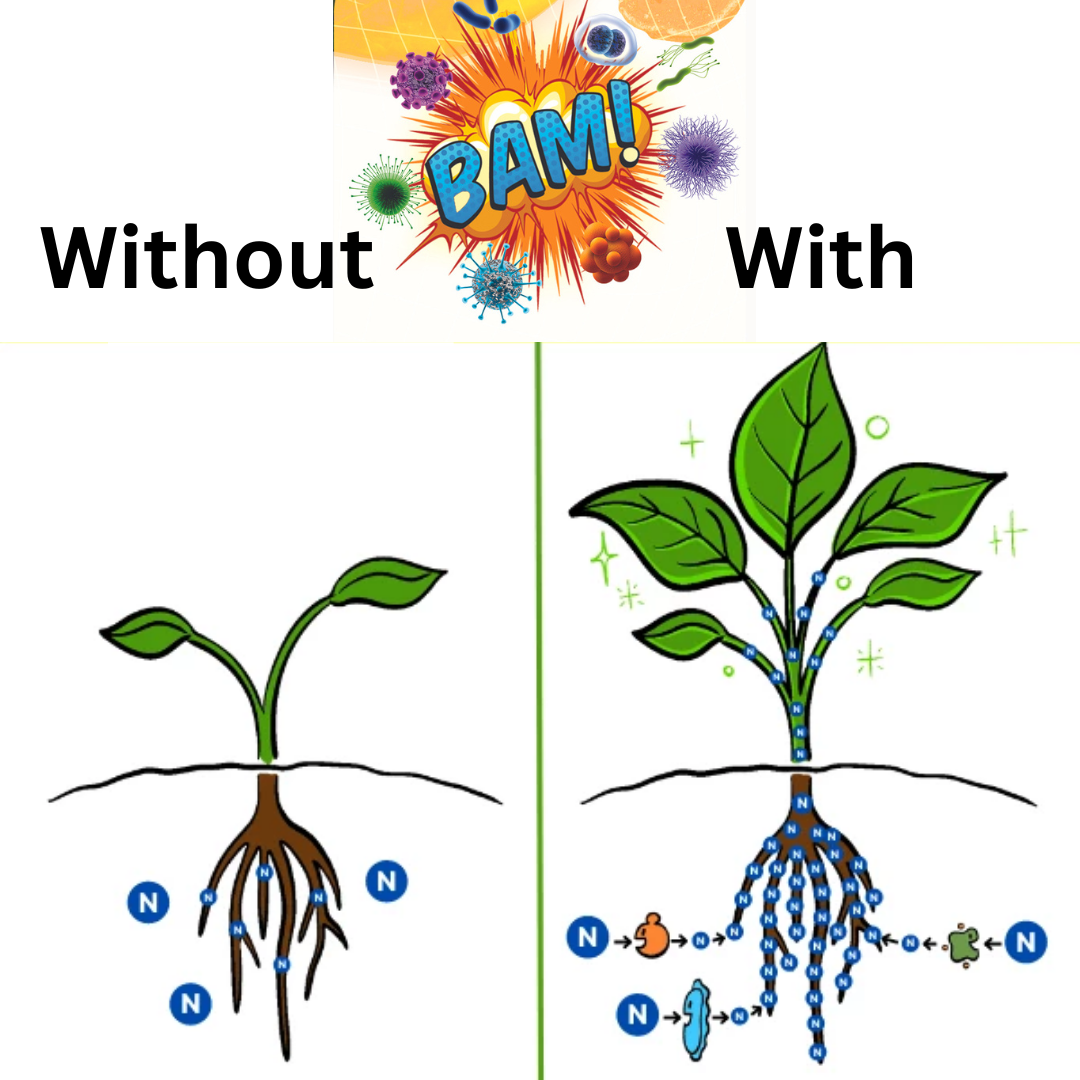
You can have all the minerals in the world in your soil, but if they aren't "bioavailable," the plant can’t eat them. This is where soil biology comes in. Beneficial bacteria and fungi act as the "digestive system" of the soil, breaking down minerals into a form that roots can absorb.
This is why we often recommend pairing Drops of Balance with a microbial inoculant. While the minerals provide the raw material, products like BAM! Microbial Inoculant provide the "workers" to deliver those minerals to the plant.

How to Use Drops of Balance for Your Plants
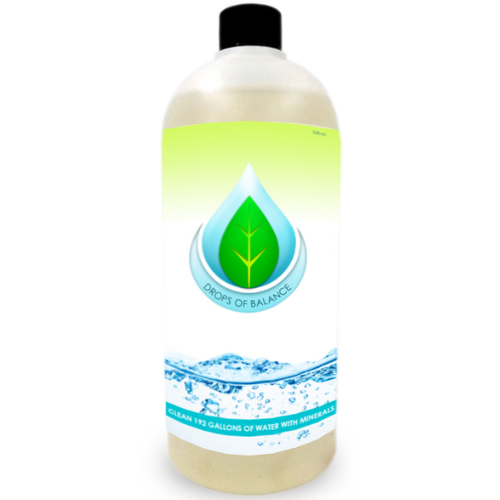
The beauty of Drops of Balance is its versatility. It’s a concentrated mineral solution that treats the water you're already giving your plants, removing harmful contaminants like chlorine and fluoride while adding back that essential mineral profile.
For those looking to maximize their plant nutrition, here is the protocol:
- Tap Water Treatment: Add 0.5 ml of Drops of Balance per gallon of tap water. This removes toxins and adds the trace mineral load.
- RO or Distilled Water: Because these water sources are "empty," they can actually leach minerals out of your soil. Add 0.25 ml per gallon to "re-mineralize" the water.
- Foliar Spraying: This is the "fast track" to plant health. Mix 2 ml per gallon and spray directly onto the leaves. This bypasses the soil and allows for immediate uptake through the stomata. We recommend doing this before adding any other additives to ensure maximum absorption.
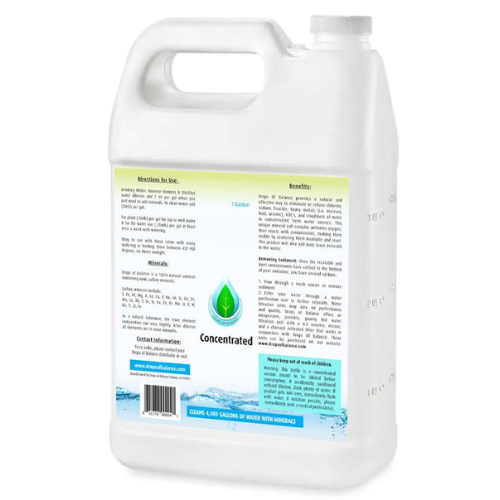
For large-scale gardens or farms, our 1-gallon concentrate can treat up to 7,500 gallons of water for plants, making it a highly cost-effective way to transition to a high-mineral growing program.
Final Thoughts: Rethink Your Feeding Schedule
If you want to see what your plants are truly capable of, it's time to look past the NPK label. By focusing on the 70+ trace minerals that govern the biological "machinery" of the plant, you aren't just feeding them; you are optimizing them.
Whether you are growing an indoor jungle or a high-yield vegetable garden, minerals are the foundation. When the soil is balanced, the plant is strong, the pests are gone, and the harvest is truly nutritious.
Ready to see the "BAM!" effect in your own garden? Check out our Safety Testing to see the purity of our minerals, or head over to our FAQ to learn more about how minerals can change the way you grow.