
The 2026 EPA Fluoride Review
As of March 2026, the landscape of public water regulation in the United States is undergoing a significant transformation. The Environmental Protection Agency (EPA) is currently in the midst of an accelerated health assessment regarding fluoride in drinking water: a move that has profound implications for public health, municipal water management, and the wellness industry. This review, prompted by judicial intervention and emerging toxicological data, marks the first time in decades that federal fluoride standards have been subjected to such intense, expedited scrutiny.
For decades, the presence of fluoride in municipal water has been framed primarily as a public health victory for dental hygiene. However, the 2026 EPA Fluoride Review shifts the focus toward the potential systemic risks of chronic exposure, particularly concerning neurodevelopment and endocrine function. As consumers increasingly seek to remove fluoride from water, understanding the scientific and regulatory context of this review is essential for making informed decisions about hydration and health.
The Catalyst: The 2024 Federal Court Ruling
The impetus for the current EPA review can be traced back to a landmark federal court ruling in late 2024. Under the Toxic Substances Control Act (TSCA), the court directed the EPA to strengthen its consideration of fluoride's health risks. The ruling cited a growing body of evidence suggesting that current fluoride levels in some public water systems might pose an "unreasonable risk" to the health of vulnerable populations, specifically infants and pregnant women.
Following this ruling, EPA Administrator Zeldin issued a directive in April 2025 to accelerate the health assessment of fluoride. Under the standard Safe Drinking Water Act (SDWA) cycle, this review would not have been mandated until 2030. The decision to move the timeline up by four years underscores the urgency with which the agency is now treating fluoride’s potential neurotoxicity.
Scope of the 2026 Preliminary Assessment Plan
On January 22, 2026, the EPA released its Preliminary Assessment Plan and Literature Survey. This document outlines the roadmap for the agency’s final toxicity assessment. Unlike previous reviews that weighed the dental benefits against the risks, the 2026 review is explicitly narrow in scope: it focuses solely on adverse health effects.
The assessment targets two primary areas of concern:
- Neurodevelopmental Impacts: Analyzing the correlation between fluoride exposure and cognitive development, including IQ scores in children.
- Physiological Development: Evaluating the impact of fluoride on bone density and tooth development (specifically dental fluorosis).
By utilizing a systematic review process, the EPA aims to establish a new "reference dose": a scientifically determined level of daily exposure that is likely to be without an appreciable risk of deleterious effects during a lifetime.

The Discrepancy Between Standards and Safety
One of the most critical aspects of the 2026 review is the evaluation of the Maximum Contaminant Level (MCL). Currently, the EPA’s MCL for fluoride is 4.0 milligrams per liter (mg/L). This standard was established in 1986 based on the prevention of skeletal fluorosis.
However, the Centers for Disease Control and Prevention (CDC) recommends a much lower level: 0.7 mg/L: as the optimal concentration for preventing dental caries. This massive gap between the "allowable" limit (4.0 mg/L) and the "recommended" limit (0.7 mg/L) has created significant confusion and concern. The current EPA review is expected to determine whether the 4.0 mg/L standard is outdated and if a lower, legally enforceable limit is necessary to protect public health.
Why Consumers Are Looking to Remove Fluoride from Water
As the EPA’s findings reach the public, interest in water purification has surged. While the EPA regulates public water systems, it does not mandate fluoridation; those decisions are made at the state and local levels. This means that even if the EPA lowers the "safe" threshold, many municipalities may continue to add fluoride up to the legal limit.
Standard carbon filters, often found in pitcher-style filtration systems, are largely ineffective at removing fluoride ions. This realization has led many to explore more advanced options, such as reverse osmosis, activated alumina, or specialized mineral-based treatments. For those who prioritize a holistic approach to wellness, simply "removing" the chemical is only half the battle.
The Mineral Logic: Drops of Balance and Trace Mineralization
At Drops of Balance, we believe that water treatment should go beyond simple filtration. The challenge with many methods used to remove fluoride from water is that they often strip the water of its natural character, leaving it "hungry" and devoid of essential minerals.
Drops of Balance utilizes a concentrated solution of sulfated trace minerals. When added to water, these minerals interact with contaminants through a process of coagulation and flocculation. This scientific mechanism helps to neutralize or sequester various impurities, including heavy metals and fluoride, while simultaneously enriching the water with a broad spectrum of bioavailable trace minerals.
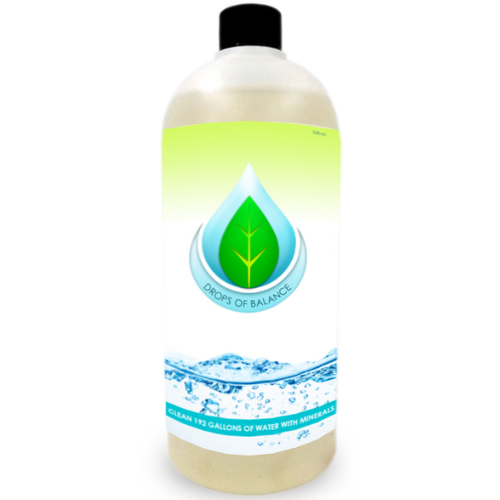
This approach aligns with the understanding that water is more than just H2O; it is a delivery system for the minerals our bodies: and our plants: need to thrive. You can learn more about how our solution addresses these issues in our detailed guide on how Drops of Balance fixes common water problems.
Fluoride’s Impact on Soil and Plant Biology
The 2026 EPA review focuses on human health, but the implications for gardeners and farmers are equally significant. Fluoride is a known phytotoxin. When present in high concentrations in irrigation water, it can accumulate in plant tissues, leading to leaf tip burn and inhibited photosynthesis.
Furthermore, fluoride can disrupt the delicate microbial balance of the soil. Soil microbes are essential for nutrient cycling; when these microbes are inhibited by chemical loads, plant health suffers. Transitioning to mineral-rich, treated water can help protect your soil health before the first frost and ensure a more nutrient-dense harvest.
Looking Ahead: The Future of Water Quality
The public comment period for the EPA’s Preliminary Assessment Plan closed on February 27, 2026. The agency is now moving into the peer-review phase, where external scientific experts will scrutinize the literature survey and assessment methodology.
For the average citizen, the 2026 EPA Fluoride Review serves as a reminder that "regulated" does not always mean "optimal." As the scientific community continues to refine its understanding of chemical exposure, the responsibility for ensuring the highest quality water often falls to the individual.
Whether you are concerned about the cognitive development of your children or the vitality of your garden, the trend is clear: moving toward cleaner, more mineralized water is a foundational step in proactive health management.

Strategic Steps for Water Safety
While waiting for the final EPA determinations, there are several steps you can take to improve your water quality today:
- Test Your Water: Knowledge is power. Understanding the specific fluoride and contaminant levels in your tap water is the first step. You might find our article on winter water testing helpful for understanding seasonal variations.
- Evaluate Your Filtration: If your goal is to remove fluoride from water, ensure your current system is specifically rated for fluoride removal.
- Replenish Minerals: If using distilled or reverse osmosis water, use Drops of Balance to reintroduce the trace minerals that are essential for cellular hydration and plant growth.
The 2026 EPA Fluoride Review is a pivotal moment in water policy history. By staying informed on these regulatory shifts and utilizing scientifically-backed mineral solutions, you can stay ahead of the curve in protecting your health and the health of your environment. For more updates on water safety and health, visit our news blog.