
How to Choose the Best Multi-Contaminant Water Treatment (Compared)
In the modern landscape of municipal and well water management, the definition of "clean water" has shifted. It is no longer sufficient for water to simply be clear, odorless, and free of pathogenic bacteria. As our understanding of environmental toxicology evolves: particularly with the 2026 EPA reviews regarding fluoride and the increasing prevalence of PFAS (per- and polyfluoroalkyl substances): homeowners and gardeners alike must navigate a complex array of water treatment technologies.
Choosing the right system requires a scientific understanding of how different contaminants behave and how various filtration media interact with water chemistry. This guide provides an objective comparison of prevalent water treatment methods, including activated carbon, reverse osmosis, and ionic sulfate mineral solutions, to help you determine the most effective multi-contaminant strategy for your health and your environment.
The Contaminant Landscape: Why Multi-Stage Treatment Matters
Single-contaminant solutions are increasingly obsolete because modern water sources often contain a "chemical soup" of disparate substances. These can be broadly categorized into four groups:
- Disinfectants and Byproducts: Chlorine and chloramines are added to kill pathogens but can react with organic matter to form trihalomethanes (THMs), which are known carcinogens.
- Heavy Metals: Lead, arsenic, mercury, and aluminum can enter water through aging infrastructure or industrial runoff.
- Industrial Chemicals: Glyphosate (the active ingredient in many herbicides) and PFAS (forever chemicals) are difficult to remove due to their stable molecular structures.
- Synthetic Additives: Fluoride, while added for dental health, remains a subject of intense scientific scrutiny regarding its long-term systemic bioaccumulation.
Understanding is your tap water ready for seasonal changes is the first step in recognizing that water quality is not static; it fluctuates with temperature, runoff, and municipal adjustments.
Comparing Traditional Water Treatment Technologies
1. Activated Carbon Filtration
Activated carbon is the most common form of household water treatment. It works through adsorption, where contaminants are trapped in the pore structure of a carbon substrate (usually coconut shell or coal).
- Strengths: Highly effective at removing chlorine, volatile organic compounds (VOCs), and improving taste and odor.
- Weaknesses: Standard carbon filters are largely ineffective against dissolved inorganic contaminants like fluoride, nitrates, and many heavy metals. They also have a finite capacity and can become breeding grounds for bacteria if not replaced regularly.
2. Reverse Osmosis (RO)
Reverse osmosis utilizes a semi-permeable membrane to remove ions, molecules, and larger particles from drinking water. By applying pressure to overcome osmotic pressure, water is forced through the membrane, leaving contaminants behind.
- Strengths: RO is the "gold standard" for removing the widest range of contaminants, including fluoride, arsenic, and PFAS.
- Weaknesses: RO is notoriously wasteful, often discharging 3 to 4 gallons of "brine" water for every gallon of purified water produced. More importantly, RO is non-selective; it removes beneficial trace minerals (calcium, magnesium, potassium), resulting in "empty" or aggressive water with a lower pH.
3. Distillation
Distillation involves boiling water into steam and then condensing it back into a liquid in a clean container.
- Strengths: Effectively removes heavy metals, salts, and most pathogens.
- Weaknesses: Like RO, distillation removes all beneficial minerals. It is also energy-intensive and fails to remove VOCs with boiling points lower than water unless paired with a carbon post-filter.

(Suggested: A comparison chart showing the removal efficacy of Carbon vs. RO vs. Distillation across various contaminant categories)
The Mineral Paradox: Why "Pure" Isn't Always Healthy
A critical oversight in many high-end water treatment discussions is the role of dissolved minerals. When technologies like RO or distillation strip water of its mineral content, the water becomes chemically unstable. This "hungry" water tends to leach minerals from the body (or the soil, in a gardening context) to reach an equilibrium.
From a biological standpoint, humans and plants have evolved to consume water that carries a specific signature of trace minerals. These minerals act as electrolytes and catalysts for enzymatic reactions. This is why a multi-contaminant solution should not only subtract toxins but also add or retain essential elements.
Drops of Balance: The Ionic Sulfate Approach
Drops of Balance represents a departure from mechanical filtration. It utilizes a concentrated solution of ionic sulfate minerals to treat water through a process known as coagulation and flocculation.
When added to water, the ionic minerals interact with contaminants at a molecular level. They neutralize the electrical charge of dissolved solids, causing them to clump together (flocculate) and settle out of the solution or become inert.
Key Advantages of Ionic Sulfate Treatment:
- Broad-Spectrum Removal: It effectively addresses heavy metals, fluoride, chlorine, and glyphosate by transforming them into insoluble particulates.
- Mineral Enrichment: Unlike RO, which strips minerals, Drops of Balance introduces over 70 trace minerals in a bioavailable, ionic form.
- Agricultural Synergy: For those focused on from seed to salad, the presence of sulfate minerals supports the sulfur cycle in soil, which is essential for protein synthesis in plants.
Comparative Analysis: System vs. System
| Feature | Activated Carbon | Reverse Osmosis | Drops of Balance |
|---|---|---|---|
| Chlorine Removal | Excellent | Excellent | Excellent |
| Fluoride Removal | Poor (unless alumina used) | Excellent | Excellent |
| Heavy Metal Removal | Moderate | Excellent | Excellent |
| Glyphosate/PFAS | Moderate | Excellent | Excellent |
| Mineral Retention | Yes (Retains all) | No (Strips all) | Yes (Adds 70+) |
| Water Waste | None | High (3:1 ratio) | None |
| Portability | Low (Plumbed-in) | Low (Plumbed-in) | High (Liquid concentrate) |
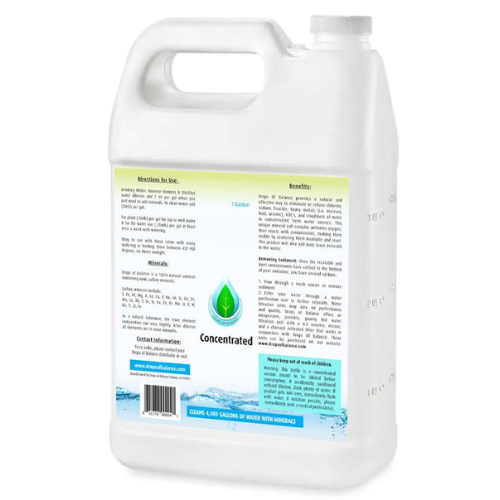
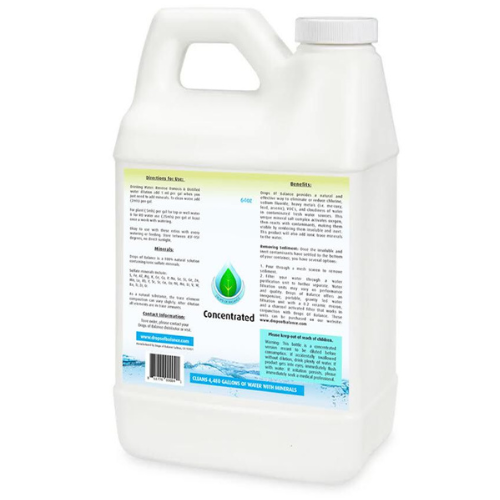
For users looking to maintain a large-scale garden or treat whole-home water without expensive plumbing overhauls, the efficiency of a concentrate is significant. For instance, a 1 gallon concentrate of Drops of Balance can treat up to 4,608 gallons of water, providing a cost-effective alternative to frequent filter replacements.
The Biological Impact on Soil and Plants
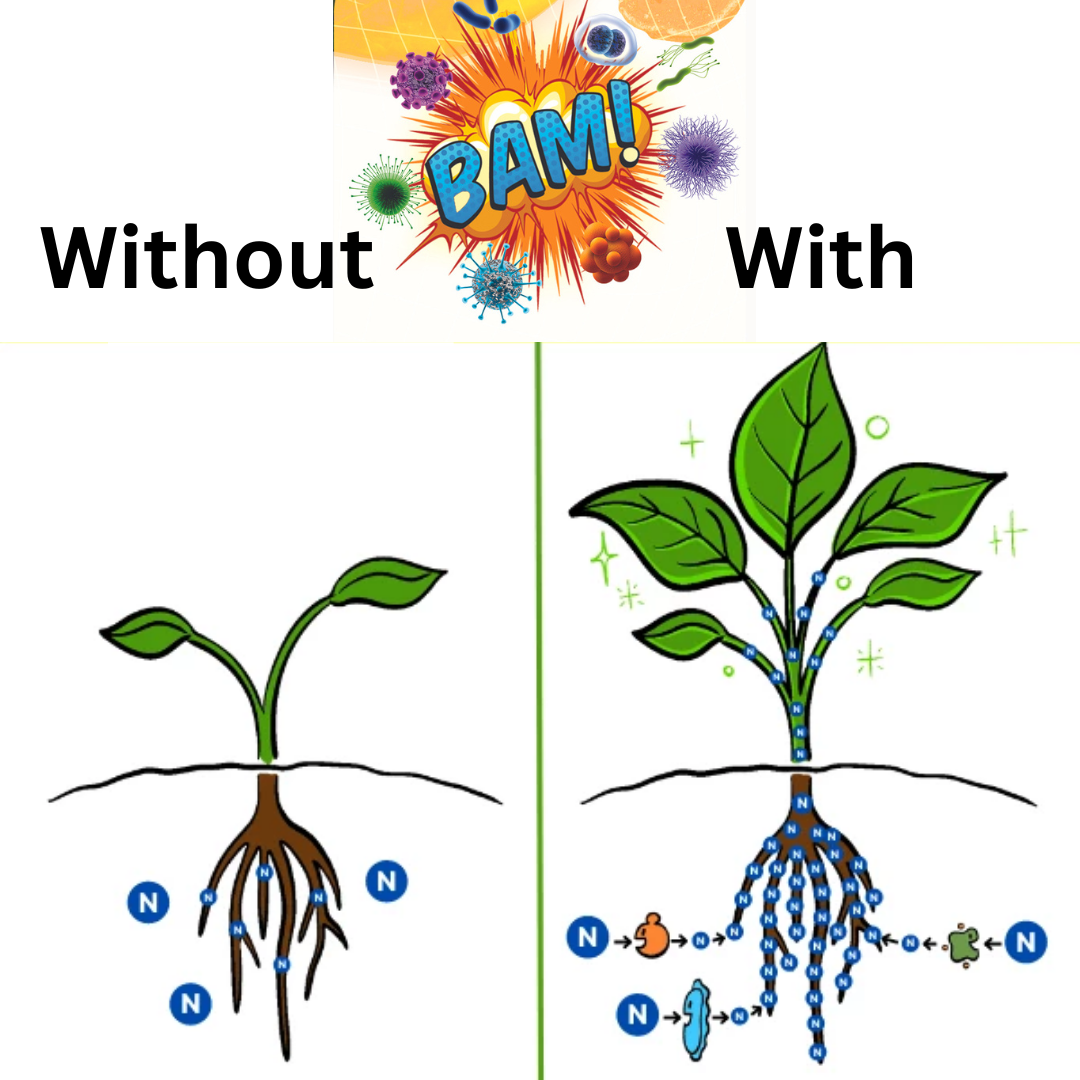
When choosing a water treatment method, one must consider the "downstream" effects. If you are using treated water for irrigation, the method you choose dictates the health of your soil microbiome.
Chlorine and fluoride are antimicrobial. When they reach the soil, they can suppress the beneficial fungi and bacteria that plants rely on for nutrient uptake. Mechanical filtration like RO removes these toxins but leaves the water "mineral-starved," which can lead to nutrient leaching in the root zone.
Using an ionic mineral solution solves both problems: it neutralizes the toxins while providing the trace elements necessary for robust microbial activity. This creates a virtuous cycle where mineralized water creates nutrient-dense harvests by supporting the natural biological processes of the earth.

(Suggested: A scientific illustration of the coagulation/flocculation process at a molecular level)
Technical Considerations for Implementation
If you are currently using a Reverse Osmosis system, you do not necessarily need to abandon it. Many health-conscious individuals use Drops of Balance as a "re-mineralization" step. Adding approximately 1.25 ml per gallon to RO or distilled water restores the mineral profile and stabilizes the pH, making the water more biologically compatible.
For those treating tap water directly, a higher dosage (2.5 ml per gallon) is recommended to ensure the full sequestration of heavy metals and halides like fluoride and chlorine.
Conclusion: Science-Based Hydration
Selecting the best multi-contaminant water treatment is not about finding a "magic" filter, but about understanding the chemistry of your water. While activated carbon is suitable for basic aesthetic improvements and RO is effective for total purification, only ionic sulfate mineral solutions offer a comprehensive approach that removes harmful toxins while simultaneously enriching the water with life-sustaining minerals.
By prioritizing both the subtraction of contaminants and the addition of essential trace elements, you ensure that your water supports the complex biological needs of your body and your garden. For a deeper dive into specific applications, explore how Drops of Balance fixes common water problems for plants and soil.