
Trace Minerals for Soil 101
Happy Thanksgiving from the Drops of Balance family. As we celebrate the harvest and gratitude today, we wanted to share a deep dive into the foundation of all healthy food: trace minerals in the soil.
To the untrained eye, soil is simply dirt: a medium to hold a plant upright.
However, from a biological and chemical perspective, soil is a complex, living matrix where thousands of microscopic reactions occur every second. While most gardeners and farmers are well-versed in the "Big Three" macronutrients: Nitrogen (N), Phosphorus (P), and Potassium (K): there is a silent category of nutrients that dictates the success or failure of a harvest: trace minerals.
Also known as micronutrients, trace minerals are chemical elements present in the soil in minute concentrations, typically less than 0.1% or 1,000 parts per million (ppm). Despite their small presence, they are the "spark plugs" of the plant world. Without them, the biological machinery of the soil and the plants it supports grinds to a halt. In this guide, we will explore why trace minerals for soil are the foundation of nutrient-dense food and resilient ecosystems.
What Are Trace Minerals?
Trace minerals are naturally occurring inorganic substances derived from the earth’s crust. While macronutrients (including calcium, sulfur, and magnesium) are required in large quantities to build plant tissues, trace minerals are required in much smaller amounts. However, their necessity is absolute.
According to agricultural science, a plant’s growth is limited by the nutrient in the shortest supply, regardless of how much of the other nutrients are present. This is known as "Liebig’s Law of the Minimum." If your soil is rich in Nitrogen but lacks a trace amount of Molybdenum, your plants will struggle to process that Nitrogen, leading to stunted growth and poor yields.
The Origin of Soil Minerals
The trace mineral content of your soil is largely determined by its parent material: the specific types of rock from which the soil was formed over thousands of years. Soils derived from sedimentary or basic rocks generally boast a wider array of trace elements. Conversely, acidic soils formed from igneous rocks, such as granite, are often naturally deficient in essential elements like cobalt or copper.
Over time, through a process called "mineral mining," plants draw these elements from the deeper layers of the earth and concentrate them in the surface layers as organic matter decays. However, modern agricultural practices and heavy irrigation have accelerated the depletion of these minerals, leaving many soils "hollow."
The "Big 8" Trace Elements for Plant Production
What do plants need to grow beyond the basics? There are eight key trace elements recognized by researchers as essential for plant health. Each serves a specific physiological function:
- Iron (Fe): Essential for chlorophyll synthesis and the maintenance of chloroplast structure. It is often the reason behind the deep green color of healthy leaves.
- Manganese (Mn): Acts as a primary catalyst in photosynthesis and helps in the evolution of oxygen. It also supports plant enzyme functions related to respiration.
- Zinc (Zn): Facilitates the production of growth hormones (auxins) and is critical for internode elongation and leaf expansion.
- Copper (Cu): Important for reproductive growth and the formation of lignin, which provides structural strength to cell walls.
- Boron (B): Vital for cell wall formation, calcium uptake, and the movement of sugars within the plant.
- Chloride (Cl): Involved in osmosis (water movement) and the ionic balance of the plant.
- Molybdenum (Mo): Crucial for nitrogen fixation. Without it, plants cannot convert nitrates into amino acids.
- Nickel (Ni): The most recently recognized essential element, it is necessary for the activation of urease, an enzyme involved in nitrogen metabolism.
Understanding these roles is vital for any grower. When you see yellowing between leaf veins (interveinal chlorosis) or distorted new growth, it is often a cry for help from a plant lacking these trace minerals for plants.
The Biological Function: Cofactors and Enzymes
To understand why trace minerals are so powerful, we must look at them as cofactors. In the world of biochemistry, enzymes are the proteins that perform work: building cells, breaking down toxins, and converting sunlight into energy. However, many enzymes are "inactive" until they are paired with a specific mineral ion.
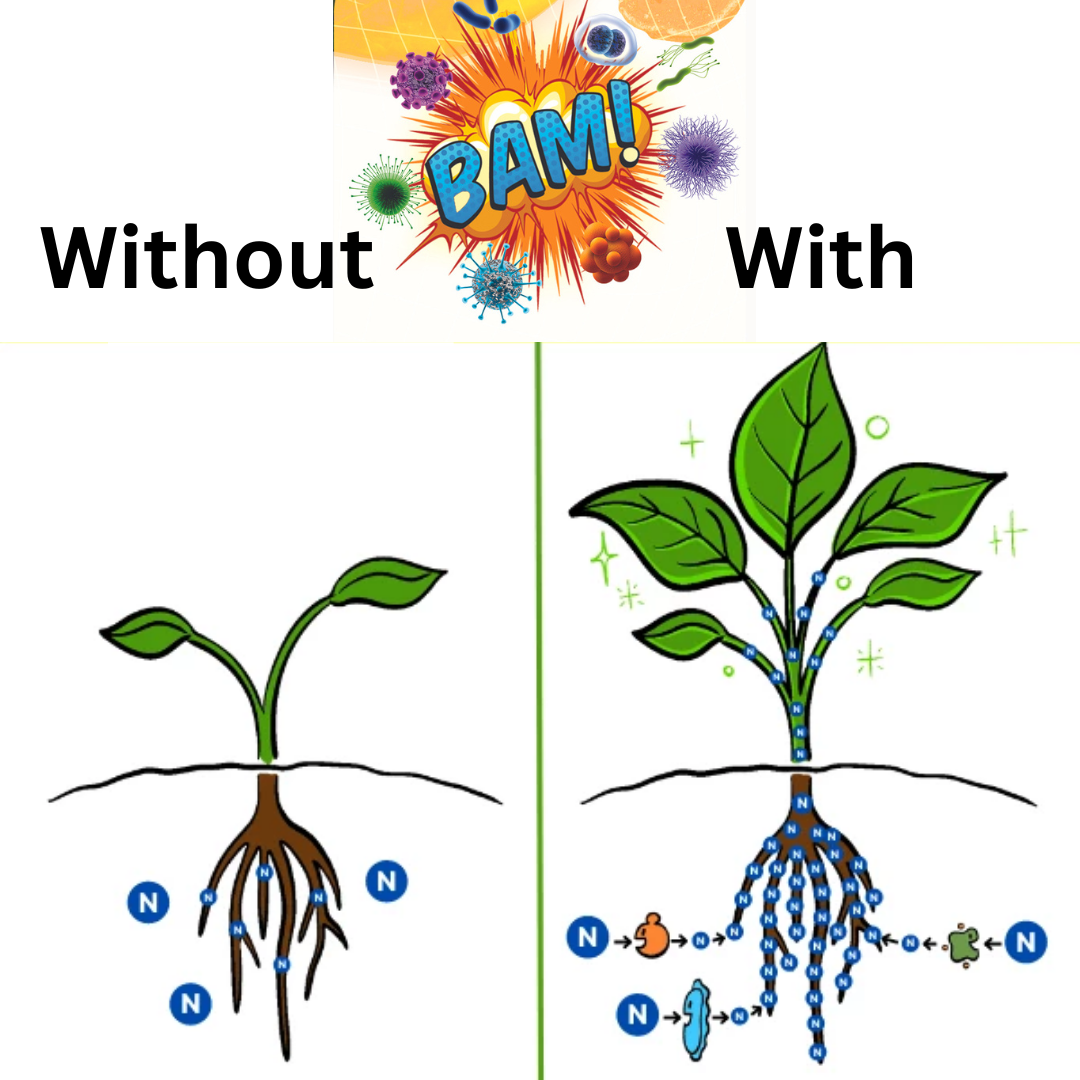
For example, the enzyme that enables a plant to utilize nitrogen effectively requires Molybdenum. If the mineral is absent, the enzyme stays dormant, and the plant suffers from nitrogen deficiency even if the soil is saturated with fertilizer. This is one reason why many fertilizers for tomatoes fail to deliver results; they provide the fuel (macronutrients) but lack the ignition (trace minerals).

Why Modern Soils Are Deficient
Across the globe, soil mineral levels are in decline. This is due to a combination of factors:
- Leaching: Heavy rain or over-watering can wash soluble minerals out of the root zone.
- Monocropping: Repeatedly growing the same crop without replenishing the full spectrum of minerals depletes specific elements.
- The Tap Water Connection: This is a critical but often overlooked factor. Most municipal tap water is treated with chlorine, chloramines, and fluoride. These chemicals are designed to kill bacteria, but in the soil, they can devastate the delicate microbial life that helps plants absorb minerals. Furthermore, contaminants like PFAS (forever chemicals) can interfere with soil chemistry, locking up trace minerals and making them unavailable to plants.
Learning how to remove fluoride from water for plants is often the first step in restoring the natural mineral cycle of your garden.
Trace Minerals and Soil Microbes: A Symbiotic Relationship
Trace minerals do not work alone. They are part of a symbiotic loop involving soil microorganisms. Beneficial bacteria and mycorrhizal fungi break down complex minerals into "chelated" or ionic forms that plant roots can actually "sip."
When soil is deficient in trace minerals, the microbial population suffers. Conversely, when the soil is rich in minerals but lacks life, the minerals remain "locked" in the dirt. This is why a holistic approach to soil health involves both mineral replenishment and microbial inoculation. Products like BAM! Microbial Inoculant work in tandem with mineral solutions to create an environment where nutrients are both present and bioavailable.

The Impact on Human Health
The importance of trace minerals for soil extends far beyond the garden gate. Humans and animals derive their mineral intake from the plants they consume. If the soil is depleted, the food is depleted. This leads to what nutritionists call "hidden hunger": a state where a person may be eating enough calories but is nutritionally starved of the trace elements needed for bone health, immune function, and hormonal balance.
By focusing on mineralized water and nutrient-dense harvests, we are not just growing bigger plants; we are growing healthier people.
How to Replenish Your Soil
Restoring trace minerals is a process of "re-mineralization." While rock dusts and powders are traditional methods, they can take years to break down and become available to plants. For immediate impact, many growers turn to liquid mineral concentrates.
The Drops of Balance Solution
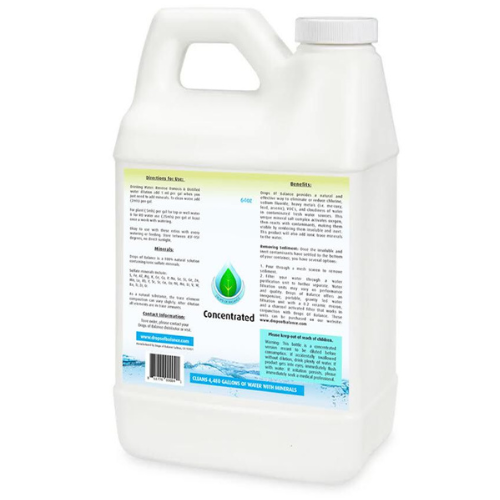
Drops of Balance provides a concentrated solution of sulfated trace minerals. When added to water, it performs two critical functions:
- Purification: It helps neutralize harmful contaminants like chlorine and fluoride that disrupt soil health.
- Mineralization: It introduces a broad spectrum of ionic trace minerals that are immediately available for plant uptake and microbial support.
Whether you are preparing your soil for the winter months or boosting growth in the spring, adding a consistent source of trace minerals ensures your soil's "biological engine" never runs out of oil.
Conclusion: The Foundation of Life
In the quest for healthy gardens and vibrant health, it is easy to focus on the things we can see: the height of the stalk or the size of the fruit. But the real magic happens in the invisible realm of trace minerals. By understanding the science of trace minerals for soil, we move from being mere observers of nature to active stewards of the earth.
If you are ready to take your soil health to the next level, start by evaluating your water source and considering a comprehensive approach to mineralization. After all, healthy soil is the only way to grow truly healthy life.
For more information on the science of water and soil, visit our About Us page or explore our Safety Testing data to see how we verify the purity of our mineral solutions.